Are There Jaguars In El Yunque?
No jaguars live in El Yunque National Forest or anywhere in Puerto Rico, but this rainforest has plenty of real wildlife. Here is what a guided nature walk actually finds.
Are There Jaguars In El Yunque?
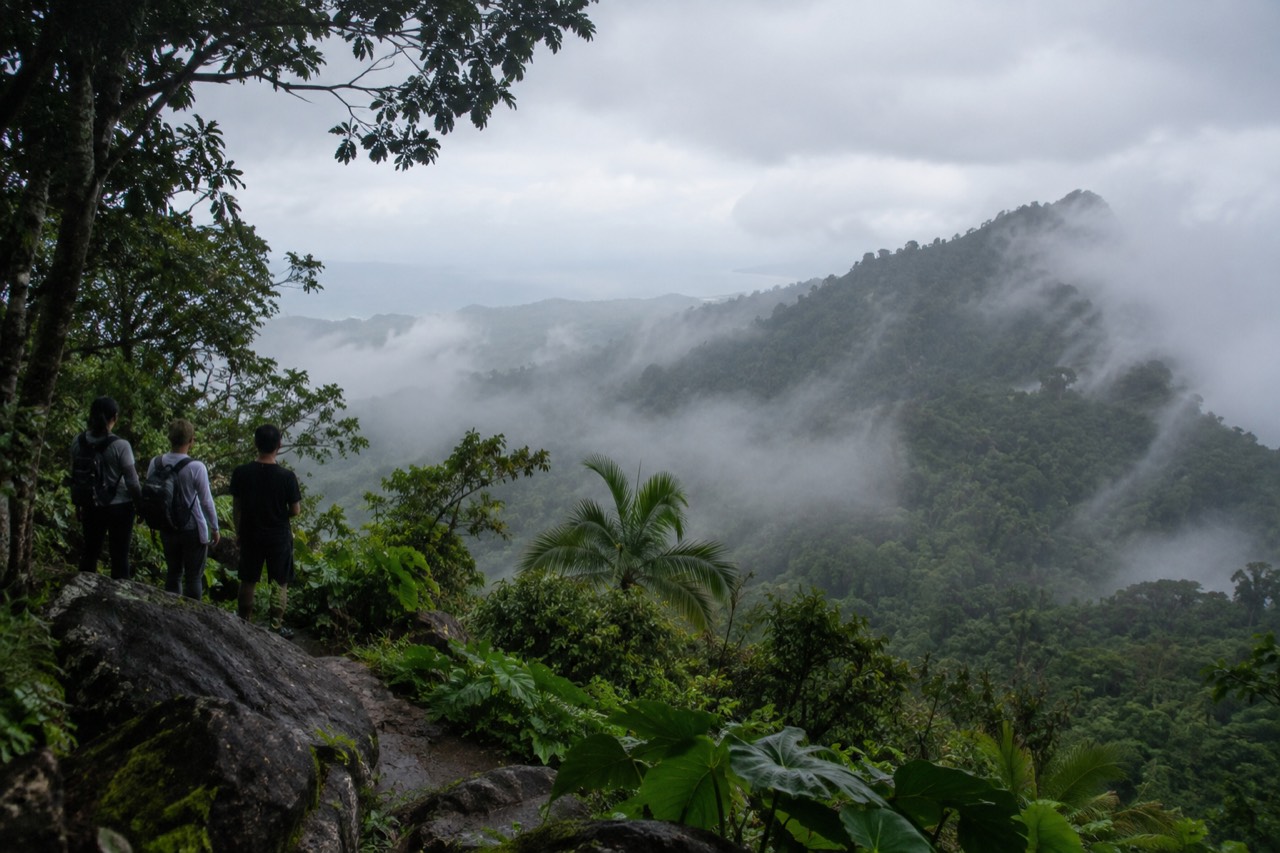
No. El Yunque National Forest has no jaguars, and neither does the island of Puerto Rico. There are no native jaguars, pumas, ocelots, or other large wild cats on the island, and the Forest Service's species lists for the forest include none. The only wild mammals here are small, shy, and harmless to people.
The idea probably starts with the word "rainforest." Jungle tourism often borrows jaguar imagery from the Amazon or Central America, but El Yunque is a different forest system. The official El Yunque National Forest page describes it as the only tropical rainforest within the national forest system, not a South American-style jungle with big cats. Its real animals are smaller and adapted to a wet, mountainous island.
The forest's habitat list for El Toro Wilderness names no jaguars. It documents the Puerto Rican boa, the Desmarest's red fig-eating bat, the Elfin Woods Warbler, and five species of coquí frogs, among other species. That is the real cast of characters. The absence of large predators is part of why the forest is safe to explore on foot.
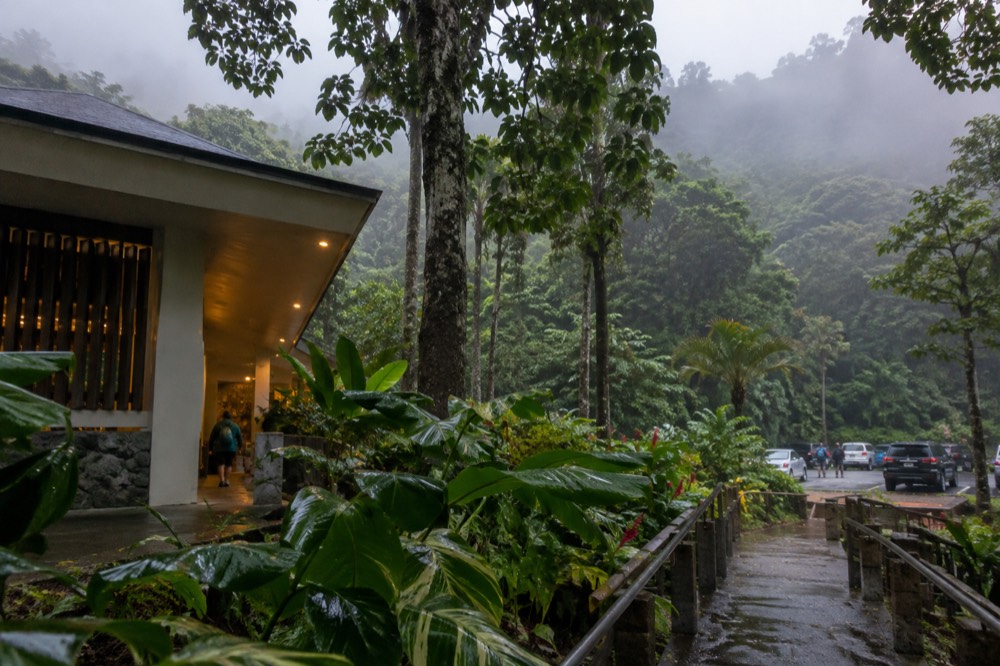
So if a tour listing's cover shows a jaguar or a spotted cat, treat it as decorative, not documentary. The same goes for monkeys and toucans, which are not native and not present in the wild. The animals you actually have a chance to see are far smaller and most active after rain or at dusk.
These three tours are all guided, which matters for wildlife. A guide knows where coquí frogs hide, which log is a lizard runway, and when the Puerto Rican parrot is most likely to be heard before it is seen. A jaguar is not on the checklist, but the real forest still rewards a slow observer.
What Large Predators Actually Live In El Yunque?
None that pose a real threat. The forest's top native predators are the Puerto Rican boa, a nonvenomous constrictor that eats small mammals and birds, and birds of prey overhead. Large wild mammals are almost entirely absent. The only mammal named in the Forest Service's El Toro Wilderness habitat list is the Desmarest's red fig-eating bat.
A few visitors expect something more dramatic because El Yunque looks like a jungle in photographs. The reality is that islands like Puerto Rico have fewer large land predators. The forest's food web runs on insects, frogs, lizards, birds, and bats. The Puerto Rican boa is an impressive snake, but it is not a threat to a walking adult and it avoids people.
Island ecosystems tend to have fewer large land carnivores because such predators require large territories and abundant prey. Puerto Rico has been isolated from continental landmasses for millions of years, so its native mammal diversity is very low. The forest's energy flows through invertebrates, frogs, and small birds rather than through large herbivores that would support big cats.
This does not mean the forest is empty of drama. The Puerto Rican boa can reach a substantial size, and seeing one draped over a branch is a highlight for many visitors. But it is a calm, nonvenomous snake that prefers to retreat. The real drama in El Yunque comes from the volume of small life: dozens of coquí species, the constant motion of anole lizards, and the sudden appearance of a parrot flock overhead.
| Species or group | Where the Forest Service documents it | Why it matters |
|---|---|---|
| Puerto Rican parrot | El Portal exhibit and forest recovery areas | Endangered and loud; often heard before seen |
| Puerto Rican boa | El Toro Wilderness habitat list | Nonvenomous constrictor and top native predator |
| Desmarest's red fig-eating bat | El Toro Wilderness habitat list | One of the forest's few native mammals |
| Elfin Woods Warbler | El Toro Wilderness habitat list | Endangered bird of upper elevation cloud forest |
| Five species of coquí | El Toro Wilderness habitat list | Tiny tree frogs; the forest's nightly soundscape |
| Orchid Lepanthes eltoroensis | El Toro Wilderness habitat list | Rare orchid known from the El Toro area |
This list comes from the Forest Service's El Toro Wilderness page. Notice what it does not include: no jaguar, no puma, no ocelot, no monkey, no tapir. The large mammal question in El Yunque is mostly an absence, and that is a good thing for visitors who want a calm walk.
Which Animals Will You Most Likely See On A Guided Walk?
On a typical daytime walk, expect small things: anole lizards on tree trunks, coquí frogs hidden in bromeliads, maybe a Puerto Rican boa curled on a branch, and if you are lucky, a Puerto Rican parrot flying over the canopy. A guide helps because the forest is dense, and most of these animals are cryptically colored or nocturnal.
Most first-time visitors hear coquí frogs long before they see one. The call is a two-note sound that fills the forest after rain. These tiny tree frogs are the island's most famous wildlife sound, and El Yunque has several species. They sit in wet leaf litter, on branches, and inside bromeliads, often less than an arm's length away.
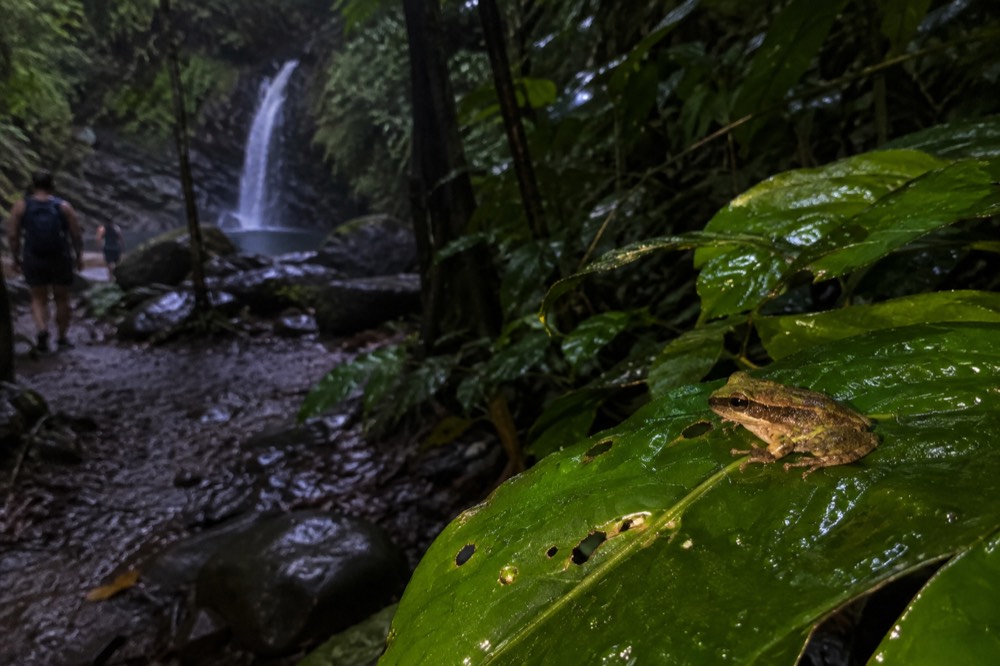
On a guided walk you may also see anole lizards doing push-up displays on sunlit trunks. If the guide knows a fruiting fig tree, you might watch birds and bats working it. The Puerto Rican parrot is rarer. El Portal has an exhibit, and wild birds are most often seen in flight over the upper forest.
If you can join a nighttime nature walk, you will hear the forest at full volume. Coquí frogs call more actively after dark, and many of the forest's most visible species are nocturnal. For a daytime walk, the best wildlife windows are early morning and just after a rain shower, when the air is cool and the frogs move. At El Portal, the Puerto Rican parrot exhibit introduces the bird before you try to spot it in the wild. El Portal charges $8 for adults 16 and over, free under 15, and $4 with an interagency pass, and it offers a useful primer on the species you may encounter on the trail.
The National Rainforest Nature Walk with Luquillo Beach stops at a forest corridor, then heads to the coast, which means two very different animal communities in one afternoon. The beach portion adds shorebirds and crabs, while the forest section is where the frogs and lizards are.
A guided walk does not guarantee specific animals, but it dramatically raises your odds. The forest rewards people who stop, stay quiet, and look at the edges of leaves, not the path ahead.
If you only pick one wildlife-focused tour, choose a walk that keeps the group small and moves slowly. The forest gives up its secrets to quiet observers, not to a group rushing toward a photo stop.
Why Do So Many Tours Mention Rainforest Wildlife That Is Not There?
Tour operators often use generic jungle icons: jaguars, monkeys, macaws, and toucans. Those images sell "rainforest" but do not describe Puerto Rico. The island's fauna is unique and less flashy, so a listing that promises a jaguar sighting is either using stock art or borrowing from another destination. None of the verified tour descriptions on this site promise jaguars.
The confusion is predictable. Rainforest tourism marketing around the world defaults to a jaguar silhouette, a toucan beak, and a monkey tail. El Yunque is a tropical rainforest, but it sits on a Caribbean island that has been isolated from mainland predators for millions of years. Its mammal list is extremely short.
El Yunque National Forest Tours reports from the actual Forest Service species lists, not the stock-photo version of a rainforest. That difference matters when you are deciding whether a tour is selling the place or a mood.
Some listings rely on imported stock imagery. Others emphasize waterslides and rope swings, which are real but often outside the forest or at specific private spots. The jaguar icon is almost never a promise; it is a visual shorthand for "jungle day." But it misleads readers into expecting something the forest does not have.
The tour roster this site maintains does not include any listing that promises a jaguar or monkey sighting. Operators selling El Yunque tend to focus on waterfalls, waterslides, and transport because those are real and verifiable. When generic jungle icons appear in thumbnail art, they are usually chosen by a booking platform's image library, not by the operator. Reading the confirmed stop list is more reliable than reading the cover photo.
| Jungle expectation | El Yunque reality |
|---|---|
| Jaguars and big cats | No jaguars, pumas, or large native cats in Puerto Rico |
| El Yunque National Park | It is a national forest, not a national park |
| Las Paylas waterslides are in the forest | Private land outside the forest boundary |
| A timed-entry reservation is required | Entrance to the PR-191 corridor is free and no reservations required |
| A big wildlife safari | Most wildlife is small, nocturnal, and found by a guide |
This gap between marketing and reality is not unique to El Yunque, but it is especially strong here. The forest is small, accessible, and heavily photographed, so travel pages borrow images from much larger rainforest destinations.
What Should You Do If You Want To See The Real El Yunque Animals?
Book a guided nature walk, not a waterslide-only day, and choose an operator that stops at forest trails rather than only private land outside the boundary. Go early or after rain, keep quiet, and look at eye level and the canopy edges. A guide who knows frog calls and bird flight patterns will show you far more than you will spot alone.
Move slowly, avoid loud music, and wear shoes with traction. The Forest Service warns that wet surfaces can be a hazard, and the same damp moss that makes footing tricky is where coquís hide. A good guide will stop for the small things: a frog in a bromeliad, a lizard doing push-ups, a boa looped over a branch.
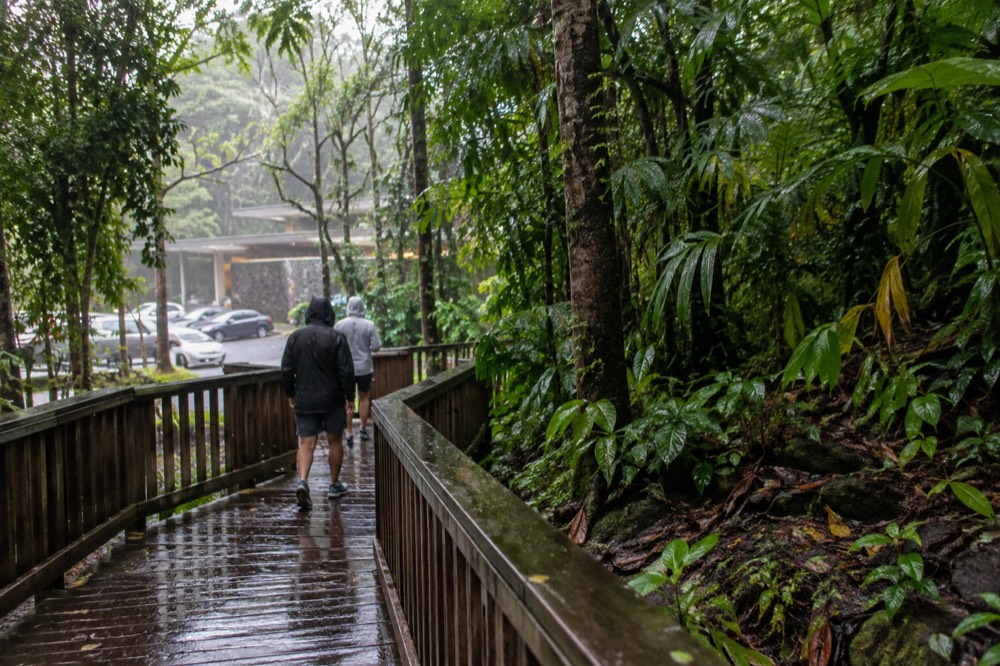
Bring binoculars if you own a small pair, but do not expect to use them constantly in the dense understory. Many animals are close enough to see without magnification. Move slowly, pause at the edge of a trail, and listen. A guide will often cup a hand behind an ear and point toward a coquí call before your eyes locate the frog. That kind of instruction is why a guided walk outperforms a quick self-drive stop. Before you go, look at our guide to El Yunque map and main stops to understand the corridor layout and which habitats are best for animal viewing.
If you want a guided walk plus a different forest stop, the Hike and Waterslide Adventure from Luquillo pairs both. The hike portion gives you a better chance at wildlife. The waterslide is a private-land stop outside the National Forest boundary, so the wildlife value is in the walk itself.
A guided tour will not turn El Yunque into a mammal safari, and that is the point. The real draw is density, not size. Every square meter of healthy forest can hold several species of frog, lizard, and invertebrate, and a good guide can turn a single tree trunk into a ten-minute wildlife stop.
Do You Need A Guide To See El Yunque Wildlife?
You do not need a guide to enter, but you are likely to see far more with one. The animals are small, camouflaged, and often nocturnal. A permit-holding guide knows which trees and stream edges to check, can identify calls, and solves the parking constraint that limits how long you can stay at popular stops.
The Forest Service Current Conditions page states that the PR-191 North recreational corridor is free and requires no reservation. That means a self-guided visit is possible. You can drive in, park only in designated areas, and walk short trails on your own.
The problem is that popular wildlife stops are also short-parking stops. Juan Diego has a 30-minute maximum, and Yokahú Tower has a 30-minute maximum. If you are hiking slowly and looking for frogs, a half-hour parking limit can feel rushed. A permitted guide's vehicle legally drops you and returns for you, which removes that pressure.
The Forest Service publishes a directory of 26 authorized and permitted tour operators. Choosing one from that list means your guide is permitted to operate in the forest and knows the legal parking and access points. That matters for wildlife because the best animal stops are often at short-parking sites like Juan Diego Creek, where a 30-minute maximum makes a knowledgable guide more valuable than a self-drive timer.
A guided tour also solves the rideshare problem. The Forest Service says rideshare apps cannot pick up at the recreational corridor or El Portal, as explained in its unauthorized transport alert. If you arrived by app, a self-guided day can leave you walking a long way out.
If you are weighing self-driving, read our guide to getting to El Yunque from San Juan. It covers the corridor roads and what to expect if you skip a tour.
Is El Yunque Safe From Dangerous Wildlife?
Yes. There are no large predators, no big cats, and no venomous land snakes that commonly threaten visitors. The greater risks are environmental: slippery rocks, sudden rain, and flash floods in rivers. The Forest Service warns that a flash flood can arrive in less than one minute, so water safety deserves more attention than any animal.
The animals you meet in El Yunque are generally more afraid of you than you are of them. The Puerto Rican boa is nonvenomous and slow to react. Coquí frogs and anoles are harmless. The main wildlife caution is simply to look but not touch, because many species are small and fragile.
The real danger is the river. The Forest Service safety guidance says flash floods can occur throughout the year, but may be more frequent in April and May. A sudden surge can claim victims in less than one minute, and floodwaters can rise 30 feet or more. That is a far more serious concern than any animal in the forest.
The Puerto Rican boa is not dangerous to people, but any wild animal should be given space. Do not pick up frogs or lizards, both because they are fragile and because oils from human skin can harm them. The forest's safety focus should remain on wet surfaces and water, not on animal encounters. If you stay on the trail and respect the forest, the wildlife will treat you as a quiet observer.
Before swimming at any listed Forest Service site, check the current conditions and pay attention to weather upstream. The forest's rivers rise quickly, even when rain falls miles away. A guide who knows the day's weather and the river's behavior is an asset, especially if your tour includes a water stop.
For a slower day that puts the real forest first, pair a guided walk with a beach stop instead of chasing big wildlife. The animals are there, just not the ones on the stock photos. The other useful planning page is what not to miss in El Yunque.
Common Questions About El Yunque Wildlife
Are There Jaguars In El Yunque?
No. Jaguars do not live in El Yunque National Forest or anywhere in Puerto Rico. The island has no native big cats, and the forest's official species lists include no jaguars, pumas, or ocelots.
What is the largest animal in El Yunque?
The Puerto Rican boa is among the top native predators, but it is a snake, not a mammal. The forest's large land mammals are essentially absent, and the documented native mammal list is short, including the Desmarest's red fig-eating bat.
Can you see monkeys in El Yunque?
No. Monkeys are not native to Puerto Rico and are not found in the wild in El Yunque. Any monkey imagery in tour marketing is decorative, not a promise of a sighting.
Is El Yunque a national park?
No. El Yunque is a national forest managed by the USDA Forest Service. It is not a national park, and entrance to the PR-191 recreational corridor is free with no reservation required.
Do you need a reservation to enter El Yunque?
No. The Forest Service states that entrance to the PR-191 North recreational corridor is free and no reservations are required. Visitor capacity is managed through parking, which is permitted only in designated areas.