Getting From San Juan To El Yunque: Driving, Tours, And What The Trip Actually Involves
No official source publishes a distance or drive time from San Juan to El Yunque, and plenty of pages invent one. Here is what is actually verified: which road you take, what entry costs, why rideshare does not work at the corridor, and how a tour with transport changes the math.
Short answer
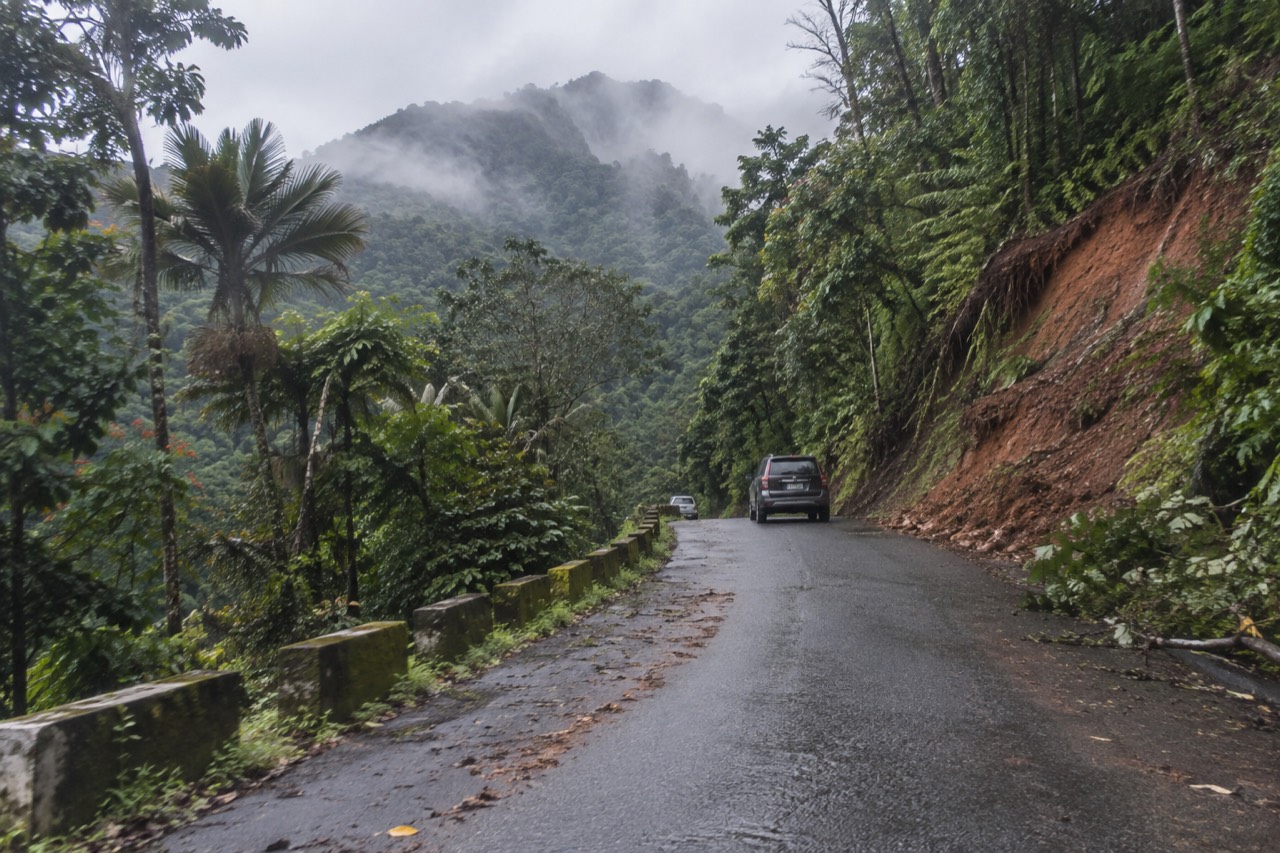
El Yunque's main recreational corridor sits on PR-191 North in Río Grande, east of San Juan. No official source publishes a drive time or distance, so treat any figure you read with suspicion. Tours from San Juan run 3 to 8 hours door to door, entry to the corridor is free with no reservation, and parking, not distance, is the real constraint.
Most travel content answers the question "how far is El Yunque from San Juan" with a confident number: 45 minutes, 25 miles, an hour from Old San Juan. None of those figures comes from an official source. The Forest Service publishes no drive time or distance from San Juan to the forest, which means every specific number you have read was invented by a writer, then repeated by the next one. What the Forest Service does publish is more useful anyway: which road the forest is on, what it costs to enter, when it closes, and why the last stretch of the journey is where trips actually go wrong.
The forest's main recreational corridor is on PR-191 North in Río Grande, on the island's east side. San Juan is the natural launching point, and nearly every visitor from outside Puerto Rico starts there, whether from a hotel in Condado, a rental in Old San Juan, or a cruise ship at the piers. This guide works through the whole journey: the road itself, the entry and reservation situation, the transportation traps that catch self-drivers, and the honest case for letting a tour operator handle the ride. For the wider picture of guided options, our El Yunque tours from San Juan guide covers the full roster.
How Far Is El Yunque From San Juan?
No official source publishes a distance or a drive time from San Juan to El Yunque National Forest, so any specific figure you read is an estimate at best. What is verified is the geography: the main corridor is on PR-191 North in Río Grande, on Puerto Rico's east coast, and tour listings that include San Juan transport describe days running roughly 3 to 8 hours door to door.
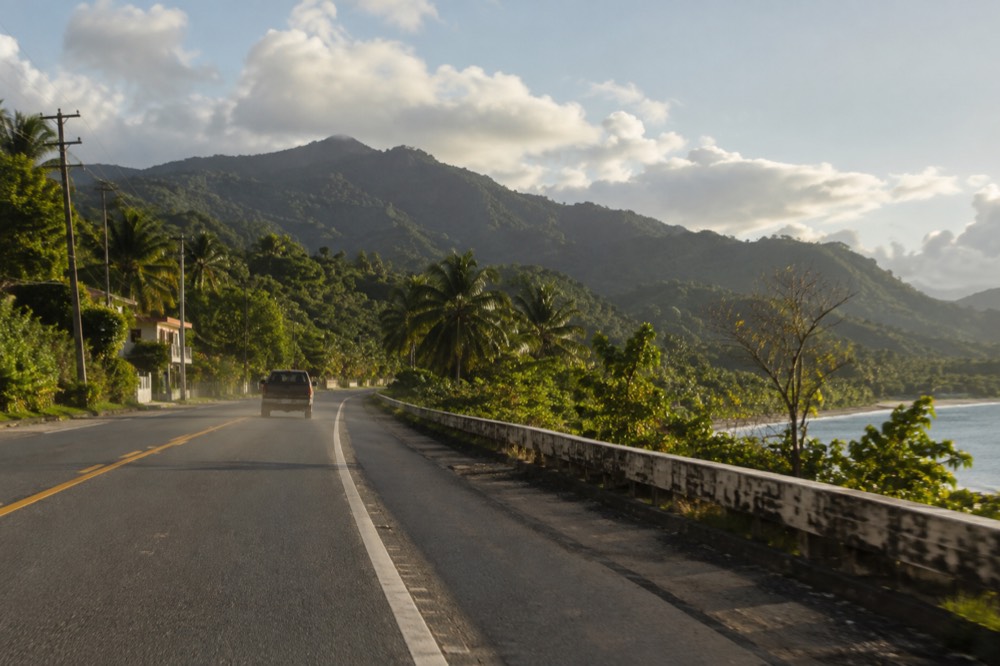
The reason this page will not print a mileage figure is that the USDA Forest Service, the agency that manages the forest, has never published one, and this site does not invent numbers. What we can say from the tour listings on our own roster is how operators themselves describe the commitment. The Half-Day El Yunque Waterslide Excursion without transportation runs 3 hours for people who drive themselves to the meeting point. Full-day tours from San Juan with hotel pickup, like the 7-hour waterslide tour from $58, build in the round-trip ride, trail time and stops. The Two-in-One El Yunque and Bio Bay day trip runs 12 hours because it adds an evening kayak in Fajardo after the forest.
That spread tells you something the invented mileage figures do not: the drive is a real part of the day, but it is not the hard part. The hard part is what happens after the highway ends. PR-191 climbs from the coastal plain into the mountains, the road narrows, and parking inside the corridor is limited and enforced. A trip that measures its drive in minutes usually measures its frustration in parking.
It also matters which side of the forest you are heading for. Most visitors enter from Río Grande on the north, but the forest extends through eight municipalities, Río Grande, Luquillo, Canóvanas, Fajardo, Naguabo, Ceiba, Las Piedras and Juncos, and there are four separate access corridors. Luquillo, on the northeast, is the second most common base. If you are weighing where to sleep, our where to stay near El Yunque guide covers the towns and the trade-offs.
| Access corridor | Location | Reservation required |
|---|---|---|
| PR-191 North, La Mina Recreation Area | Río Grande | No |
| PR-988, Luquillo entrance | Luquillo | No |
| PR-186, El Toro Scenic Byway | Naguabo / Las Piedras side | No |
| PR-191 South | Naguabo | No |
One more geography note that saves people a wrong turn: PR-191 South, the Naguabo side, is not accessible from the north side of the forest due to a major landslide that occurred in the mid-1970s. You cannot drive through the forest from Río Grande to Naguabo. The two halves of the road are separate trips.
Can You Drive Yourself From San Juan To El Yunque?
Yes, and most local visitors do. A rental car or private vehicle is one of the forms of transport the Forest Service explicitly authorizes for the corridor, entry is free with no reservation, and the corridor is open 8:00 a.m. to 5:00 p.m. The catch is parking: it is permitted only in designated areas, capacity is actively managed, and violators are ticketed.
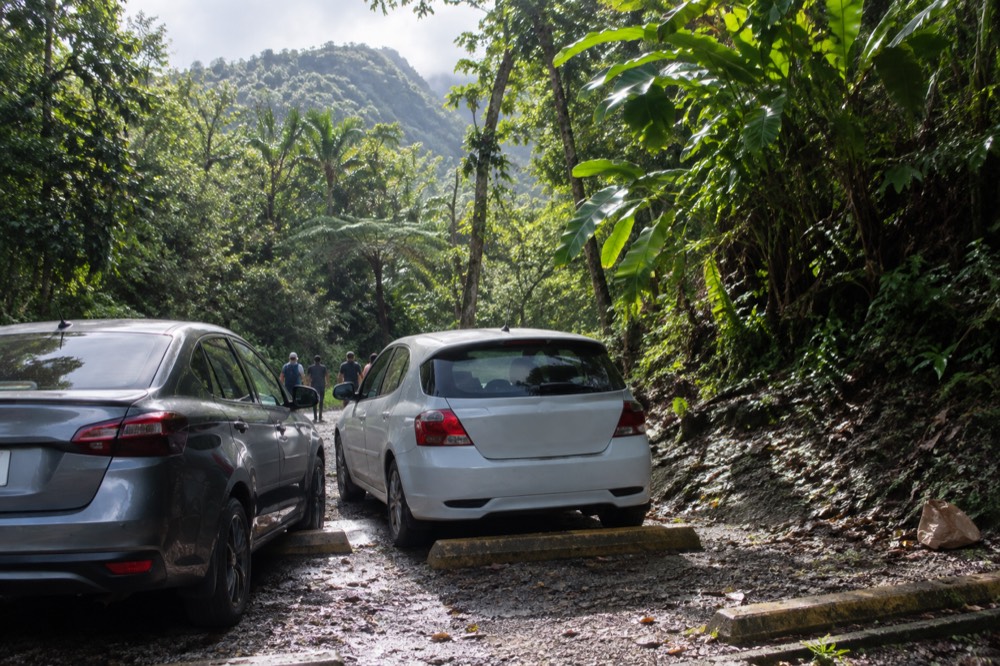
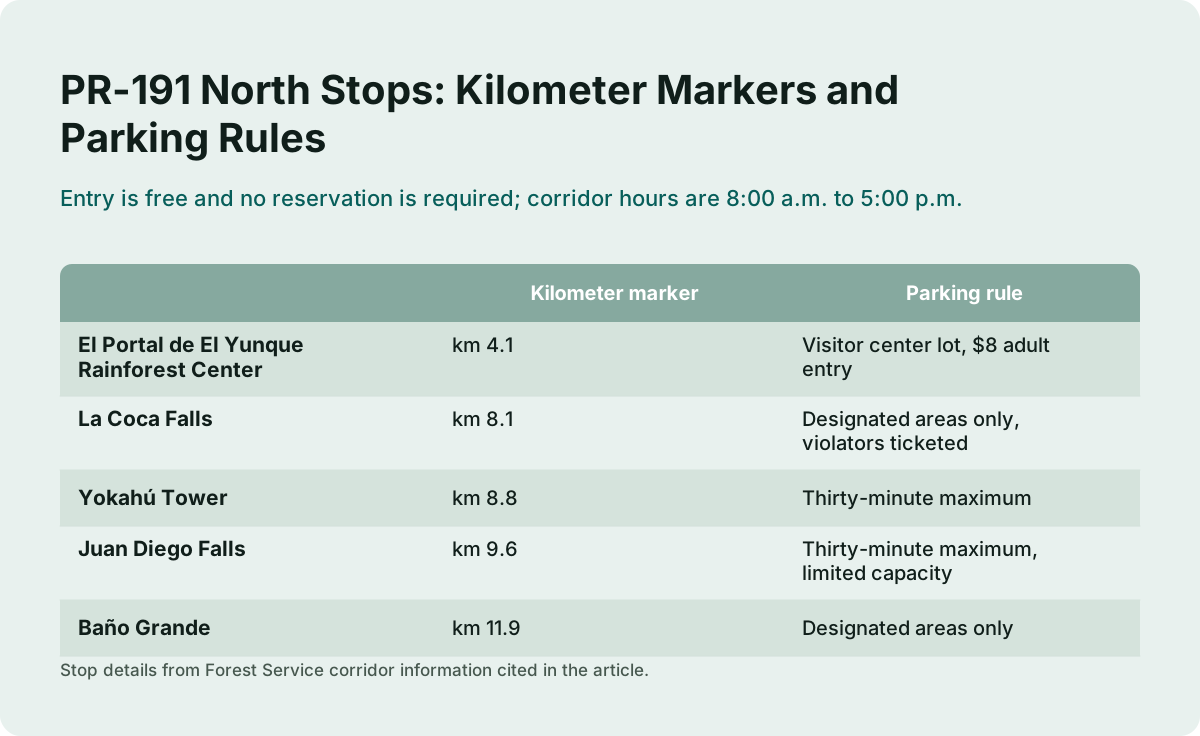
The drive itself is straightforward by Puerto Rican standards. From the San Juan metro area you head east, pick up the expressway toward Río Grande or Luquillo, and turn onto PR-191 in Palmer. The Forest Service notes that most of the recreation facilities sit on Road 191 North in Río Grande, on a road and recreation sites largely built during the 1940s by the Civilian Conservation Corps. Once you pass El Portal, the visitor center at kilometer 4.1, the road climbs and the stops come in sequence, laid out below.
| Stop on PR-191 North | Kilometer marker | Parking rule |
|---|---|---|
| El Portal de El Yunque Rainforest Center | km 4.1 | Visitor center lot, $8 adult entry |
| La Coca Falls | km 8.1 | Designated areas only, violators ticketed |
| Yokahú Tower | km 8.8 | Thirty-minute maximum |
| Juan Diego Falls | km 9.6 | Thirty-minute maximum, limited capacity |
| Baño Grande | km 11.9 | Designated areas only |
What surprises self-drivers is not the road but the clock. The corridor closes at 5:00 p.m., and the Forest Service advises visitors to begin exiting at least 15 minutes before closing. More importantly, the agency manages visitor capacity because of parking limitations, in collaboration with the Puerto Rico Police. On busy days, particularly weekends and cruise-heavy port days, that management can mean waiting or turning back. Arriving early is not travel-blog folklore here; it is the single most reliable way to see the corridor without a parking crisis. Our how early should I arrive at El Yunque post digs into that timing.
Road conditions vary by corridor. Road 988, the Luquillo entrance, carries a construction advisory telling drivers to proceed carefully. Road 186, the El Toro Scenic Byway on the south side, is flagged for poor road conditions. PR-191 North has seen repaving work as part of the La Coca Entrance Station Project, including a one-day full closure at kilometer 8.3 in June 2025. Construction inside a rainforest is ongoing and normal; check the Forest Service current conditions page before you set out.
If you are weighing a self-drive day against a guided one, these three formats cover the main ways people combine the ride east with time in the forest.
Driving yourself is genuinely fine if you have a car, a tolerance for mountain roads, and an early alarm. The people it fails are the ones without a vehicle, and that is a bigger group than most guides acknowledge.
Do You Need A Reservation Or Pay A Fee To Enter El Yunque?
No. Entrance to the PR-191 North recreational corridor is free and no reservations are required, with operating hours of 8:00 a.m. to 5:00 p.m. The old recreation.gov timed-entry reservation no longer exists. The only thing that charges inside the corridor is El Portal Visitor Center, at $8 for adults 16 and over, free for under-15s, and $4 with an interagency pass.
This is the fact that most competing pages get wrong, and it is worth being blunt about. For a period, El Yunque used a timed-entry vehicle reservation sold through the federal booking site. That system is gone. The old reservation facility returns an error, and a search of the federal booking site for El Yunque now yields exactly one bookable product: El Portal visitor center tickets. Anyone telling you to buy a corridor reservation, or that a tour "skips the reservation line," is describing a system that no longer exists.
Capacity is managed instead through parking. Parking is permitted only in designated areas, and the enforcement is real: La Coca Falls warns that violators will be ticketed, Yokahú Tower allows a 30-minute maximum, and Juan Diego also caps parking at 30 minutes due to limited capacity. Groups of 75 people or more need a special use permit, and school groups must reserve in advance, but an ordinary family or couple needs nothing but a vehicle and a parking spot.
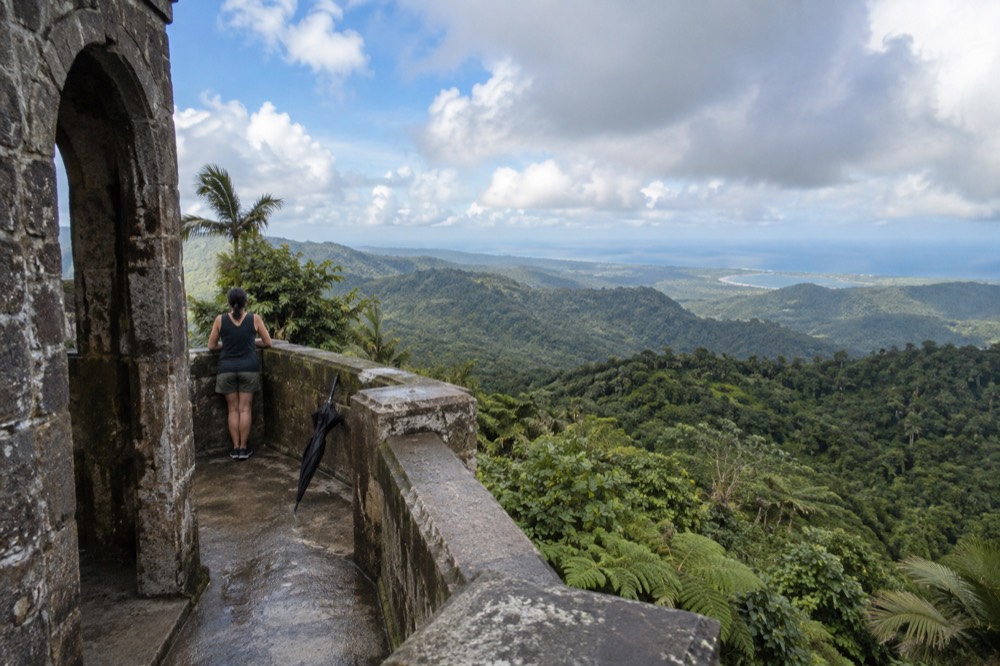
El Portal is the one paid stop, and it is worth separating it clearly from forest entry. The $8 adult fee buys the exhibits, the Puerto Rican Parrot display, the theater and the interpretive trail at the visitor center, not access to the forest. The corridor itself, the waterfalls, the towers and the trailheads cost nothing. There is a live proposal to change some of this, a possible $4 La Mina Recreation Area day permit among other new fees, but it is proposed only, the public comment period closed in August 2026, and no decision has been published. Nothing in that proposal is a current charge. Our El Yunque tickets and reservations guide covers the fee situation in full detail.
Free entry does not mean a tour is pointless, and it is worth saying why in plain terms. A tour buys you a permitted vehicle, a legal drop-off and pick-up, a guide who knows which trails are actually open on the day, and someone else who solves the parking problem. It does not, and cannot, buy you past a reservation queue, because there is no queue.
Why Rideshare And Taxis From San Juan Are A Trap
Rideshare apps cannot pick you up at the El Yunque recreational corridor or El Portal, a restriction the Forest Service states in an official alert, and not every taxi driver holds a permit to operate inside the forest. A visitor dropped off without pre-arranged return transport can be forced to walk long distances to reach a legal pick-up point.
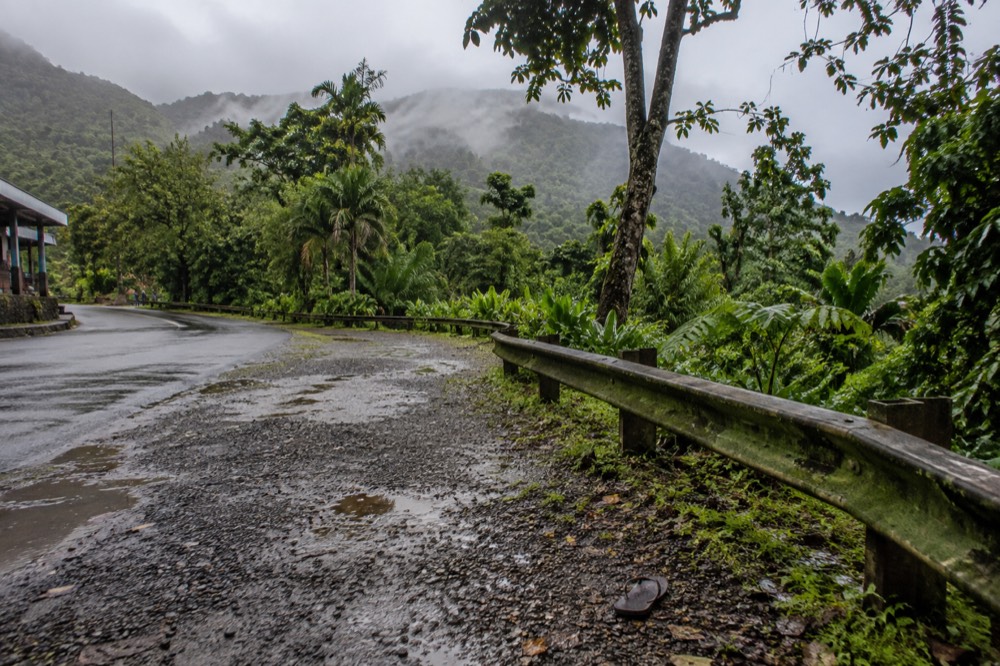
This is the failure mode nobody plans for. Getting a ride from San Juan to the forest is usually possible; the app will take you up PR-191. The problem is the return. The Forest Service alert on unauthorized transport is explicit that the recreational corridor and El Portal are not pick-up points for rideshare apps, and that the apps force visitors to walk long distances to reach a valid pick-up point. Picture doing that downhill along a mountain road with no shoulder, in rain, after a full day of hiking.
Taxis are a partial fix, but only partially. The Forest Service urges visitors to use authorized transportation, which includes private and rented vehicles, cabs with permits to operate in the forest, and authorized tourism and transportation providers. The agency's own wording is blunt: there are cab drivers who can operate in the forest, but not all of them have a permit, so ask before hiring. If you cannot confirm the return leg before you go up the mountain, you are gambling.
The Forest Service also publishes a directory of authorized and permitted tour operators, the only official list of who holds a permit to guide in the forest. It changes, so check it rather than trusting a count you read somewhere, but it is the reference point for who is legitimately operating.
This is the single strongest honest argument for a guided tour with transport, and it applies even to confident independent travelers. One format worth a look is the 3-hour El Yunque Rainforest: Waterfalls, Waterslides and Rope-swing tour, rated 4.9 across 1,644 reviews and from $40, where you meet the guide on site, an optional paid shuttle is available, and free cancellation applies, so the return leg is never your problem. Its confirmed stops include Luquillo Beach and the Luquillo Kiosks, so the day extends beyond the forest road.
That format is not the only way to hand off the ride, though it is one of the cheapest with pickup included. If you already know you want the transportation question answered permanently, the same operator family offers a box below that walks through the booking decision, including the cancellation terms, before you commit to a date.
The rideshare problem also explains why the meet-the-guide tours exist. Several operators on the roster sell a no-transportation version: you drive to a meeting point near the forest, and the operator takes over from there with a permitted vehicle and a guide. It is a middle path for people who have a car but not a plan.
What A Guided Tour From San Juan Actually Gets You
A tour with transport provides a permitted vehicle, a legal drop-off and pick-up, parking solved by the operator, and a guide who knows which trails and sites are open that day. It does not provide special entry, priority access or a reservation, because none of those things exist at El Yunque. The value is entirely in logistics and local knowledge.
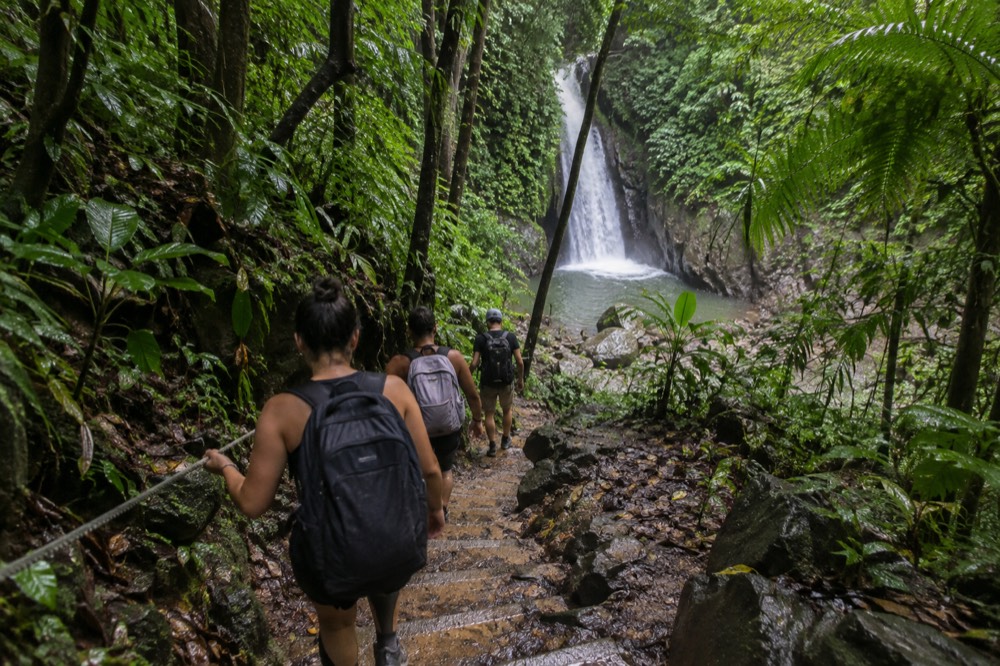
Trail knowledge matters more at El Yunque than at most destinations, and this is not a sales line. The forest's trail status has been in flux for years: La Mina Trail and Big Tree Trail, the two routes to the famous La Mina Falls, are closed, and El Yunque Peak Trail is open only as far as Los Picachos. These statuses change with construction and storm recovery, and a guide who works the corridor weekly knows what is actually walkable today. A self-driver relying on a blog post from two years ago may drive an hour east to find a trailhead barrier. The Forest Service's alerts page is the official source, and checking it is good practice either way.
The parking point deserves its own sentence. Because capacity is managed through designated parking, a permitted tour vehicle with a planned drop-off converts the forest's scarcest resource, a legal parking spot, into the operator's problem rather than yours. On a busy Sunday that is the difference between a day in the forest and a day circling PR-191. Other pages covering the same trip are gathered on El Yunque National Forest Tours.
For a full-day format with everything handled, the Let me show you MY Island Tour With visit to El Yunque runs 6 to 7 hours from $89, rated 4.9 across 1,655 reviews, with hotel pickup and free cancellation, and confirmed stops at La Coca Falls, Yokahú Tower and Piñones. It is a sightseeing-forward option for travelers who want the corridor's highlights without hiking logistics.
If you are still deciding whether a guided day is worth it at all, our are El Yunque tours worth it post works through the value question honestly, including what tours cannot fix.
What Does It Cost To Get To El Yunque From San Juan?
The forest itself costs nothing to enter, so your real costs are transport and time. Tour prices on our roster run from $25 for a meet-the-guide waterslide tour to $184 for a 12-hour bio bay combo with transport, with most full-transport tours clustering between $50 and $100 per person. El Portal adds $8 if you visit the visitor center.
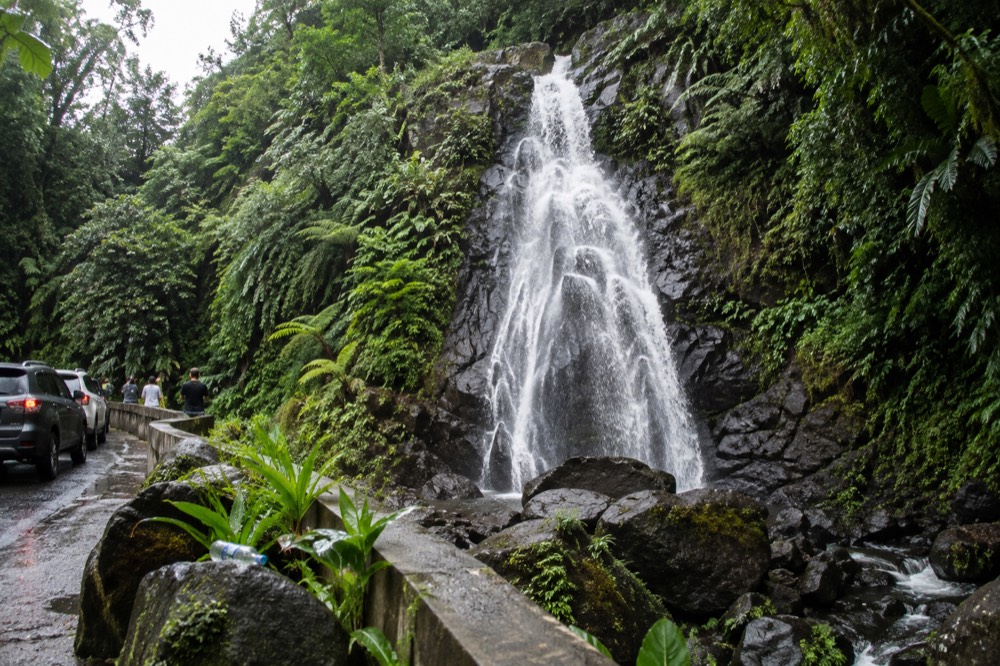
Self-driving costs are mostly the rental car and fuel, which vary by season and booking. The tour side is easier to compare, because the roster holds verified prices. The table below shows how the main formats stack up.
| Tour format | Example from the roster | Price from | Duration | Transport included |
|---|---|---|---|---|
| Meet-the-guide waterslide | Half-Day Waterslide Excursion (No Transportation) | $29 | 3.5 hours | No, you drive to the meeting point |
| Meet-the-guide, budget | Half-Day Yunque Rainforest Waterslide & rope swing | $25 | 4 hours | No |
| Full transport, waterslides | From San Juan: El Yunque Rainforest and Waterslide | $58 | 7 hours | Yes, from San Juan |
| Small-group with pickup | Small-Group El Yunque Waterfall & Waterslides | $63 | 4 to 5 hours | Yes, hotel pickup |
| Sightseeing with pickup | El Yunque Rainforest Tour with San Juan Transportation | $89 | 5 hours | Yes, hotel pickup |
| Forest plus bio bay combo | Two-in-One Day Trip: El Yunque and Bio Bay | $183.98 | 12 hours | Yes, hotel pickup |
Two patterns stand out. First, the meet-the-guide tours are dramatically cheaper, sometimes a third of the price, because you are paying for the guide and not the ride; they only make sense with a car. Second, the big jump in price comes with the bio bay combos, which run 12 hours and add an evening kayak at Laguna Grande in Fajardo. That is a full day and then some, and it is priced accordingly.
If you are building a budget for the whole trip, our what El Yunque tours cost guide breaks down pricing by category, including the zipline, ATV and horseback options that operate around the forest's edges. For the swimming question, which affects what you pack and which tour you pick, see can you swim at El Yunque.
One cost that does not exist: the corridor reservation fee you may see referenced on older pages. Entry is free, and the only in-forest charge is El Portal's $8. Do not budget for a reservation, and do not buy one from anyone selling it.
Where Should You Stay If You Want To Be Closer To The Forest?
Río Grande and Luquillo are the two towns that put you beside the forest instead of commuting to it, and Río Grande contains the corridor entrance itself. The Wyndham Grand Rio Mar in Río Grande, the closest large resort to El Yunque, completed a renovation of more than $60 million and held its official reopening ceremony in February 2026.
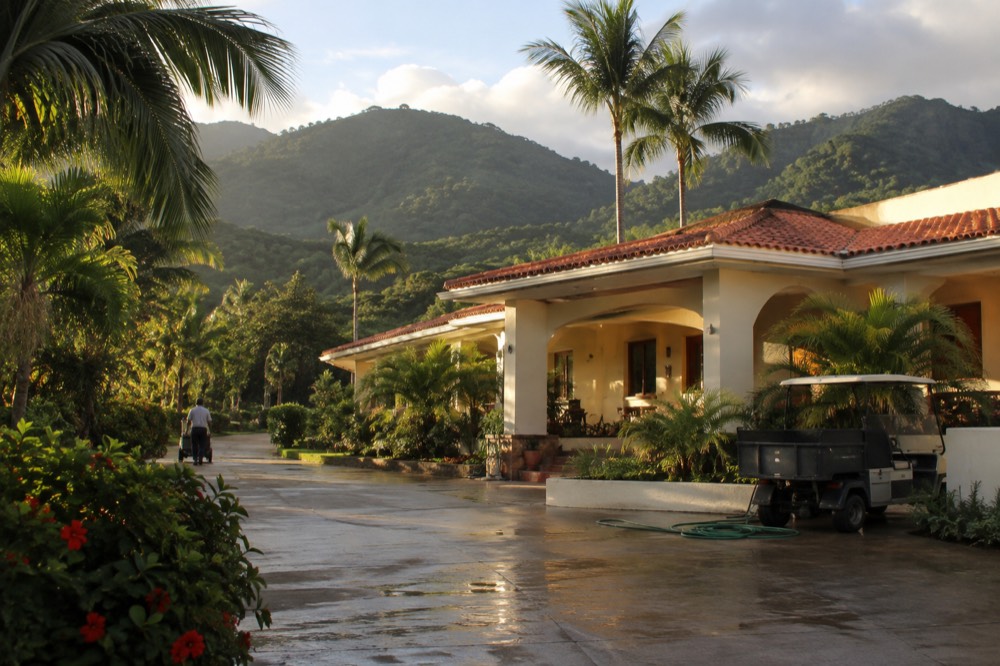
Staying east of San Juan changes the shape of the day. You can be at the corridor entrance shortly after the 8:00 a.m. opening, ahead of the San Juan traffic and the tour vans, and the parking math improves when you are not arriving at mid-morning peak. Luquillo adds the beach and the kiosks to the equation, a food scene that generates around 840 direct jobs and an estimated $41.4 million a year for the island's eastern economy, drawing roughly a million visitors annually by Tourism Company figures. Our Luquillo kiosks and beach guide covers that side of a stay.
The trade-off is simple: hotels near the forest are fewer and more resort-priced than San Juan's inventory, and dining options thin out after dark. Many visitors split the difference, staying in San Juan and booking tours with hotel pickup, which converts the commute from a chore into someone else's drive. The El Yunque Rainforest Tour with San Juan Transportation, rated 4.9 across 369 reviews and from $89 with hotel pickup and free cancellation, is a straightforward example of the format.
For a full comparison of bases, including Fajardo for the bio bay crowd, the where to stay near El Yunque guide has the detail. The short version: Río Grande for the corridor, Luquillo for beach plus forest, San Juan for everything else.
How Many Hours Do You Need For The Trip?
Plan on a half day as the realistic minimum and a full day as the comfortable default. Tours from San Juan run 3 to 8 hours, the corridor is open 8:00 a.m. to 5:00 p.m. with exit expected by 4:45 p.m., and combining the forest with Luquillo beach or a bio bay evening pushes the day to 6 or 12 hours.
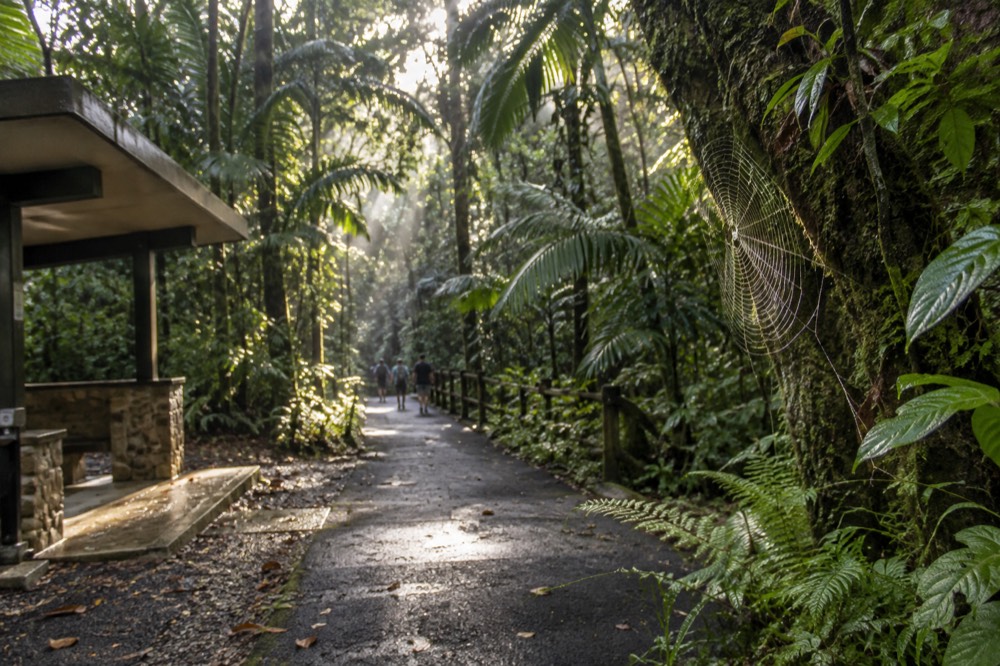
The corridor's hours are the hard boundary. Whatever you plan, the forest closes at 5:00 p.m. sharp and the Forest Service asks visitors to start leaving 15 minutes before that. A self-driver leaving San Juan at noon gets a compressed afternoon; a tour with pickup handles the schedule for you, which is why most run early-morning departures. Our how many hours do you need in El Yunque post covers the timing question in depth.
Cruise passengers face the tightest version of this. Puerto Rico recorded 1,360,937 cruise passengers and 515 ship calls in the November 2025 to April 2026 season, a 43 percent jump over the season before, and San Juan's cruise infrastructure is expanding further with roughly $45 million invested across the two Panamericano piers. More ships mean more corridor crowding on port days, which strengthens the case for a tour that manages timing and parking. Our El Yunque cruise excursions guide is built for that reader.
Weather is the other schedule factor. Annual rainfall in the forest ranges from roughly 96 inches at lower elevations to over 157 inches at higher stations, and flash floods can occur year-round, more often in the rainy months of April and May. Rain is a feature of this destination, not a reason to cancel; see El Yunque in the rain for how to plan around it. What should change your plans is a flash flood warning, when rising water can claim victims in less than a minute. Guides watch the forecasts; self-drivers need to do the same.
Before you lock anything in, here again are the three formats that best cover the journey east: a meet-the-guide budget day, a full-transport waterslide tour, and the 12-hour forest-plus-bio-bay combination.
Common Questions About Getting To El Yunque From San Juan
How far is El Yunque from San Juan?
No official source publishes a distance or drive time between San Juan and El Yunque, so any specific figure you read is an estimate. The main corridor is on PR-191 North in Río Grande, on the island's east side, and tours from San Juan that include transport run 3 to 8 hours door to door, with bio bay combos stretching to 12.
Do you need a reservation to enter El Yunque?
No. Entrance to the PR-191 North recreational corridor is free and requires no reservation, with hours of 8:00 a.m. to 5:00 p.m. The old timed-entry reservation system no longer exists. The only ticketed item is El Portal Visitor Center, $8 for adults 16 and over, free under 15.
Can you take an Uber or rideshare to El Yunque?
You can usually get a ride to the forest, but rideshare apps cannot pick you up at the recreational corridor or El Portal, per a Forest Service alert, and visitors have been forced to walk long distances to a valid pick-up point. Not every taxi holds a forest permit either; the Forest Service says to ask before hiring.
Is it better to drive or take a tour from San Juan?
Driving works well if you have a rental car and arrive early, since entry is free and parking is the main constraint. A tour is the better choice without a car, because it provides a permitted vehicle, a legal drop-off and pick-up, and a guide who knows which trails are open that day. A tour does not grant special entry; there is nothing to skip.
What time does El Yunque close?
The recreational corridor is open 8:00 a.m. to 5:00 p.m., and the Forest Service advises visitors to begin exiting at least 15 minutes before closing. El Portal Visitor Center is open daily 8:00 a.m. to 4:00 p.m., with an annual maintenance closure each September.
Where do you enter El Yunque from San Juan?
Most visitors enter from the north via PR-191 North in Río Grande, turning off the eastern expressway at Palmer. There are four access corridors in total, PR-191 North, PR-988 at Luquillo, PR-186 at El Toro and PR-191 South at Naguabo, and none requires a reservation. The north and south halves of PR-191 do not connect through the forest.