Where To Stay Near El Yunque: Hotels In Luquillo, Puerto Rico And Forest Base Towns
Choosing a base near El Yunque changes your morning, your parking plan and your tour pickup options. This guide compares Rio Grande, Luquillo and Fajardo using the Forest Service's own access and safety rules, not travel-blog drive times.
Short answer
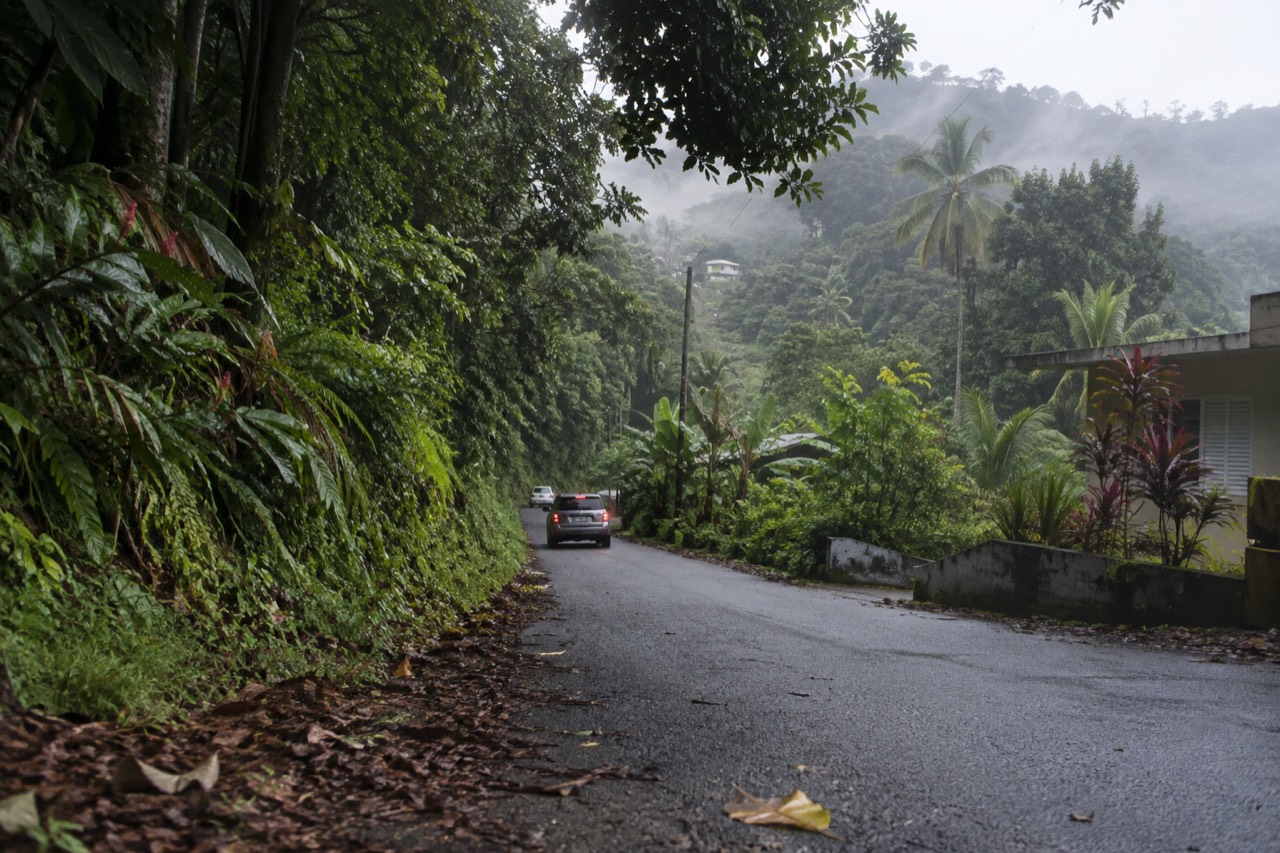
Most visitors should base in Rio Grande or Luquillo, the two towns beside the forest's main PR-191 North and PR-988 entrances. Entry is free and no reservation is required, but parking is limited and enforcement is real, so an early start close to the forest matters. Fajardo works well for a bio bay combo.
Which Towns Are Closest To El Yunque National Forest?
Rio Grande and Luquillo are the two most practical base towns because they sit beside the forest's two busiest entrances, PR-191 North and PR-988. The forest's boundary also touches Fajardo, Naguabo, Ceiba, Canóvanas, Las Piedras, and Juncos, but those municipalities have fewer direct routes into the main recreation corridor.
The USDA Forest Service says El Yunque extends through eight municipalities in northeastern Puerto Rico. For a visitor whose main goal is the La Mina Recreation Area corridor on PR-191 North, Rio Grande puts you at the closest practical entry. For the Road 988 side, which leads down to the Río Mameyes and Angelito Trail, Luquillo is the natural choice.
That core geographic fact drives almost every lodging decision on this site: before you compare room styles, look at which forest entrance your day will actually use, because that choice shapes which El Yunque National Forest Tours departure points and pickup options make sense. Some guests arrive imagining one uniform "forest gate" with hotels lined up beside it, but the forest is accessed through four separate corridors, and only two are convenient for a standard day trip.
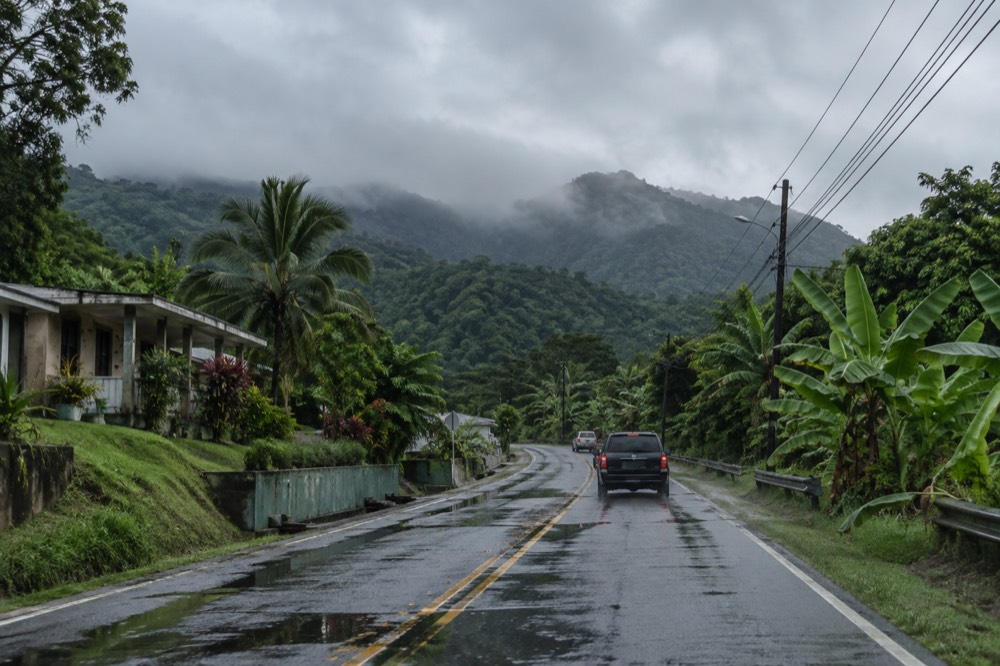
The PR-191 North corridor is the main recreational spine, with El Portal visitor center, La Coca Falls, Yokahú Tower and many trailheads along its length. The Road 988 corridor enters from Luquillo and connects to PR-191 just above El Portal.
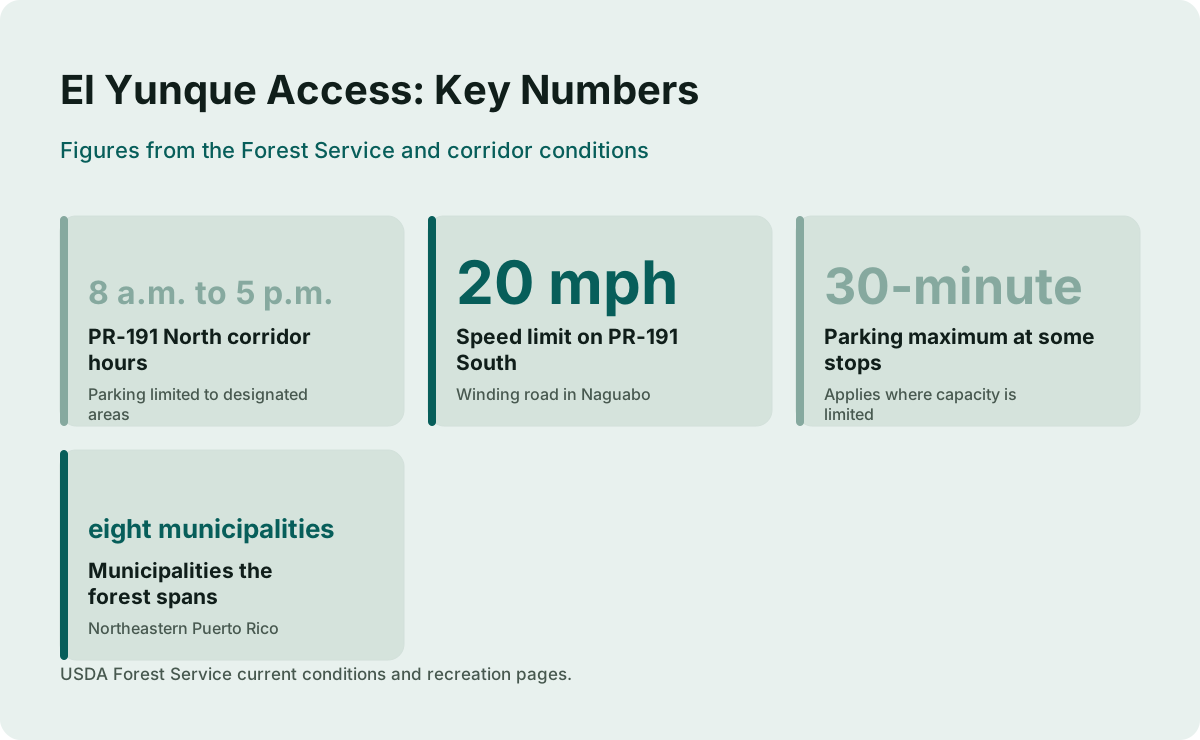
| Corridor | Route | Reservation | Current condition note |
|---|---|---|---|
| PR-191 North (La Mina Recreation Corridor) | PR-191 in Río Grande | Free, no reservation | Main corridor; hours 8 a.m. to 5 p.m.; parking limited to designated areas |
| PR-988 (Luquillo entrance) | Road 988 | Free, no reservation | Construction works on the road, drive carefully; connects to PR-191 above El Portal |
| PR-186 (El Toro Scenic Byway) | Road 186 | Free, no reservation | Poor road conditions, drive carefully; home of the Río Espíritu Santo watershed |
| PR-191 South (Naguabo) | Road 191 South | Free, no reservation | Not accessible from the north side due to a mid-1970s landslide; winding road with 20 mph limit |
Check the Forest Service current conditions page for the latest on all four corridors.
Is Rio Grande Or Luquillo A Better Base For El Yunque?
Rio Grande wins for direct PR-191 North access to El Portal, La Coca Falls, Yokahú Tower and most of the main trailheads. Luquillo wins for the Road 988 entrance, Angelito Trail and the Río Mameyes swimming spots, plus the beach and kiosks after the forest. Many visitors split the difference and stay in Luquillo for the beach-plus-forest combination.
The PR-191 North corridor is where most of the named forest sites sit. If your plan is a classic first-visit loop of El Portal, La Coca Falls, Yokahú Tower and a drive uphill to the Mount Britton trailhead, Rio Grande gets you to the entrance with the least backtracking. The trade-off is that Rio Grande is quieter and less beach-oriented than Luquillo.
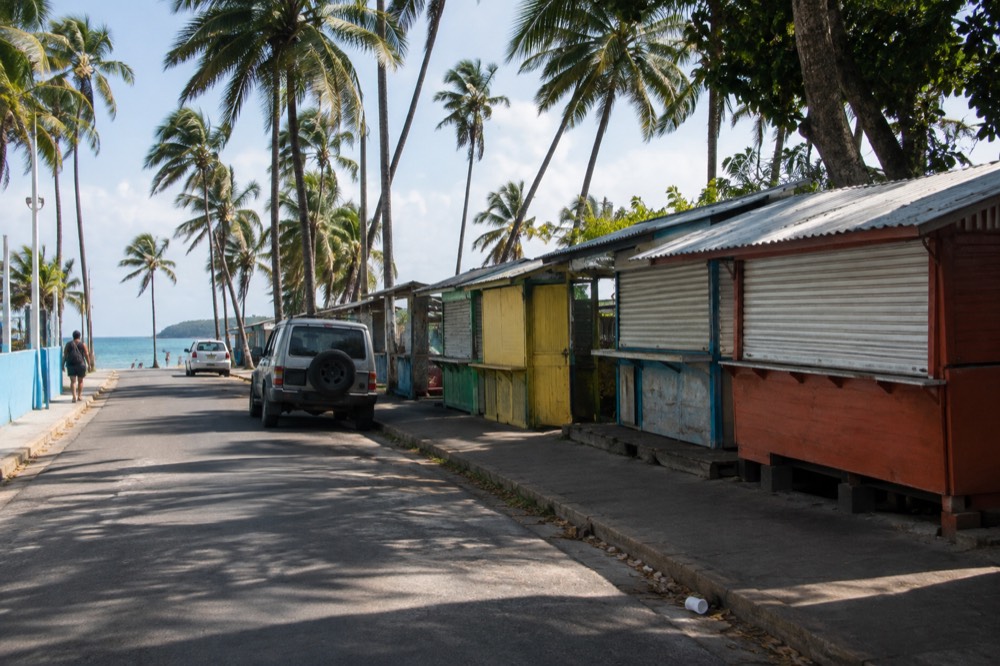
Staying in Luquillo puts you closer to the Road 988 side, which drops quickly to the Angelito Trail and the federally designated Wild and Scenic Río Mameyes. After a forest morning, you can walk to the Luquillo kiosks or Balneario La Monserrate for the afternoon. That combination is why many tours list Luquillo Beach and the kiosks as confirmed stops.
The table below lays out the two practical choices side by side. It is less about which town is better overall and more about which entrance matches the day you actually want to have.
| Base town | Nearest forest entrance | Main forest stops nearby | Best for | Main watch-out |
|---|---|---|---|---|
| Rio Grande | PR-191 North | El Portal, La Coca Falls, Yokahú Tower, Mount Britton trailhead | Classic first-visit loop, no beach requirement | Parking limits and 30-minute maximums at some stops |
| Luquillo | Road 988 | Angelito Trail, Río Mameyes, Puente Roto, Quebrada Grande | Forest plus beach, kiosks and water access | Road construction on the 988 side; check before driving |
Both bases keep you inside the practical early-start radius. The forest opens its recreational corridor at 8:00 a.m., and parking is permitted only in designated areas. The Forest Service says visitor capacity is managed because of parking limits, so a base close enough to arrive before the lots fill is a real advantage.
These three tours cover the range of decisions a near-forest base makes easier. One is a small-group waterslide day that suits the Luquillo side. Another adds photos and transport for a full forest day. The third pairs a forest hike with ziplining for travelers who want an active day without driving themselves. For the broader picture of tour departures from the city, see the guide to El Yunque tours from San Juan.
What Does Staying Near El Yunque Change About Tour Pickups?
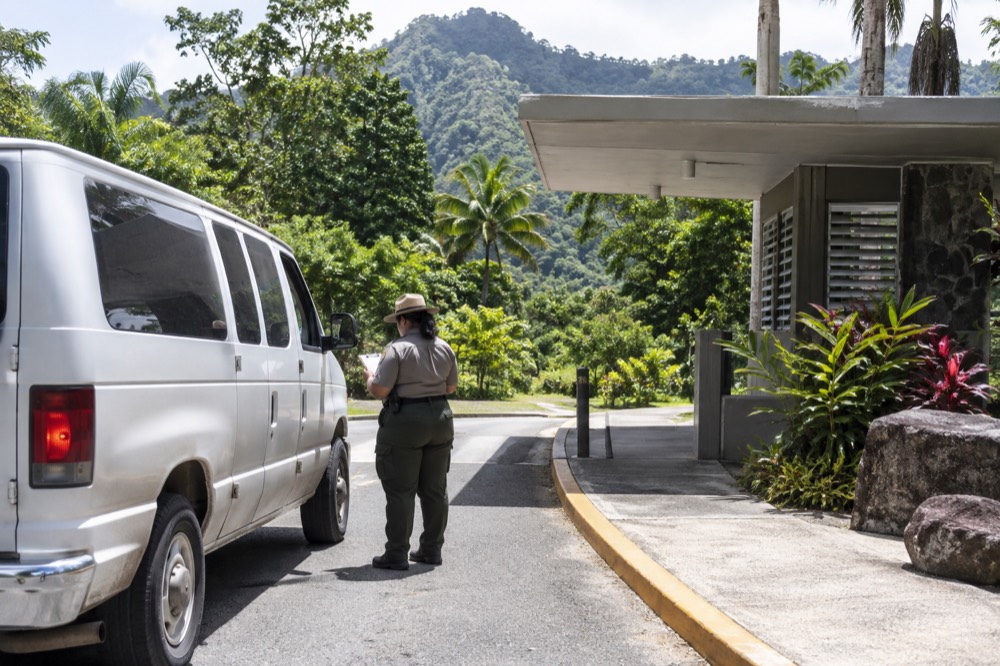
A near-forest base removes the biggest self-drive risk: rideshare apps cannot legally pick up at the recreational corridor or El Portal. The Forest Service advises using permitted taxis, authorized tour providers, or a private or rental vehicle. If you stay far from the forest without a car, you could be left on foot at the end of the day.
The official alert titled "Risks of using unauthorized transport" is blunt. The corridor and El Portal visitor center are not authorized pick-up points for ride-hailing apps, and visitors who try to use them have been forced to walk long distances to reach a valid pick-up point. That fact should directly shape where you book a room. If you do not plan to drive, pick a lodging in a town where your tour operator offers legal pickup, or stay close enough that a permitted taxi can reach you.
The Forest Service publishes a directory of authorized and permitted tour operators. Not every taxi driver holds a forest permit, and the official guidance tells visitors to ask before hiring any transportation service. A guided tour does not buy you past any reservation line, because there is no reservation line anymore, but it does buy a permitted vehicle, a legal drop-off and pickup, and someone else solving the parking-capacity problem.
This is the part most visitors underestimate. The forest itself is not difficult to enter: the PR-191 North corridor is free and requires no reservation. The friction comes at the exit, especially in the afternoon when the 5:00 p.m. closing time approaches and everyone tries to leave at once. A permitted tour vehicle waiting at a designated spot is a much cleaner end to the day than a long walk down PR-191 past a line of no-parking signs. Read the Forest Service alert on unauthorized transport before you commit to a lodging without a car.
Where Should You Stay If You Want To Swim Or Do Waterslides?
For legal swimming in the forest, the Luquillo side is the most useful base: Angelito Trail leads to the Río Mameyes and Las Damas Pool, and Puente Roto and Quebrada Grande are on that side. Juan Diego Falls on PR-191 also allows wading. Las Paylas waterslides are on private land outside the forest, not a Forest Service swimming area.
The Forest Service lists swimming as a recreation opportunity at specific sites: Juan Diego Creek, Angelito Trail and the Río Mameyes, Puente Roto, Quebrada Grande, Quebrada Sonadora, the Río Espíritu Santo Observation Point, and Río Sabana Recreation Area. Every one of those carries a flash-flood warning, and the official safety page says a sudden surge can claim victims in less than one minute. Check water levels and weather before entering, and pair any river plan with the Forest Service flooding safety page.
The swimming opportunities below are the ones the Forest Service itself publishes. They are not evenly spread around the forest, which is exactly why the Luquillo and Rio Grande base decision matters. If swimming is a core part of your plan, a Luquillo base puts several of these on the same side of the forest as your room.
| Swimming opportunity | Side of forest | Water activities listed by Forest Service | Parking note |
|---|---|---|---|
| Juan Diego Creek | PR-191 North | Natural pool and waterfall, wading | 30-minute maximum due to limited capacity |
| Angelito Trail / Las Damas Pool and Río Mameyes | Road 988, Luquillo side | Swimming | Standard flash-flood warning; lock vehicles |
| Puente Roto Recreation Area | Road 988, Luquillo side | Swimming | Road under construction; drive carefully |
| Quebrada Grande Recreation Area | Luquillo side | Swimming | Poor road conditions; drive carefully |
| Quebrada Sonadora | Forest-managed site | Swimming | Check current recreation status |
| Río Espíritu Santo Observation Point | El Toro side | Swimming | Check water levels and flash flood reports |
| Río Sabana Recreation Area | Naguabo side | Swimming | Accessed from the PR-191 South corridor |
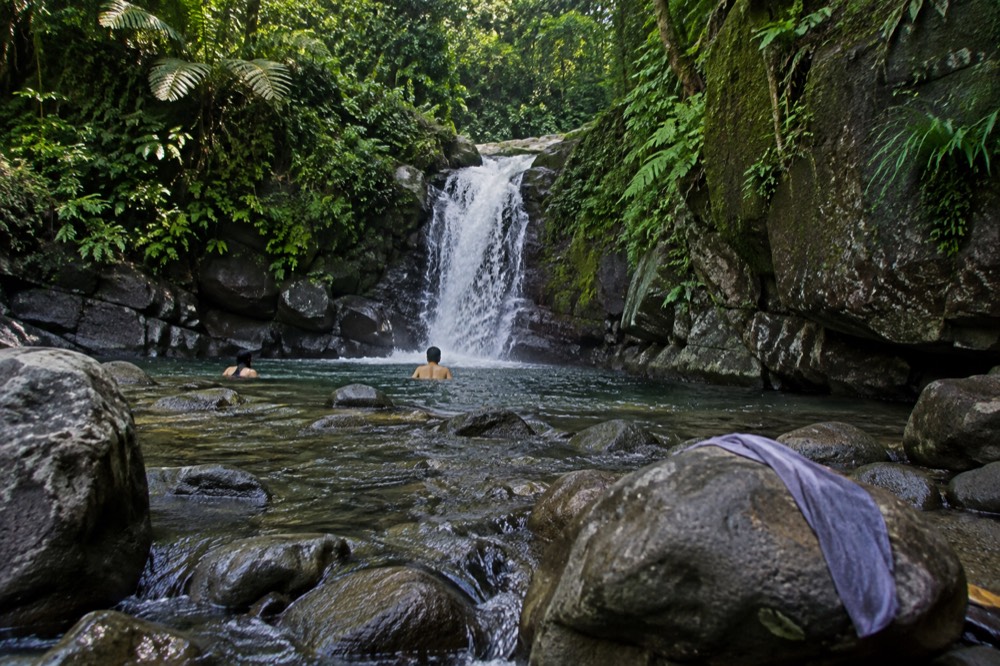
This tour is built around the waterslide and river experience on the Luquillo side, which is why a base near Luquillo or Rio Grande shortens the morning. Check the live listing for the current meeting point and whether pickup is included from your hotel. For a closer look at the swimming access points on the Luquillo side, read the guide to Juan Diego Falls and Angelito Trail.
How Do The Luquillo Kiosks And Beach Fit Into A Base Decision?
The Luquillo kiosks and Balneario La Monserrate are close enough to the forest's Luquillo entrance that a beach-and-forest day becomes simple. The kiosks draw around one million visitors a year and support about 840 direct jobs, and the beach is a common confirmed stop on forest-plus-beach tours.
If your ideal day is a morning on a trail or waterslide followed by an afternoon of local food and a swim in the Atlantic, staying in Luquillo makes the schedule easy. The kiosks sit near the beach and produce an estimated $41.4 million a year for the local economy, according to Metro Puerto Rico reporting.
Several tours on the roster list Luquillo Beach and the Luquillo Kiosks as confirmed stops, including the forest-and-beach combos. That matters when you choose a base: if your tour ends at the kiosks, you can walk back to a Luquillo hotel rather than riding an hour back toward San Juan.
The kiosk area works as a post-forest wind-down because it is a real eating and gathering place, not a single restaurant. Around one million people a year visit, and the economic footprint runs across the eastern towns. For a traveler comparing a Luquillo base with a generic chain hotel farther away, that density means you can finish the forest day and still have an evening within walking distance.
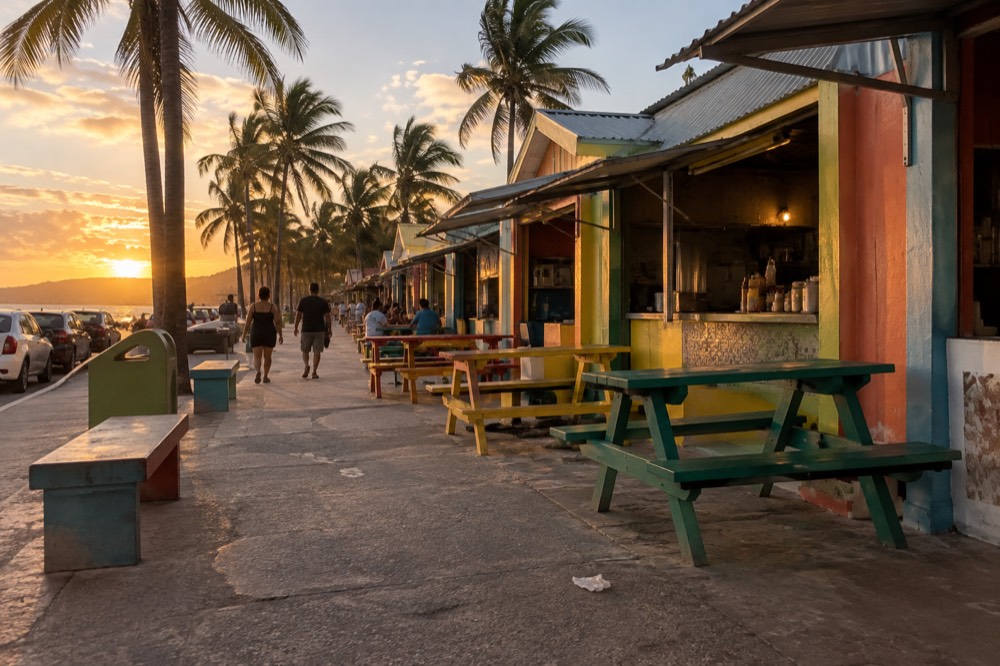
For a full forest day with photos included, this small-group tour pairs the main PR-191 stops with transport, so a Rio Grande base works well if pickup is along the route. More detail on the beach and kiosk area is in the guide to Luquillo kiosks and beach.
Is It Worth Staying In Fajardo For An El Yunque Plus Bio Bay Trip?
Fajardo is the practical base for a two-in-one day: the forest in daylight and Laguna Grande bio bay after dark. The forest's Road 186 corridor runs through the El Toro side, and Fajardo sits near the bio bay launch points. Combo tours run 12 hours and include transport, so an overnight in Fajardo removes the late drive back to San Juan.
The bio bay at Laguna Grande is one of three bioluminescent bays in Puerto Rico, which is rare globally. In 2025, sargassum inundation depleted oxygen and killed dinoflagellates for several months, but the bay's status changes with water conditions and season. If you are planning a combo, check what the operator's live listing says about current bay visibility rather than relying on an old review.
The El Toro Scenic Byway on Road 186 is one of the four forest entrances and carries a "poor road conditions, drive carefully" note from the Forest Service. That makes a permitted tour vehicle more attractive on the Fajardo side, since you avoid a winding forest road after dark.
Fajardo also changes the character of the stay. Instead of the beach-kiosk afternoon that Luquillo offers, you get a quieter eastern base closer to the marina area and the bio bay launch points. The trade-off is that the main PR-191 North attractions require a longer approach through the El Toro corridor, and the road condition note means you should allow extra time and check the alerts page the night before.
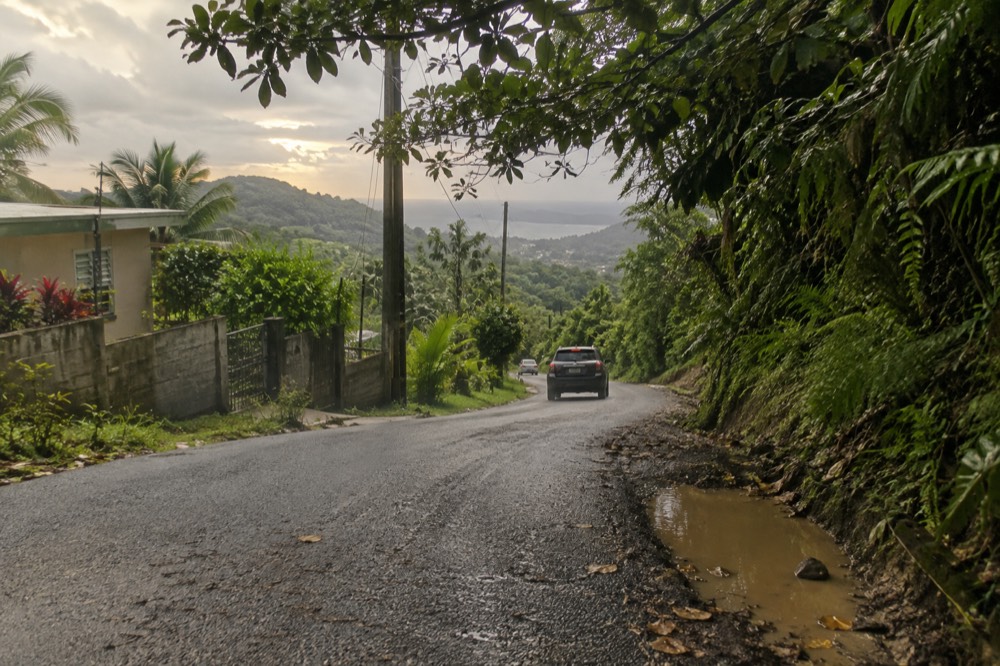
For an active full-day combo that pairs forest hiking with ziplining, this tour keeps you on the move; ask where its pickup point sits relative to Fajardo or Rio Grande. Compare the bio bay combos in the guide to El Yunque and bioluminescent bay tours.
What Should You Check About Your Lodging's Location And Access?
Before you book, confirm three things: which forest entrance your lodging is actually near, whether your tour can legally pick up there, and whether the property gives you a realistic way to reach the corridor before 8:00 a.m. without relying on rideshare. The forest's own alerts page is the authority for construction and closures that could change your approach.
The Road 988 Luquillo entrance has had construction works posted, and the El Toro Scenic Byway carries a poor-road-conditions warning. A hotel that looks close on a map may still sit on the wrong side of a closure or a one-day repaving event. The Forest Service keeps a current conditions page and an alerts page for exactly this. Check the Forest Service alerts page before you commit to a nonrefundable room.
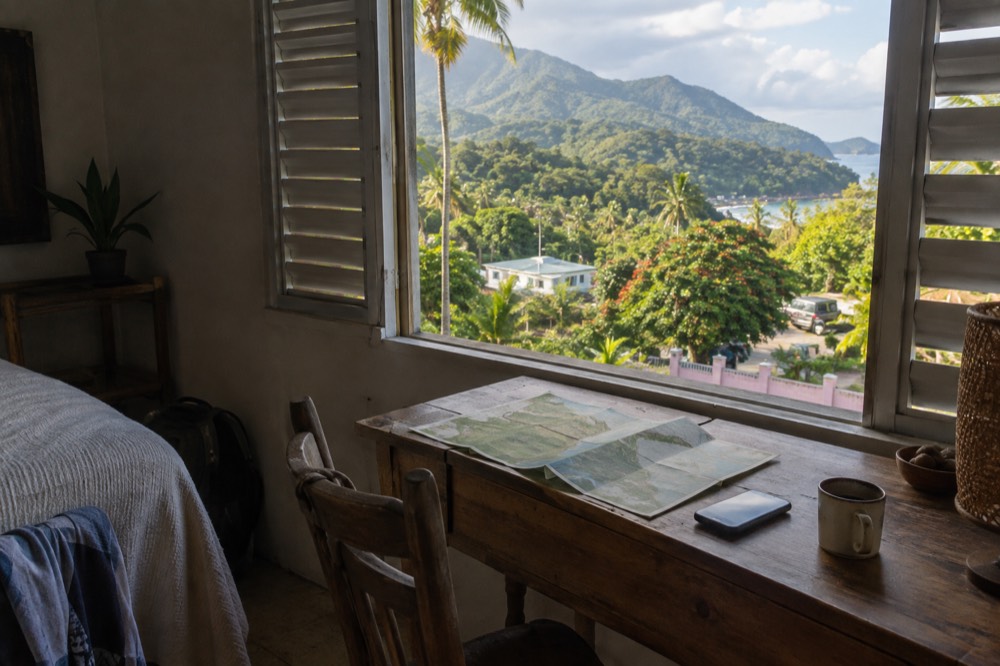
Also confirm the property's own wording about parking. On the forest side, parking is permitted only in designated areas, and enforcement is real: La Coca Falls warns that violators will be ticketed, and Yokahú Tower and Juan Diego both have a 30-minute maximum. If your lodging advertises "easy parking at the trailhead," treat that as something to verify against the official page.
The most common mistake is booking a room in a town that looks close on a map but sits on the wrong side of the forest for that day's route. The PR-191 South corridor in Naguabo is not accessible from the north side due to the mid-1970s landslide, for example, so a Naguabo room does not simply plug into a Rio Grande itinerary. Match the town to the corridor you will actually drive or ride.
What Does The El Yunque Area's Lodging Scene Look Like Right Now?
The closest large resort is the Wyndham Grand Rio Mar in Rio Grande, which reopened in February 2026 after a renovation its owner put at more than $60 million. Beyond that headline, the lodging landscape is mostly smaller hotels, guesthouses and vacation rentals spread across Rio Grande, Luquillo and Fajardo rather than a dense resort strip at the forest gate.
The reopening of the Wyndham Grand Rio Mar is worth noting because it restored the largest full-service option near the forest's main PR-191 North entrance. The project created more than 190 jobs and more than 70 positions at Rio Mar, according to owner LionGrove, and it gives Rio Grande a big-property anchor that had been missing since the 2017 hurricane rebuilds.
For most travelers, the better fit is a smaller base in Luquillo for the beach-kiosk combination or in Fajardo for the bio bay overnight. Do not expect a wall of chain hotels at the forest boundary; this is not a national-park gateway town with a built-up entrance village. That is exactly why choosing the right town matters more than choosing a specific hotel brand.
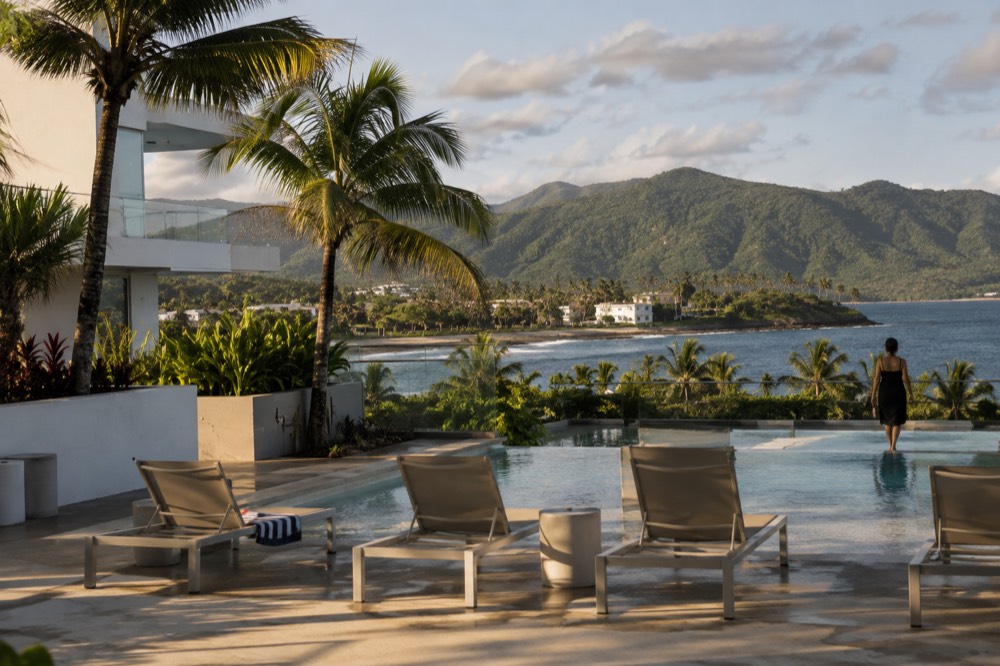
The geographic facts above are the ones that most hotel listings will not tell you. A room can photograph beautifully and still leave you relying on a ride-hail app at a forest entrance that forbids it. Start with the corridor and work backward to the property.
These three tours bracket the main reasons people stay near the forest: a waterslide and river day, a photo-friendly full island loop with forest stops, and an active hike-plus-zipline combination. Each one's live listing shows current pickup points, cancellation terms, and whether the operator includes hotel transport.
Common Questions About Where To Stay Near El Yunque
Should I stay in San Juan or near El Yunque?
If your priority is the forest, staying near Rio Grande, Luquillo or Fajardo removes the early drive and parking pressure. San Juan works for a single day trip if a tour includes pickup, but you may spend more of the day in transit and cannot rely on rideshare for the forest return.
Do hotels in Luquillo include El Yunque tours?
Most lodging does not bundle tours. You book a tour separately, and the operator's listing will state whether pickup from Luquillo hotels is included or whether you meet at a central point. Check the live listing before booking.
Is there a resort at the El Yunque entrance?
There is no resort directly at the forest gate. The closest large resort is the Wyndham Grand Rio Mar in Rio Grande, several minutes from the PR-191 North corridor. Most other options are smaller hotels and rentals in Luquillo and Fajardo.
Can I stay overnight inside El Yunque National Forest?
No. The Forest Service currently lists all campsites as closed and dispersed camping as not available until further notice. Overnight stays are outside the forest in nearby towns.
What is the best town for a first visit to El Yunque?
Rio Grande is the most direct base for the PR-191 North corridor and its main stops. Luquillo is better if you want to combine the forest with the beach and kiosks. Both are practical; the choice depends on your itinerary.