Is El Yunque Worth Visiting?
An honest look at whether El Yunque National Forest deserves a day of your Puerto Rico trip: what it costs, what you can actually do there, and when a guided tour is worth it.
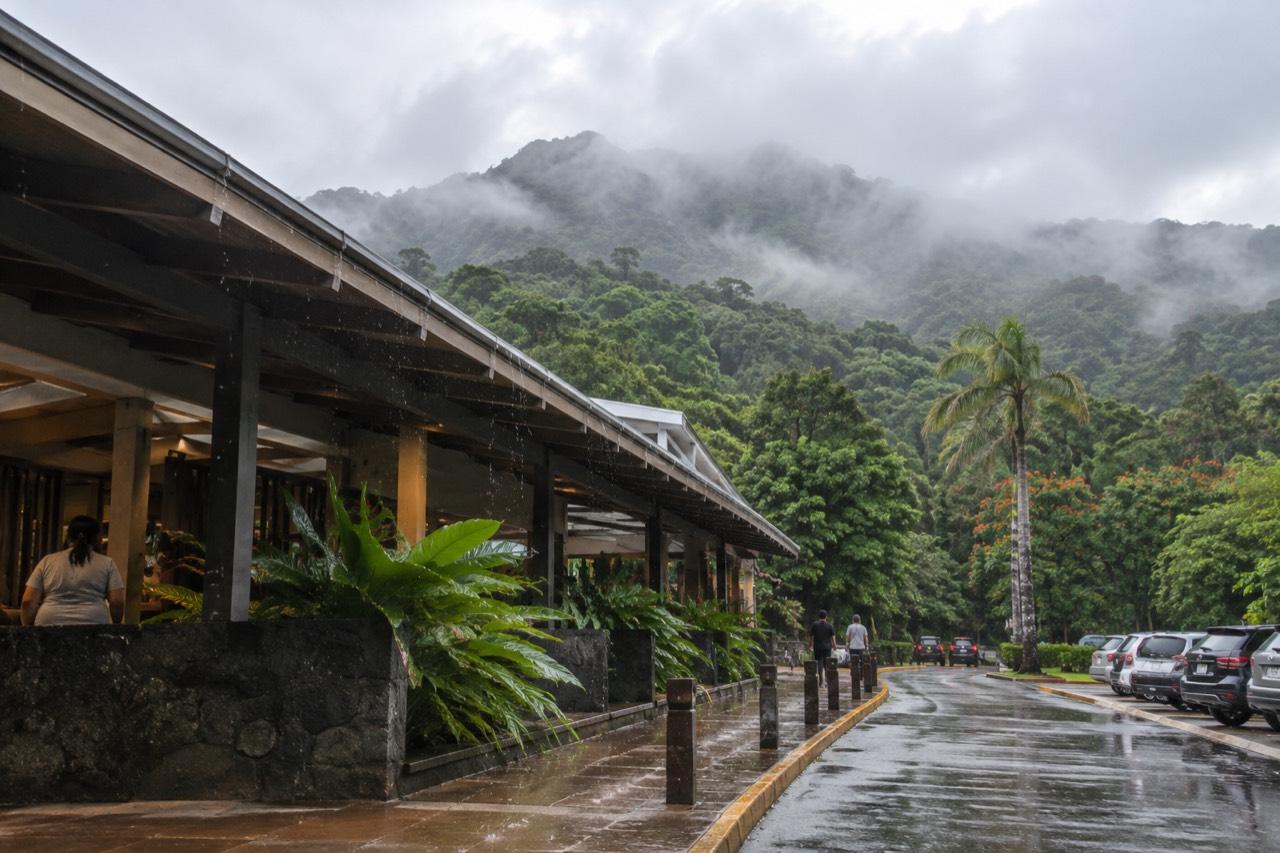
Is El Yunque Worth Visiting?
Is El Yunque Worth Visiting?
Yes, for most travelers El Yunque is worth visiting, and it earns the day on three facts: it is the only tropical rainforest within the national forest system, entry to the PR-191 North recreational corridor is free with no reservation required, and the forest is small enough that a half or full day covers its main stops. The honest caveats are parking limits, trail closures, and rain that you should plan for rather than against.
That is the short answer. The longer one depends on what kind of traveler you are, because El Yunque rewards some itineraries far more than others. If your image of Puerto Rico is beaches, Old San Juan and rum distilleries, the forest is the counterweight: a 28,516-acre wedge of the Luquillo Mountains where annual rainfall runs from roughly 96 inches at lower elevations to over 169 inches at the highest stations, and where the road up PR-191 was largely built by the Civilian Conservation Corps in the 1940s.
The forest extends through eight municipalities, Río Grande, Luquillo, Canóvanas, Fajardo, Naguabo, Ceiba, Las Piedras and Juncos, and the Forest Service describes it as one of the smallest national forests in size yet one of the most biologically diverse. For a visitor deciding whether to carve out a day, that density is the argument: you do not need a week here, you need a well-planned day.
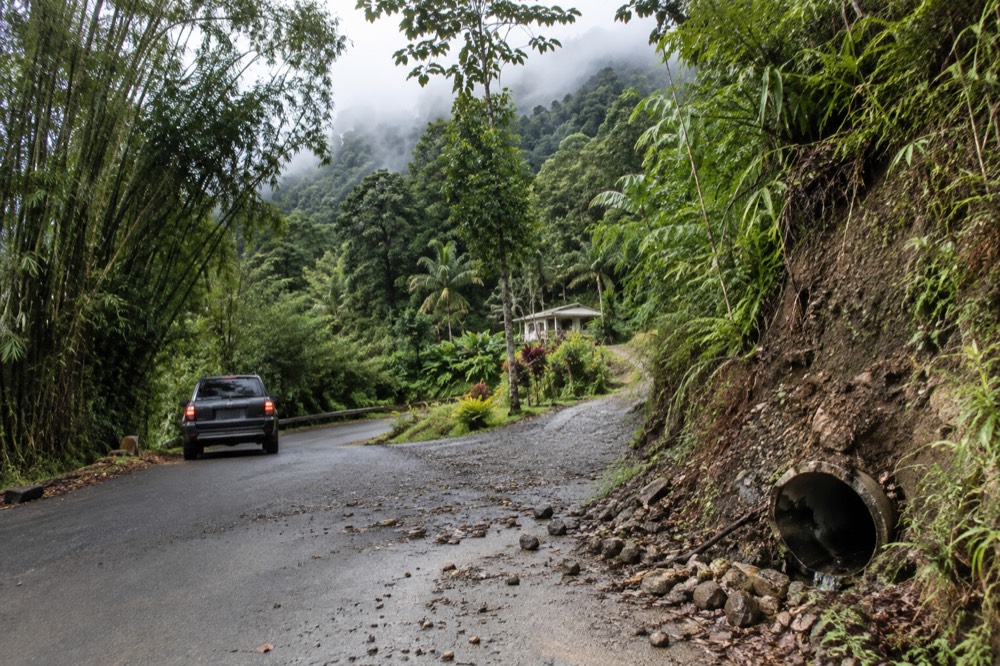
The question is also more common than you might think, because El Yunque asks for something most Puerto Rico stops do not: a car, a plan and a tolerance for weather. This page works through what the forest actually delivers, what it costs, what you can and cannot do in the water, and when a guided tour earns its price. If you want the short version of that last part, the comparison below covers three of the strongest options on the roster.
What Makes The Forest Worth A Full Day?
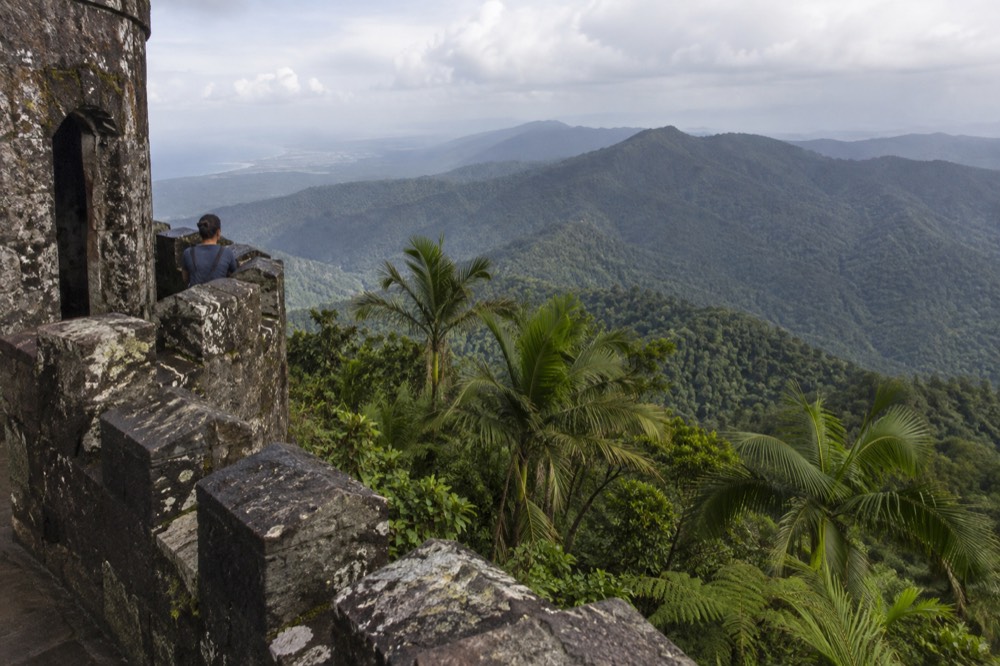
El Yunque earns a full day through variety rather than scale: a roadside waterfall at La Coca Falls, the 69-foot Yokahú Tower with its view toward the coast and the Virgin Islands, the El Portal visitor center with its Puerto Rican Parrot exhibit, and river access points on the Luquillo side, all packed into a compact mountain corridor with free entry. No other stop on a Puerto Rico itinerary puts you inside a tropical rainforest this quickly.
The forest supervisor, Keenan Adams, has described the special recreation area as welcoming a million visitors annually across its 360 acres, which tells you two things at once. One, this is a genuinely popular destination, not a hidden one. Two, the places people actually go are concentrated, which is why parking, not entry, is the real constraint. The Forest Service manages capacity because of parking limitations and ongoing construction, and parking is permitted only in designated areas.
What that means practically is that the experience rewards early arrival. Yokahú Tower carries a thirty-minute maximum parking rule, Juan Diego Falls the same, and at La Coca Falls the Forest Service warns that violators will be ticketed. A visitor who arrives mid-morning on a weekend may spend part of the day circling for a spot; a visitor who arrives near the 8:00 a.m. opening gets the forest more or less as advertised.
There is also an intangible case, and it is not fluff. The El Toro Wilderness, named after the forest's highest peak at 3,524 feet, is the only tropical wilderness in the U.S. National Forest System. Its habitat list includes the endangered Puerto Rican Parrot, the Puerto Rican Boa and five species of coquí, the tiny frogs whose call is the sound of the island at night. You will hear coquís on almost any visit. Whether you see a parrot is luck, but the forest's soundscape alone is something no beach day replicates.
For a fuller rundown of the individual stops and how they string together, the El Yunque map and main stops guide walks the corridor in order, and what not to miss in El Yunque covers the short list if you only have a morning.
What Does It Cost To Visit El Yunque?
Visiting El Yunque is free, with no reservation required, along the PR-191 North recreational corridor in Río Grande, open 8:00 a.m. to 5:00 p.m. The only charge is at El Portal de El Yunque Rainforest Center, which costs $8 for visitors 16 and over, is free for those under 15, and is $4 with an interagency pass. A proposed $4 La Mina Recreation Area permit remains undecided.
That fee situation is the single most misunderstood fact about El Yunque, and it matters for anyone budgeting a trip. A great deal of third-party content still tells readers to buy a timed-entry corridor reservation on recreation.gov. That facility no longer exists; the old reservation product returns an error, and a search of recreation.gov for El Yunque now surfaces exactly one bookable item, the El Portal visitor center ticket. The Forest Service's own current conditions page states plainly that entrance is free and no reservations are required, and all four access corridors, PR-191 North, PR-191 South in Naguabo, PR-988 in Luquillo and PR-186 as the El Toro Scenic Byway, are listed as not requiring a reservation.
The honest cost picture, then, looks like this:
| Cost item | What you pay today | Notes |
|---|---|---|
| Forest entry (PR-191 North corridor) | Free | No reservation required; hours 8:00 a.m. to 5:00 p.m. |
| El Portal Rainforest Center | $8 adults 16+, free under 15, $4 with interagency pass | Open 8 a.m. to 4 p.m.; closed Thanksgiving, Christmas, New Year's Day and Three Kings Day |
| Proposed La Mina fee | $4 per person, proposed only | Public comment closed August 4, 2026; no decision published, do not budget on it |
| Parking | Free, designated areas only | Capacity managed with Puerto Rico Police; 30-minute limits at Yokahú and Juan Diego |
| Guided tours | From $25 to $225 depending on format | Roster range across self-drive meet-guide trips to full-day combos |
The tour line in that table is where the decision gets interesting. A tour does not buy you past a reservation queue, because there is no queue to skip. What a tour buys is transport solved, and in El Yunque that is not a small thing. The Forest Service warns that the recreational corridor and El Portal are not authorized pick-up or drop-off points for rideshare apps, that visitors relying on them have been forced to walk long distances to a valid pick-up point, and that not every taxi driver holds a permit to operate in the forest. The Forest Service maintains a public directory of authorized tour operators and urges visitors to ask before hiring any transportation service.
So for a traveler without a rental car, a guided tour is often the difference between seeing the forest and not seeing it. The cost breakdown by tour type is covered in detail in what El Yunque tours cost, and the practicalities of reaching the forest are in getting to El Yunque from San Juan.
If you are leaning toward letting someone else handle the day, this is the point where it makes sense to look at options.
Can You Swim At El Yunque?
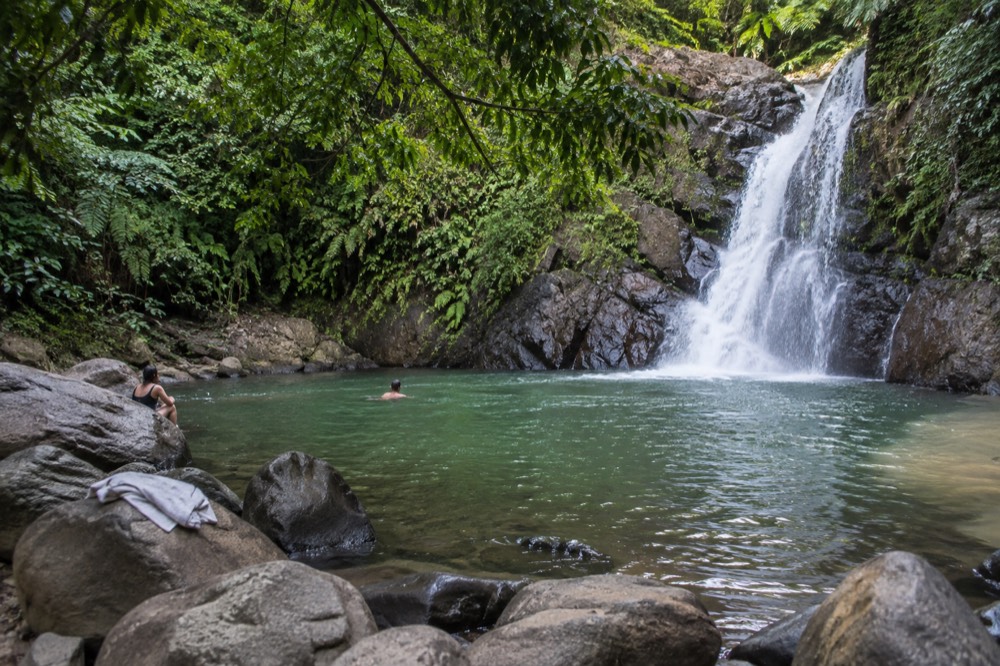
Swimming in El Yunque is real but narrower than tour marketing suggests: the Forest Service lists swimming at Juan Diego Falls, the Angelito Trail's Las Damas Pool on the Río Mameyes, Puente Roto, Quebrada Grande, Quebrada Sonadora, the Río Espíritu Santo Observation Point and the Río Sabana Recreation Area. La Coca Falls is viewing only, Baño Grande has been closed to swimmers since 1968, and both trails to La Mina Falls are closed.
That list deserves the flash-flood warning that accompanies it, because the Forest Service is blunt on this point: flash floods can occur throughout the year, are more frequent in the rainy months of April and May, and a sudden surge can claim victims in less than one minute, with flood water capable of reaching heights of 30 feet or more. The standard advice is to watch for heavy rain upstream, not just where you are standing, and to get to higher ground rather than try to outrun water in a car. The Río Mameyes even has a live USGS stream gauge publishing real-time discharge, so a careful swimmer can check the river before going in.
The other honesty point concerns the natural waterslides above Luquillo, known as Las Paylas. They are not in El Yunque National Forest. Point-tested against the Forest Service's own boundary and ownership GIS layers, the site returns zero features where La Coca Falls returns El Yunque National Forest. Las Paylas sits on private land in Luquillo, outside the forest boundary, with no Forest Service management, staffing or safety oversight, and access is arranged with the landowners on the spot. Several popular tours include it, and that is fine, but a visitor should know that portion of the day happens outside the national forest they read about.
If river time is the part of the day that appeals most, the El Yunque waterfall tours guide covers the water-focused options, and can you swim at El Yunque answers the swimming question in full.
What Are The Downsides?
The honest negatives are trail closures, crowding at the main stops, rain that is near-constant rather than occasional, and a road network in poor repair on the southern and Luquillo approaches. La Mina Trail and Big Tree Trail, both routes to the forest's most famous waterfall, are closed, and El Yunque Peak Trail is open only as far as Los Picachos. None of these are dealbreakers, but they reshape what a visit looks like.
The La Mina situation is the one that disappoints the most visitors, because La Mina Falls is the image many people have of El Yunque. The Forest Service FAQ says the trail and falls remain closed for construction, with damage from hurricanes Irma and María in 2017 still being recovered from years later. Trail and site closures in El Yunque change with construction and storm damage, so before you plan a day around any specific trail, check the Forest Service's alerts page for the current status rather than any travel article, including this one.
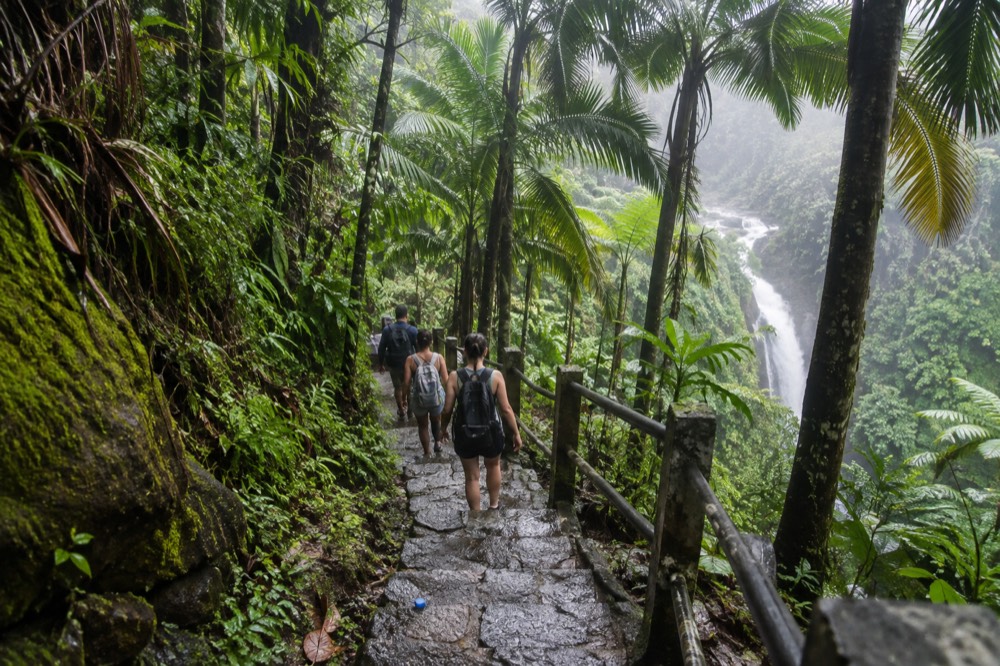
Rain is the other thing to be realistic about. This is a rainforest in the most literal sense: research from the USDA Forest Service's International Institute of Tropical Forestry puts annual rainfall at roughly 96 inches at lower elevations and over 169 inches at the highest stations, with one weather station recording yearly totals between 147 and 254 inches over an eight-year span. The Forest Service's own preparation advice leads with footwear: wear good shoes with traction, because it is wet and mossy, and wet surfaces on a slope are a hazard. A visit here should assume drizzle at some point. The El Yunque in the rain guide makes the case that a wet day is still a good day here, and what to wear and bring to El Yunque handles the packing list.
Crowding rounds out the list. With a million visitors a year concentrated into a few pull-offs and towers, the midday experience can feel more like a queue than a wilderness. The fix is timing: arrive at opening, or go late afternoon, a trade-off examined in El Yunque morning or afternoon.
How Much Time Do You Need?
Most visitors need between four and eight hours: a half-day covers La Coca Falls, Yokahú Tower and a river stop, while a full day adds El Portal, the Luquillo side and a beach or kiosks afterward. The corridor closes at 5:00 p.m. sharp, and the Forest Service advises starting to exit at least 15 minutes before closing, so the day has a hard stop that shapes the plan.
The half-day versus full-day split maps cleanly onto the tour roster, which is one reason tours work well here. A four-hour trip from the roster runs from $25, a seven-hour small-group day from $45, and the twelve-hour bio bay combos from $165 to about $184 for travelers who want the forest by day and the Fajardo bioluminescent bay by night. The roster's format spread tells you what different travelers value:
| Format | Typical length | Roster price range | Best for |
|---|---|---|---|
| Self-drive, meet the guide | 3 to 4 hours | From $25 | Travelers with a rental car who want local knowledge |
| Small-group with transport | 4 to 7 hours | From $43.99 | Visitors without a car, or who want parking solved |
| Forest and beach day | 5 to 8 hours | From $44 to $85 | Families splitting the day between mountains and coast |
| Forest and bio bay combo | 12 hours | From $165 to $184 | Once-in-a-trip travelers maximizing a single day |
The deeper time question, including what a self-guided itinerary looks like hour by hour, is covered in how many hours do you need in El Yunque. The short version: if your only window is a morning, go anyway. A morning in El Yunque beats a full day in a lot of places.
One planning note for cruise passengers: Puerto Rico recorded 1,360,937 cruise passengers and 515 ship calls in the November 2025 to April 2026 winter season, a 43 percent jump over the season before, and the port is investing roughly $45 million across its Panamericano piers ahead of the 2026-2027 season. More ships mean more pressure on the same parking and pull-offs, which strengthens the case for a tour with a permitted vehicle and a legal drop-off. The El Yunque cruise excursions guide covers that scenario in detail.
So Is It Worth It?
For the overwhelming majority of travelers, yes: El Yunque is worth visiting because it delivers something no other part of a Puerto Rico trip can, a walkable tropical rainforest with free entry, a genuine summit-and-waterfall landscape, and river swimming at Forest Service listed sites, all reachable within a day. It is not worth it for a traveler unwilling to rent a car, join a tour or accept rain.
The decision usually comes down to logistics rather than the forest itself. The forest is not the variable; the transport is. A traveler with a car and an early start can have a superb self-guided day for the cost of El Portal's $8 ticket and a tank of gas. A traveler without a car faces a harder math, because rideshare cannot pick up at the corridor and unpermitted taxis are a documented risk, which is exactly the gap the permitted tour operators fill.
If the day is worth doing, it is also worth doing well, and the strongest version of it on the roster is the small-group waterslide day: rated 4.9 across 16,584 reviews, running seven hours from $45, with hotel logistics handled and a mix of forest and river time. For a fuller comparison of the top options, the Puerto Rico rainforest tours overview is the place to start, and for the specific question of whether tours justify their price, are El Yunque tours worth it answers it directly.
This site, El Yunque National Forest Tours, exists because that question has an honest answer, and it is not the one most booking pages give.
The other format worth weighing is the zipline combination, which stretches the day to nine and a half hours and pairs forest time with an adventure-park segment, a good fit for travelers who want adrenaline rather than a beach afternoon.
Whichever way you go, the forest itself asks very little: free entry, no reservation, a decent pair of shoes and an early alarm. It gives back the only tropical rainforest in the national forest system, and it gives it back in a single day. That is a trade most itineraries should take.
Common Questions About El Yunque
Is El Yunque Worth Visiting?
Yes. It is the only tropical rainforest within the national forest system, entry to the PR-191 North corridor is free with no reservation required, and its main stops fit into a half or full day. The caveats are parking limits, some trail closures and rain that should be expected rather than avoided.
How much does it cost to enter El Yunque?
Entry to the PR-191 North recreational corridor is free. The only charge is El Portal de El Yunque Rainforest Center at $8 for visitors 16 and over, free under 15, and $4 with an interagency pass. A proposed $4 La Mina Recreation Area fee is still only a proposal with no decision published.
Can you swim at El Yunque?
Yes, at Forest Service listed sites: Juan Diego Falls, the Angelito Trail's Las Damas Pool on the Río Mameyes, Puente Roto, Quebrada Grande, Quebrada Sonadora, the Río Espíritu Santo Observation Point and the Río Sabana Recreation Area. La Coca Falls is viewing only, and Baño Grande has been closed to swimmers since 1968. Always watch for flash flooding.
Do you need a reservation for El Yunque?
No. The Forest Service states that entrance to the PR-191 North recreational corridor is free and no reservations are required, and all four forest corridors are listed as not requiring a reservation. The old recreation.gov timed-entry facility no longer exists. The only bookable item is the El Portal visitor center ticket.
How many hours do you need in El Yunque?
Most visitors need four to eight hours. A half-day covers La Coca Falls, Yokahú Tower and a river stop; a full day adds El Portal and the Luquillo side. The corridor closes at 5:00 p.m., and visitors are advised to begin exiting at least 15 minutes before closing.
Is a guided tour worth it at El Yunque?
A tour does not skip any entry line, because there is none. What it buys is a permitted vehicle with a legal drop-off, parking solved, and a guide who knows which trails are actually open on the day. For travelers without a rental car it is often the only practical way in, since rideshare apps cannot pick up at the corridor.