What To Wear And Bring To El Yunque: A Packing Guide Built On The Forest Service's Own Advice
El Yunque is a rainforest that measures its rainfall in meters, and the Forest Service's own preparation advice leads with footwear. Here is what to wear, what to pack, and how your kit should match the tour you end up booking.
Short answer
Wear shoes with real traction, quick-drying clothes, and bring a light rain layer: the Forest Service's own safety page leads with footwear because wet, mossy surfaces are the forest's main hazard. Annual rainfall runs from about 96 inches at lower elevations to over 157 inches higher up. Entry is free, so your budget goes to kit, not tickets.
What Should You Wear To El Yunque?
Wear closed shoes with aggressive traction, synthetic or merino clothing that dries fast, and a light rain shell you can stuff in a daypack. The Forest Service's own safety advice for the forest leads with footwear, quote: "Wear good shoes with traction: it is a rainforest, and it is wet and mossy. Wet surfaces can be a hazard and even more so if it's on a slope." Everything else in your outfit is a refinement of that one warning.
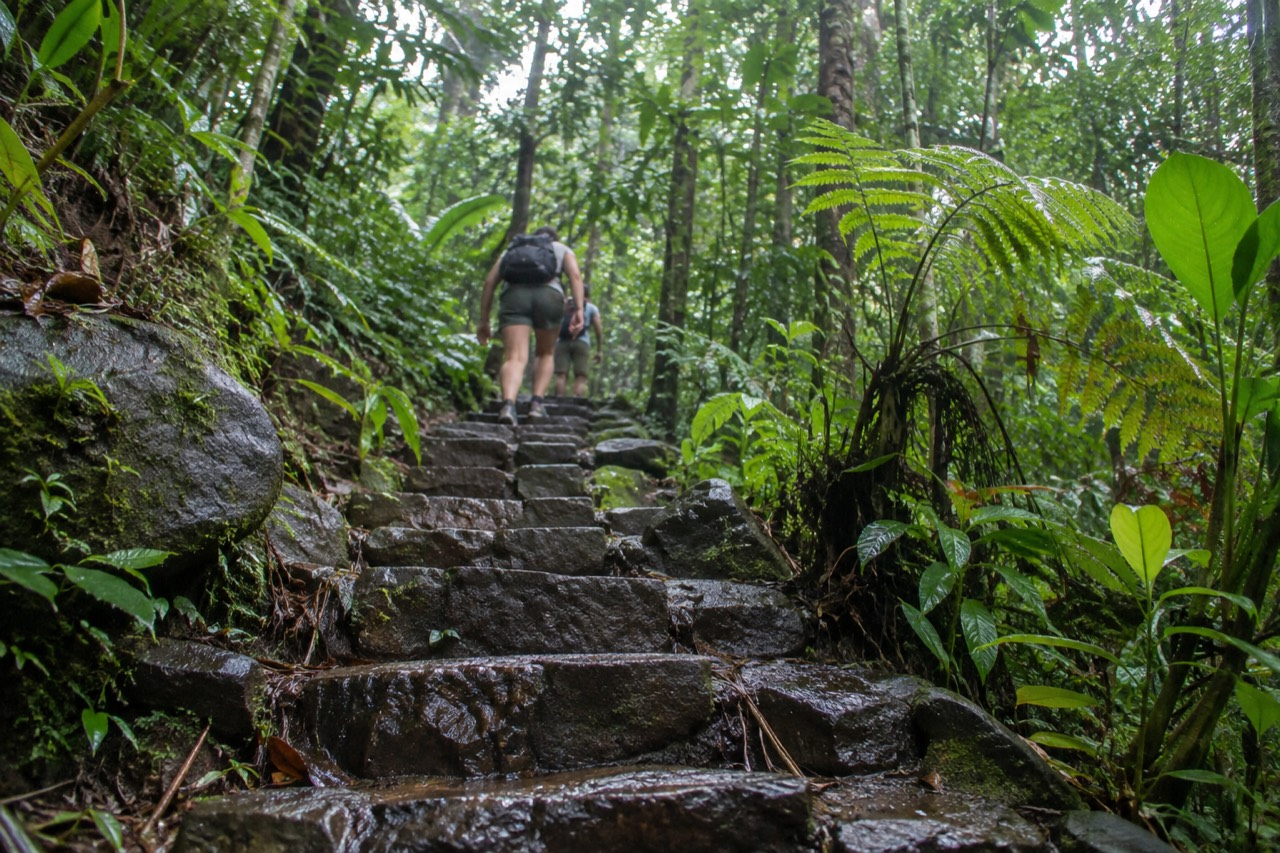
That sentence comes from the Forest Service's Safety and Outdoor Ethics page for El Yunque, and it is the single most useful piece of clothing advice that exists for this forest. Every trail surface here can be wet at any hour of any day. Concrete steps built in the 1940s grow moss. Boardwalks film over with condensation. The clay-rich soils on the Luquillo side turn slick after an afternoon shower that you never saw because it fell two ridges upstream.
The rest of the wardrobe follows from the climate. Temperatures in the forest are warm but not punishing, and the variation comes less from the time of day than from elevation: the recreation corridor along PR-191 sits far lower than the peaks, and the cloud forest near the towers is noticeably cooler and damper. Cotton is the enemy. A heavy cotton t-shirt that soaks through on the walk up to Yokahú Tower stays wet for the rest of the day, chills you at elevation, and weighs twice as much on the walk out.
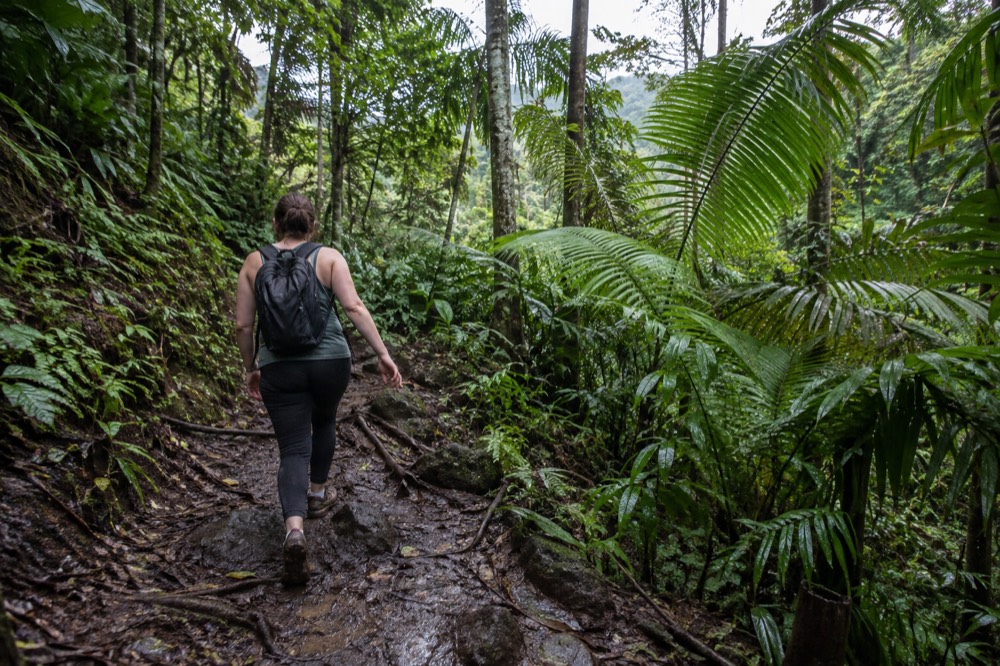
A practical outfit for most visitors looks like this: trail runners or light hiking shoes with lugs, synthetic socks (bring a spare pair in the car or daypack), quick-dry shorts or hiking pants, a moisture-wicking top, a ball cap or packable sun hat for the coastal stops, and a packable rain shell. Long sleeves matter more than people expect, not for cold but for vegetation: several trails press through dense growth, and arms bare from a San Juan beach day scratch up quickly. If your day includes a beach stop at Luquillo, which many tours on this roster include, a swimsuit worn under hiking clothes removes an entire changing problem.
One thing not to worry about: dressing for a fee station or a checkpoint. Entrance to the PR-191 North recreational corridor in Río Grande is free and no reservation is required, and the corridor is open 8:00 a.m. to 5:00 p.m. Your money goes to footwear and a good daypack, not to tickets. Our El Yunque National Forest Tours guide to El Yunque tickets and reservations covers the only fee that does exist, the $8 El Portal visitor center, if you want that detail.
Do You Need Water Shoes For El Yunque?
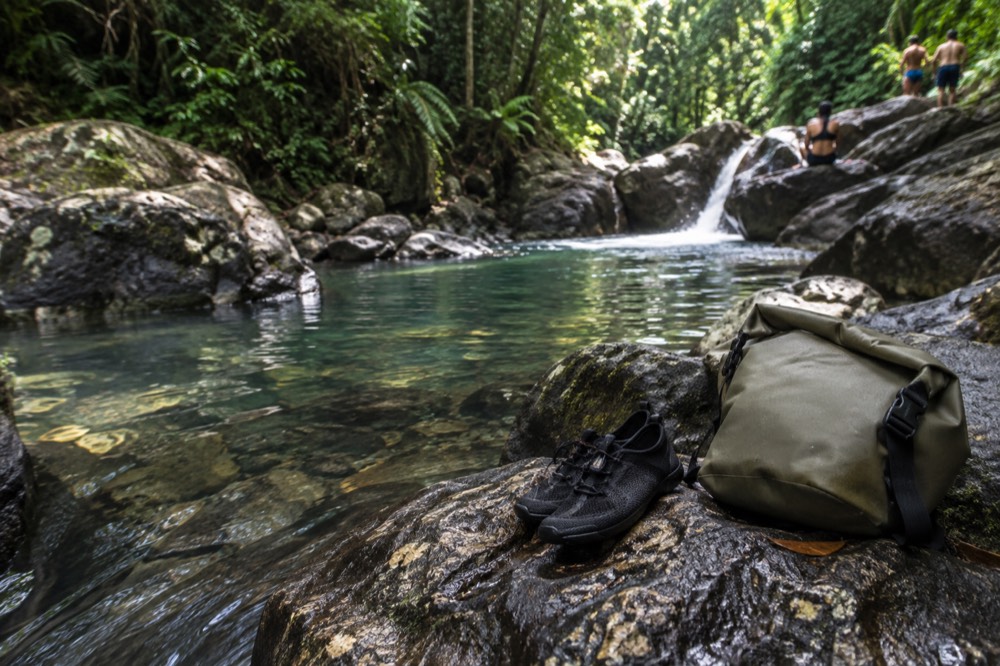
For the hiking corridors, no: closed traction shoes are better than water shoes, which are too flimsy for mossy stone and rooty trail. For a waterslide or river-pool tour, yes: bring a pair that stays on the foot with a heel strap, because you will walk on wet rock. The compromise many travelers use is trail sandals with real tread, worn for the water sections and carried in the daypack otherwise.
The honest answer splits by what you booked. The Forest Service lists its swimming and wading opportunities at specific sites: Juan Diego Falls pool, the Angelito Trail's Las Damas Pool on the Río Mameyes, Puente Roto, Quebrada Grande, Quebrada Sonadora, the Río Espíritu Santo Observation Point, and the Río Sabana Recreation Area. Every one of those involves river rock, which is the slipperiest surface in the forest. Bare feet are a sprained ankle with a delay; flip-flops float away.
If your day is built around the natural waterslides above Luquillo, the kit question changes again, and so does the geography question. Those slides sit on private land in Luquillo, outside the national forest boundary, with no Forest Service oversight, no staffed site, and no listed recreation page. Access is arranged with the landowners on the spot. That means no developed facilities of the kind you'd find at a Forest Service recreation area, and it means your footwear, your towel and your own water are all you have. Tours that include the slides, like the 7-hour small-group waterslide tour rated 4.9 across 16,584 reviews from $45, handle the logistics of getting there; your job is to arrive shod for wet rock.
| Footwear type | Best for | Weakness |
|---|---|---|
| Trail runners / light hikers | Hiking corridors, tower walks, all-day tours | Soak through at river pools; bring spares |
| Heel-strap water shoes | Waterslide tours, river wading, Las Damas Pool | Poor ankle support on trails |
| Trail sandals with tread | Mixed hike-and-swim days | Toes exposed on rocky descents |
| Flip-flops | Beach stop only | Useless on wet rock and mossy steps |
| Sneakers with flat soles | Nothing here, honestly | Smooth tread on wet stone slides |
One footnote on the slides themselves: the rock is natural, not manufactured, which travelers ask about more than you'd think. Our piece is the slide in El Yunque man-made? answers it directly, and it explains why the question even exists.
What Should You Pack For A Day In The Forest?
Pack a daypack with a rain shell, a full water bottle, sunscreen and insect repellent, a small towel, a dry bag for electronics, and a spare shirt. Add a swimsuit and heel-strap water shoes only if your itinerary includes a river or beach stop. Skip drones, skip valuables, and skip anything you would mourn if it went into the Río Mameyes, because on this roster, it might.
The daypack itself deserves a sentence. You will carry it up stone stairs built by the Civilian Conservation Corps in the 1930s and down again, in humidity, possibly in rain. A cheap string backpack that was fine in Old San Juan becomes a misery on the Mount Britton Trail, which gains 591 feet over 1.3 kilometers and is rated Challenging by the Forest Service. A small padded daypack with a sternum strap is one of the few gear purchases that genuinely changes the day.
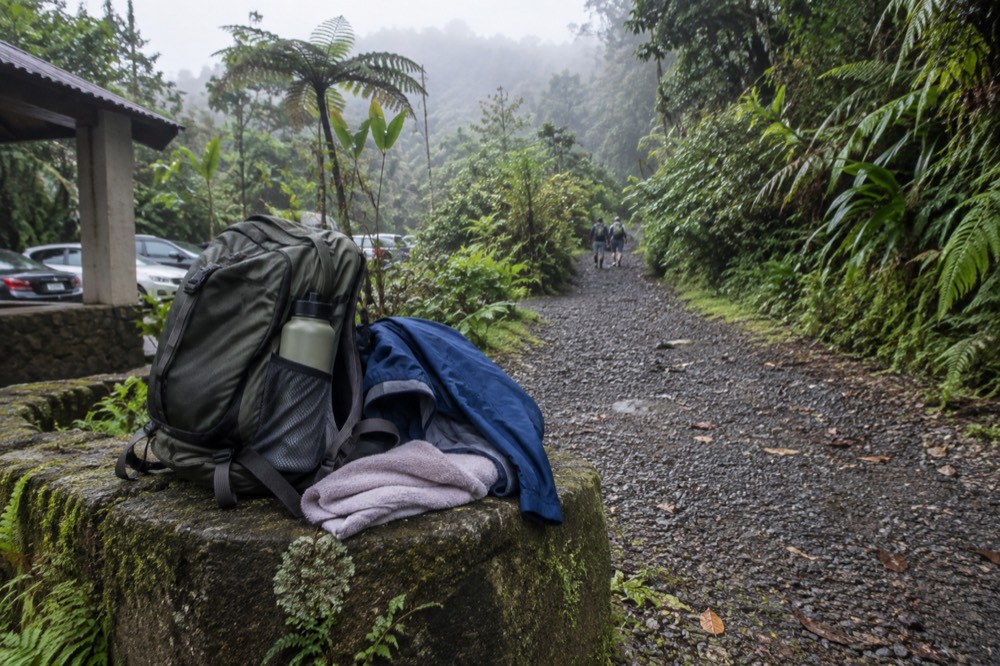
Water matters more than food. The forest is hot and humid enough that people underestimate their intake, and while potable water is available at El Portal, several popular stops, La Coca Falls among them, specifically note that potable water is not available. Repellent matters too: the forest is home to mosquitoes and, famously, five species of coquí frogs, whose nightly chorus is the loudest thing in the understory. The coquís are harmless and wonderful. The mosquitoes are ordinary mosquitoes.
The dry bag is the item people skip and then regret. On waterslide tours, on river-pool stops, and on the beach legs that many tours tack on at Luquillo, phones and rental-car keys end up in pockets. A cheap roll-top dry pouch costs less than a phone screen. Tours that include photos taken by the guide, like the 6-hour small-group option from $43.99 rated 4.9 across 3,835 reviews, reduce how much you need your own camera out, which is its own kind of packing decision.
How Much Does It Rain, Really?
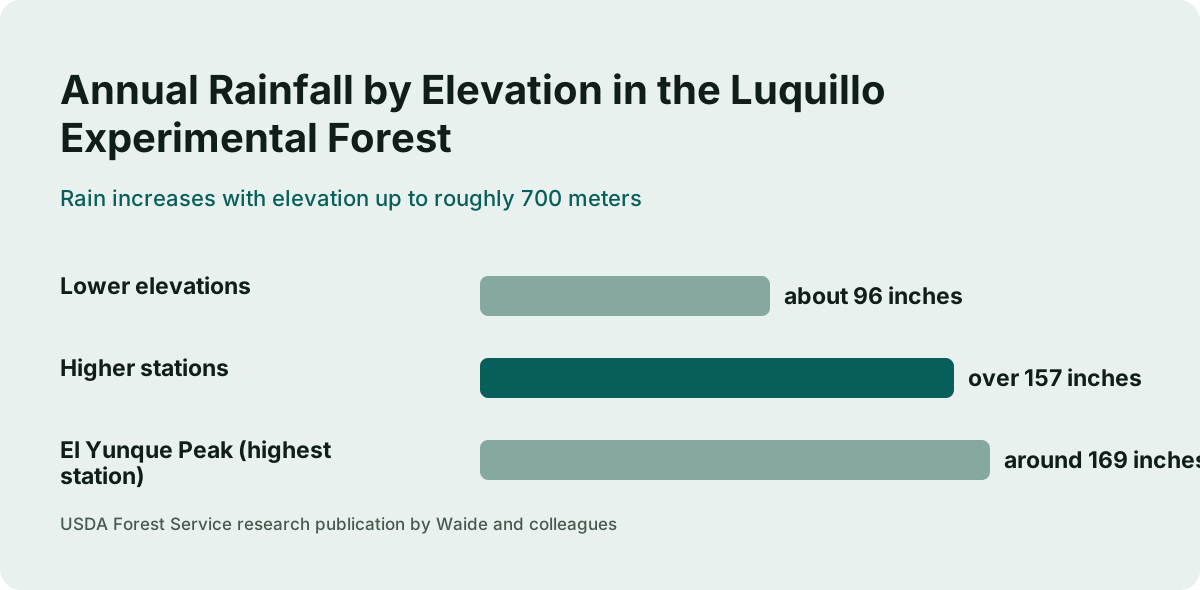
Annual rainfall in the Luquillo Experimental Forest ranges from about 96 inches at lower elevations to over 157 inches at higher stations, with the highest station, El Yunque Peak, recording around 169 inches. Rain increases with elevation up to roughly 700 meters. You should expect rain at some point on most visits, and pack as though it is certain.
Those figures come from a USDA Forest Service research publication by Waide and colleagues, which measured the forest across stations and years, and they are the honest numbers behind the marketing phrase "rainforest." A single weather station at La Mina recorded annual totals varying between roughly 147 and 254 inches across an eight-year period. In plain terms: some years the mountain catches twice the rain of others, and no forecast in San Juan reliably tells you what the cloud forest is doing.
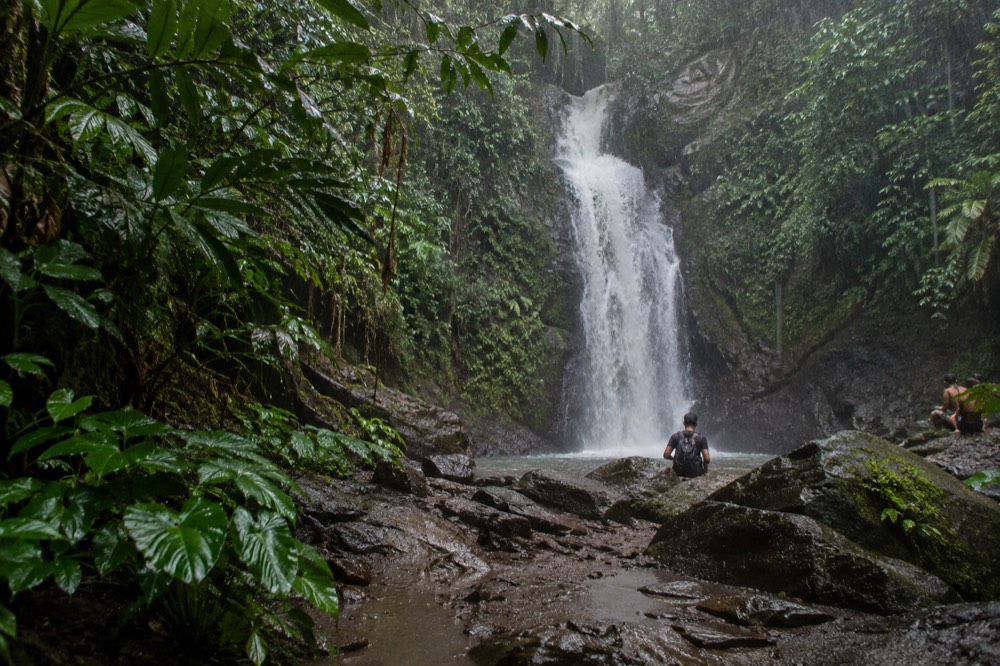
The practical consequence for packing is that your rain layer is not optional and your footwear choice is not optional. The Forest Service's preparation advice pairs the traction warning with the simple fact that it is a rainforest and it is wet. Rain here also arrives as localized downpours: the sun can be out at El Portal at kilometer 4.1 while the trade-wind clouds are dumping on the towers. Our longer treatment, El Yunque in the rain, covers whether a rainy day is even a bad day there, and the short version is that it usually is not.
Flash flooding is the one weather event that packing cannot solve but awareness can. The Forest Service warns that flash floods can occur throughout the year, are more frequent in the rainy months of April and May, and that a sudden surge can claim victims in less than one minute, with flood water capable of reaching heights of 30 feet or more. The advice that matters: stay alert for heavy rain upstream of you, not just where you are standing, and never cross flowing streams. The Río Mameyes even has a live USGS stream gauge you can check before a swim stop.
Can You Swim On An El Yunque Tour?
Yes, at the sites the Forest Service itself lists: Juan Diego Falls pool, the Angelito Trail and Las Damas Pool on the Río Mameyes, Puente Roto, Quebrada Grande, Quebrada Sonadora, the Río Espíritu Santo Observation Point, and the Río Sabana Recreation Area. No at La Coca Falls, which is viewing only, and no at Baño Grande, which has been closed to swimmers since 1968 and is posted "No swimming permitted."
That list is worth memorizing because a great deal of tour marketing is vaguer than the underlying reality. Some listings still describe swimming at La Mina Falls; both trails that reach it, La Mina Trail and Big Tree Trail, are closed, and trail status in this forest changes with construction and storm damage, so the Forest Service alerts page is the authority to check before you pack a swimsuit around a specific waterfall. Our swim-focused piece, can you swim at El Yunque, goes deeper on the rules.
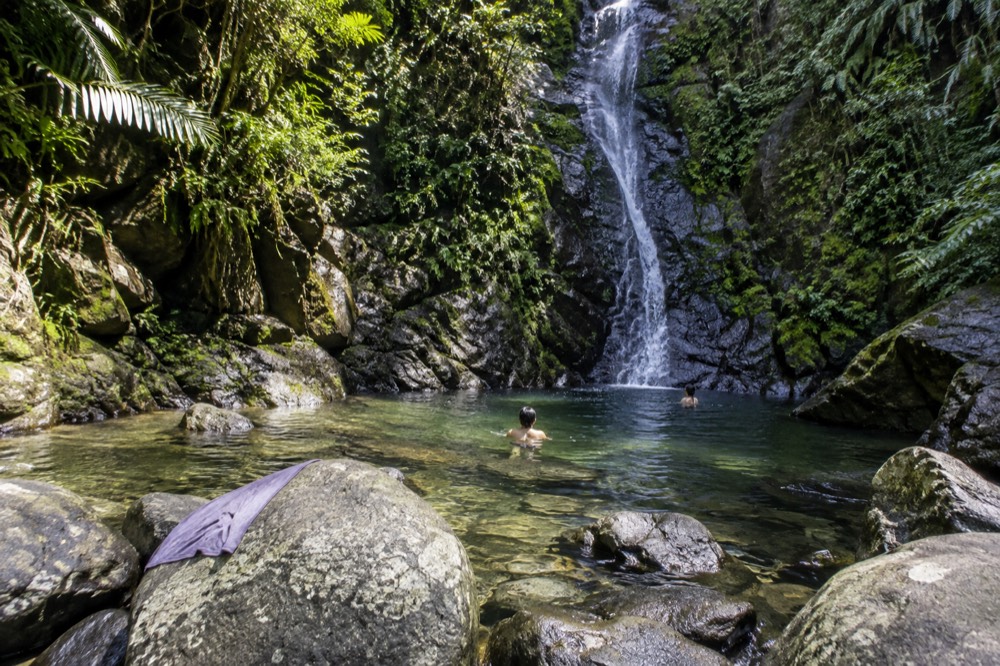
For packing purposes, a swimsuit plus a swim layer is the answer for any tour whose confirmed stops include a river or beach. On this roster that includes the small-group waterfall and waterslide tours with pickup from $63 rated 4.8 across 3,040 reviews, which lists Las Tinajas and Charco Frío as confirmed stops, and the forest-and-beach combinations that end the day at Luquillo. Wear the suit under your hiking clothes and you never have to find a changing room in a rainforest.
| Swim site (Forest Service listed) | What to bring | Note |
|---|---|---|
| Juan Diego Falls pool | Water shoes, towel | 30-minute parking maximum at the site |
| Las Damas Pool, Río Mameyes | Water shoes, dry bag | Reached by the easy Angelito Trail on Road 988 |
| Puente Roto | Water shoes, towel | Road 988; construction noted on the road, drive carefully |
| Quebrada Grande | Water shoes | Poor road conditions flagged on the access road |
| Río Sabana Recreation Area | Swimsuit, towel | Naguabo side, Road 191 South |
Every one of those river stops carries the standard flash-flood warning, and it is not boilerplate. Check conditions, watch the sky upstream, and get out of the water if the river so much as changes color or tone.
What Does A Waterslide Day Demand From Your Kit?
A waterslide day demands heel-strap water shoes, a swimsuit you can hike in, a towel, a dry bag, and clothes to change into afterward. It does not demand a wetsuit or anything technical: the slides are natural rock chutes on private land outside the forest, and the tour operator brings the safety equipment. Your kit list is short, which is part of the appeal for families.
The natural waterslides above Luquillo are the most kit-light water day available from San Juan, and that is precisely why they dominate the value end of this roster. The half-day waterslide and rope swing option runs from $25, rated 4.8 across 8,066 reviews, with free cancellation, though it is a meet-the-guide format, so you drive yourself to the meeting point. The 7-hour small-group version from $45, rated 4.9 across 16,584 reviews, includes transport and a longer day. Neither requires anything you would not already pack for a beach afternoon.
What the reviews on those listings repeatedly mention, in their own words, is rope swings, cliff jumps and slides at specific operator-permitted spots. Those are real descriptions of real days, and several of those spots sit outside the federal forest boundary. They are not a general permission to leap off rocks anywhere in El Yunque; the Forest Service's listed swim sites are the places where swimming is an official, managed opportunity. Treat the reviews as color, not as a rulebook.
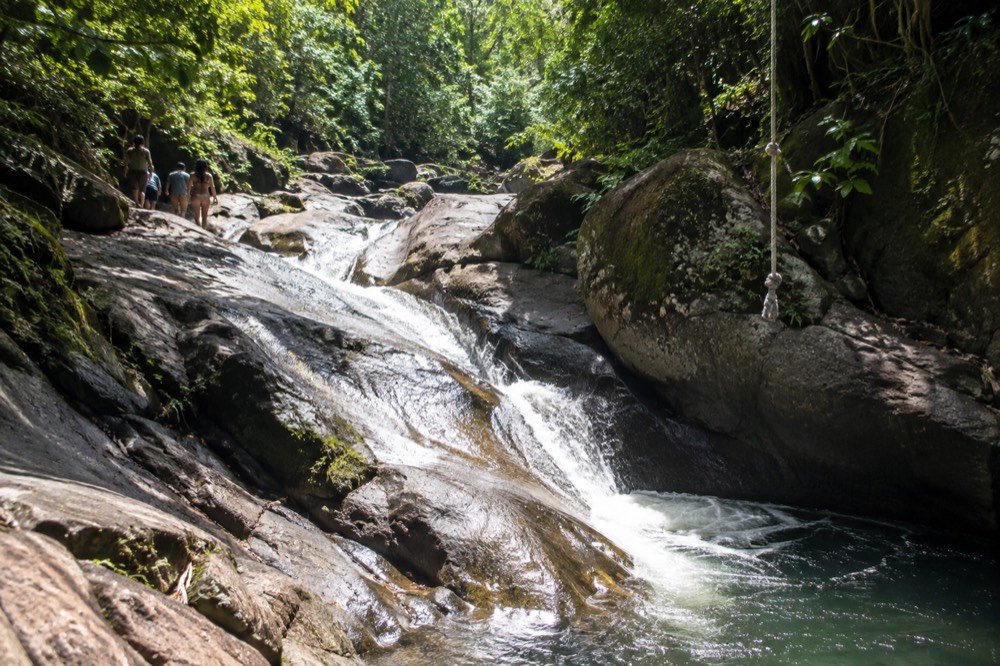
One honest packing note for the slides: a rash guard or synthetic t-shirt earns its place. You will slide on rock, sometimes repeatedly, and a layer between shoulder and stone is the difference between a fun morning and a scraped afternoon. The same logic applies to shorts with a drawstring rather than elastic, for reasons that become obvious on the second slide.
What Should You Leave Behind?
Leave behind drones, valuables, glass, single-use plastic you are not prepared to carry out, and any assumption of a locker. The Forest Service asks visitors to take their trash with them and to lock vehicles and valuables, and several sites have no potable water and no facilities beyond what the listing shows. A rental car full of visible luggage is an invitation, and a packed daypack is a burden on the stairs.
The trash point is not cosmetic. The Forest Service repeats the same line on trail after trail: remember to take your trash with you. There is no cleaning crew walking behind you on the El Toro Trail, which is 2.3 miles of Difficult hiking to the highest peak in the forest at 3,524 feet. What you carry in, you carry out, and a small trash bag in the daypack makes that easy instead of awkward.
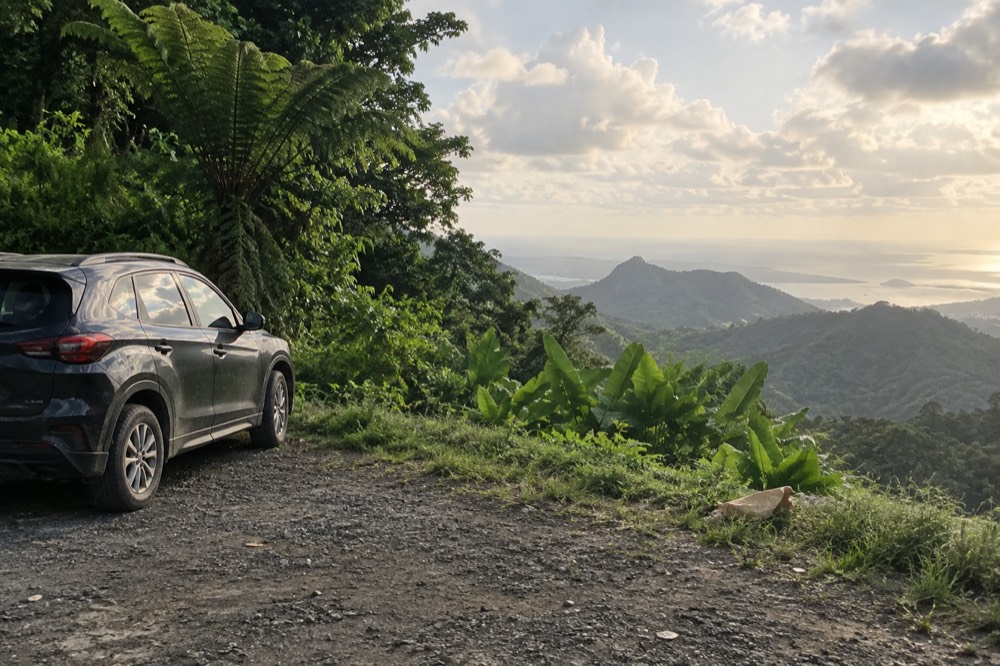
Drones are a common question and a firm no without checking current rules; the Forest Service publishes its own guidance and the answer for most visitors is that the airspace and wilderness considerations make it not worth the argument. Glass containers fail on wet rock. Jewelry fails at the rope swing. The one item people regret not leaving behind is a heavy cotton towel: a compact microfiber towel weighs nothing, dries in an hour, and does not spend the drive back to San Juan making your daypack smell like a swamp.
Does Your Kit Change Which Tour You Should Book?
Yes, and it should be a two-way decision: the tour determines the kit, and the kit you are willing to carry should determine the tour. A meet-the-guide waterslide tour from $25 or $36 suits travelers with a rental car and a swimsuit. A pickup-included small-group tour from $43.99 to $89 suits travelers who want to carry nothing but a daypack. A 9.5-hour hike-and-zipline combo from $225 demands real hiking kit.
Work backwards from your shoes. If you own trail shoes and like stairs, the hiking corridors and the longer tours are open to you: the 8-hour waterfall hike with pickup from $72, rated 4.8 across 1,209 reviews, or the 8-hour off-the-beaten-path tour from $85. If your footwear budget is one pair of water shoes, the waterslide family is your lane, and it is a good one: those tours carry the highest review counts on the roster.
The middle case is the traveler who wants one day, one bag, and no decisions: a small-group tour with photos included, from $43.99, rated 4.9 across 3,835 reviews with free cancellation, pairs a moderate kit list with a guide who handles the day. For the full-commitment end, the hike and zipline combo from $225, rated 4.7 across 21 reviews over 9 hours 30 minutes, is the only roster option where genuine hiking boots stop being overkill.
| Kit you'll carry | Tour family that fits | Example from the roster |
|---|---|---|
| Swimsuit and water shoes only | Meet-the-guide waterslide tours | Half-day slides and rope swing, from $25 |
| Daypack, one spare shirt | Small-group tours with pickup | 6-hour photos-included tour, from $43.99 |
| Daypack plus swim kit | Forest-and-beach combinations | Slides and beach with transport, from $44 |
| Trail shoes, rain shell, layers | Full-day hiking tours | 8-hour waterfall hike, from $72 |
| Hiking boots, gloves optional | Adventure combos | Hike and zipline combo, from $225 |
The one kit constant across every family: a change of clothes left in the vehicle or handed to the guide. Every water tour on this roster ends with a wet traveler, and the drive back to San Juan is long enough to make dry shorts a luxury item.
The Final Packing Checklist
Pack in three layers: worn, carried, and stashed. Worn: traction shoes, quick-dry clothes, hat. Carried in the daypack: rain shell, water, repellent, sunscreen, dry bag, microfiber towel, spare shirt, water shoes if the day includes water. Stashed in the car or with the guide: full change of clothes, towel, plastic bag for wet kit, and cash for the kiosks at Luquillo, where a food stop ends many tours.
That last item is the one people forget. A large share of tours on this roster finish at the Luquillo kiosks, a strip of food stalls that by Puerto Rico Tourism Company figures draws around a million visitors a year and supports roughly 840 direct jobs. It is a sit-and-eat stop, not an attraction you pack for, but cash and an appetite are the entry requirements, and the food is a genuine highlight of the day.
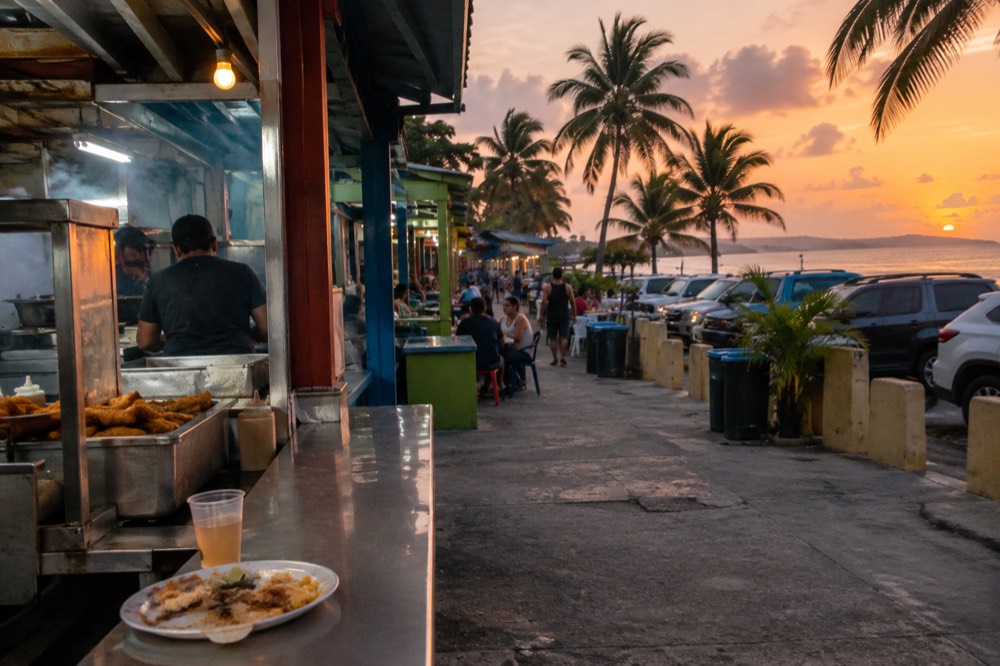
Before you leave, one habit beats every item on the list: check the Forest Service's Current Conditions page the morning of your visit. It carries the authoritative word on corridor hours, which are 8:00 a.m. to 5:00 p.m., on parking, which is permitted only in designated areas, and on whatever construction is underway that season. A guide who knows the forest solves the rest, which is the honest reason to book one: not queue-skipping, because there is no queue, but a permitted vehicle, a legal drop-off, and someone who knows which trail is actually open today.
Common Questions About What To Wear And Bring To El Yunque
Do you need water shoes for El Yunque?
For hiking, no: closed shoes with traction are better, and the Forest Service's own advice leads with footwear because wet, mossy surfaces are the main hazard. For river pools and waterslide tours, yes: bring heel-strap water shoes, because you will walk on wet rock. Trail sandals with real tread are the workable compromise for mixed days.
What shoes are best for El Yunque?
Trail runners or light hiking shoes with aggressive lugs. The Forest Service's safety page says it directly: wear good shoes with traction, because it is a rainforest and it is wet and mossy, and wet surfaces on a slope are a hazard. Flat-soled sneakers and flip-flops are the two most common footwear mistakes in the forest.
Should you bring a rain jacket to El Yunque?
Yes. Annual rainfall ranges from about 96 inches at lower elevations to over 157 inches higher up, and the highest station has recorded around 169 inches. A packable rain shell weighs almost nothing and is the difference between a shower and a soaked, chilled afternoon at elevation.
Can you swim at El Yunque?
At the Forest Service's listed sites, yes: Juan Diego Falls pool, Las Damas Pool on the Río Mameyes via the Angelito Trail, Puente Roto, Quebrada Grande, Quebrada Sonadora, the Río Espíritu Santo Observation Point, and Río Sabana. La Coca Falls is viewing only, and Baño Grande has been closed to swimmers since 1968. Always check flash-flood conditions before getting in a river.
Do you need a towel on an El Yunque tour?
If your tour includes water, which most on the roster do, yes. A compact microfiber towel beats cotton: it dries in an hour, weighs little, and does not make the daypack smell on the drive back. Waterslide tours, river-pool stops and beach finishes at Luquillo all end with a wet traveler.
What should you not bring to El Yunque?
Drones, glass, valuables you would mourn, and more than a daypack's worth of gear. The Forest Service asks visitors to take trash with them and to lock vehicles and valuables. Several popular sites have no potable water, and there is no locker system, so anything you bring on trail, you carry.