Is The Slide In El Yunque Man Made?
The famous rainforest waterslide is natural rock, not a built attraction, and it sits on private land outside the national forest. Here is what it is made of and which tours go there.
Is The Slide In El Yunque Man Made?
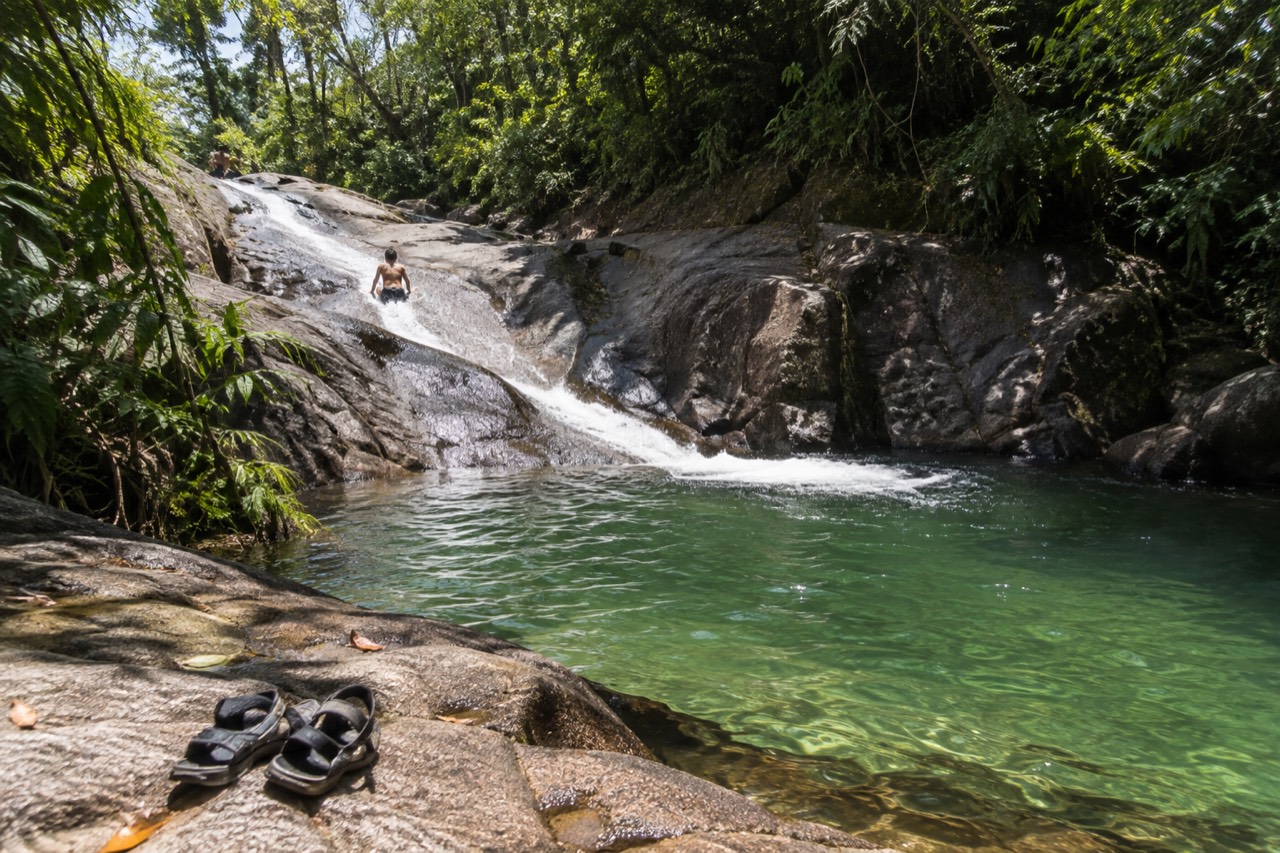
No. The slide is a natural rock chute, a section of riverbed worn smooth by flowing water over a very long time, and nobody built it. What the marketing calls "the El Yunque waterslide" is a series of these chutes on private land in Luquillo, outside the boundary of the national forest. The rock does the work, the river supplies the ride, and the only man-made things on site are the paths and handrails locals have added.
That is the short answer, and it is worth unpacking because a lot of copy written about this slide gets two things wrong at once. First, it treats the slide as some kind of installed attraction, a water park feature hidden in the jungle. It is not. It is geology. Second, and this matters more if you are booking something, it calls the slide an "El Yunque" attraction as though it were a Forest Service facility inside the national forest. It is not that either.
The slide, or rather the slides, because there is more than one chute, sit on private land near the town of Luquillo on Puerto Rico's east coast. Testing the location against the Forest Service's own boundary data returns nothing: no national forest feature, no federal ownership parcel. The Forest Service publishes 37 recreation sites and trails for El Yunque, and the slides are not on that list. There is no fs.usda.gov page for them, no ranger presence, no federal safety oversight. Access is arranged with the landowners on the spot, through their property.
None of this makes the slide a bad experience. It makes it a different kind of experience than the phrase "El Yunque waterslide" suggests, and knowing the difference helps you pick the right tour and set the right expectations. A guide who runs this trip regularly knows the chutes, the pools, the entry points and the conditions under which the river should be left alone. That is what you are buying, and it is worth buying.
If you already know you want the slide and just need the ride sorted, these are the three tours that get the most consistent reader interest:
Where Is The Slide, If It Is Not In The National Forest?
The slides sit on private land in the municipality of Luquillo, outside El Yunque National Forest and outside the Forest Service's administrative boundary entirely. The Forest Service does not manage them, does not staff them, does not list them among its 37 recreation sites, and provides no oversight there. Access runs through private property and is arranged with the landowners on the day.
The distinction is not pedantry. El Yunque National Forest covers 28,516 acres across eight municipalities in the island's northeast, and Luquillo is one of them. But the town and the forest are not the same thing, and a spot being "near El Yunque" does not put it inside El Yunque. The slides sit below the forest on the Luquillo side, on land that federal boundary data simply does not cover.
Why does this matter to you as a visitor? Because the rules change. Inside the national forest, the Forest Service sets hours, manages capacity through designated parking, posts alerts when trails close, and warns about flash floods. At the slides, none of that applies. There are no forest hours, no federal passes, no ranger patrols. What there is instead is a river, a rock chute, and a local arrangement for getting to it.
This is also why tour descriptions can sound confusing. A listing that says "El Yunque rainforest and waterslide tour" is describing a day that typically includes both: a guided stop in the actual national forest, often a river or trail segment, and then the slides on the Luquillo side. The two halves of the day are on different land with different management, and the tour operator handles the logistics of both. Several tours on our roster do exactly this, and the ones that visit the slides are covered in detail further down this page.
The honest framing, which we use across this site, is simple: the slides are a natural attraction on private land outside the national forest, and a tour that includes them is selling you the road between two very different places, plus a guide at each. For a full comparison of the operators that run this route, see our guide to El Yunque National Forest Tours and the deeper rundown on Luquillo waterslide tours.
Wondering whether the slide day is worth booking at all?
What Are The Slides Actually Made Of?
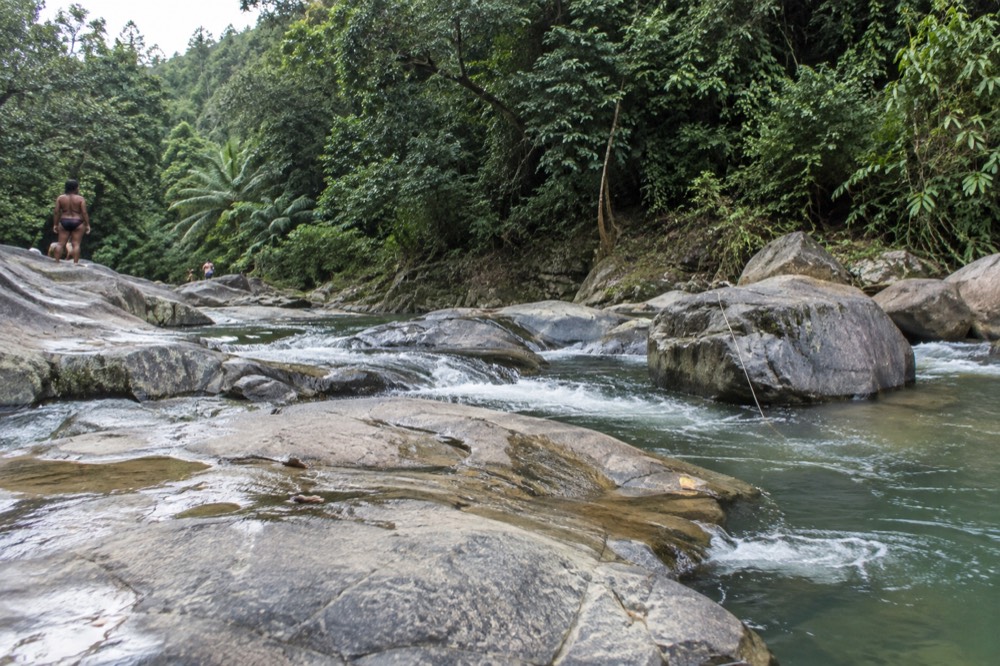
Worn bedrock. The chutes are channels of volcanic rock, smoothed and polished by sediment-laden river water moving downhill for centuries, ending in natural plunge pools. Nothing was poured, cut or installed. The same process that makes any mountain river slide, abrasion, made these, and the river keeps reshaping them every wet season.
The rock in the Luquillo Mountains is old volcanic material, dense and jointed, and when a stream runs over a sloping slab of it year after year, the sediment it carries acts like slow sandpaper. Softer lines in the rock erode faster, a groove deepens, water concentrates in the groove, and the groove deepens faster. Given enough time you get a chute: a smooth, water-filled channel with just enough gradient to carry a person down into the pool at the bottom. That is the slide. It is a river feature that happens to be human-sized.
What you slide on is the rock itself, under a thin sheet of moving water. That is why conditions matter so much. After heavy rain the flow rises, the chutes run faster and rougher, and the pools churn. In dry spells the water level drops and sections that are normally deep can be shallow. Local guides read the river on the day and adjust which chutes get used, which is one of the quiet arguments for a guided trip over a solo visit: the rock is constant, but the ride is not.
It also explains the footwear question, which comes up constantly. Smooth wet rock is slippery everywhere, on the slide, beside the slide, and on the approach. The Forest Service's own advice for the national forest next door is blunt: wear good shoes with traction, because wet surfaces are a hazard, and more so on a slope. The same logic applies to the slides, only there you are deliberately launching yourself down one.
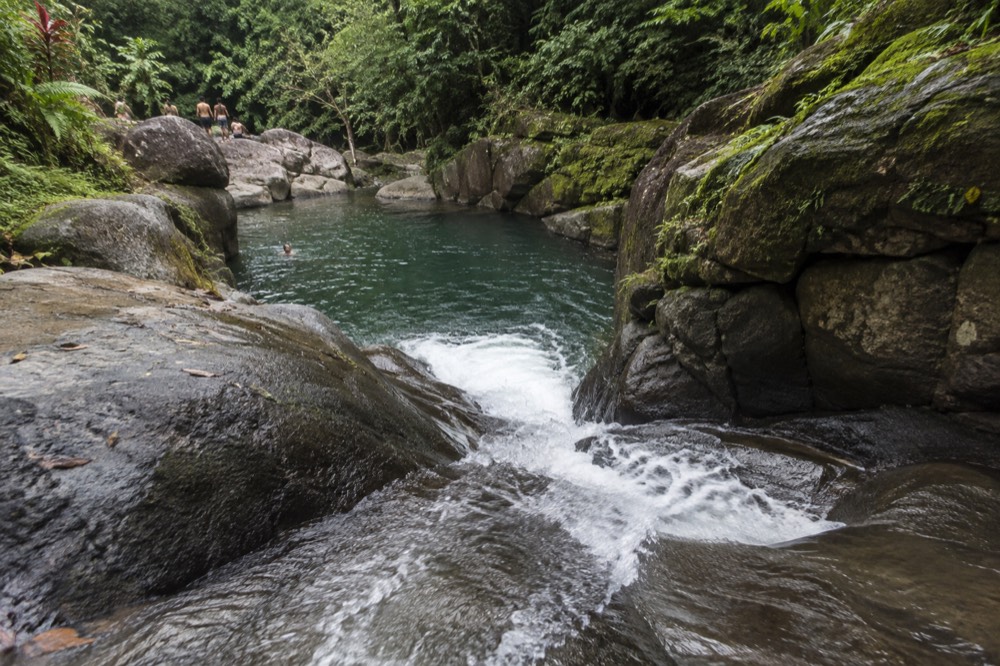
One more thing worth knowing: the slides are not the only natural rock feature of this type on the island, but they are the best known and the most visited, which is exactly why tours cluster here. The combination of a reliable chute, a swimmable pool and easy access from San Juan is rare. The rock did the hard work; the landowners and guides built the economy around it.
Is It Safe To Ride A Natural Rock Slide?
Riding is a real activity with real risks, and the honest answer is that safety depends on the day's water conditions, the specific chute and how you enter it. Flash floods are the serious hazard in this watershed: the Forest Service warns that a sudden surge can claim victims in less than a minute and that flood water can reach 30 feet or more. Guides exist largely to manage this.
Start with the flash flood problem, because it is the one that matters most. The mountains here are rainforest, and rainforest means rain: annual rainfall in the Luquillo range runs from roughly 96 inches at lower elevations to over 169 inches at the highest stations. When a storm cell sits over the upper watershed, rivers downstream can rise fast, and the Forest Service's flash flood guidance for the area is unambiguous about how quickly that happens. A slide chute is the last place you want to be when a surge comes through.
The practical rules that follow from this are the ones any competent guide will enforce. Check conditions before you go, not just where you are standing but upstream, since the rain that floods your pool may be falling a mile away. If the water is high, brown or fast, the slides are off. If you hear thunder or see the river rising, you leave. And you never ride alone or without someone watching the water.
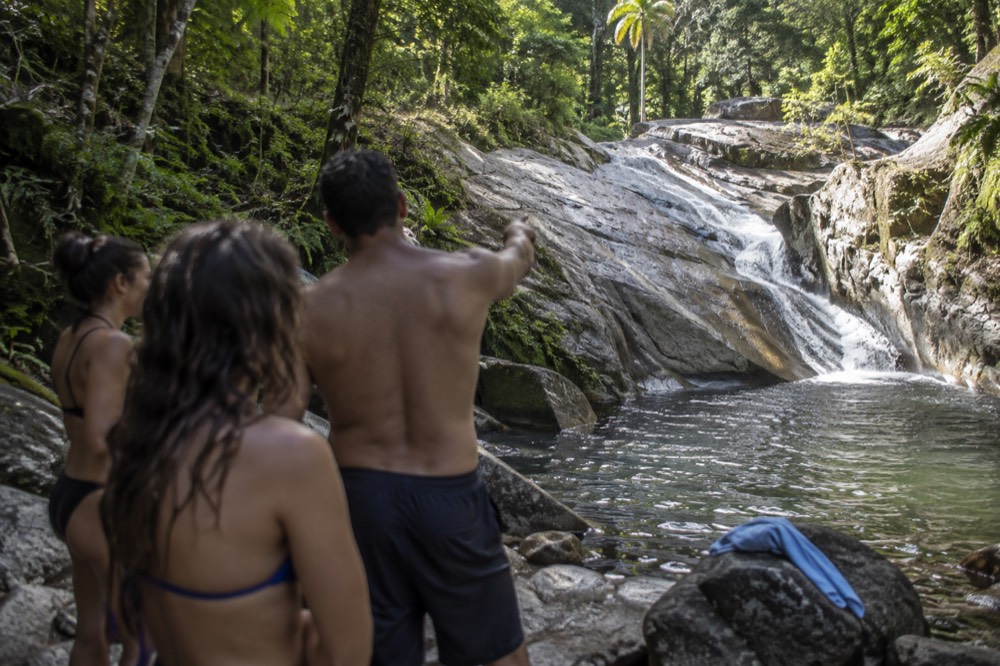
Within a normal, moderate flow day, the chutes themselves are reasonably forgiving: deep entry pools, smooth rock, no drops onto shallow shelves at the main lines. But "reasonably forgiving" is a judgment a local makes, not one a first-time visitor can make from a photo. Where people enter the water, how they position their body, and which pool they aim for are all learned calls. Reviews from travellers on the slide tours describe exactly this, guides walking the group through each chute, demonstrating the line, and going first.
For official flood and safety wording, the Forest Service's guidance is the reference point for this watershed: its safety and outdoor ethics page covers footwear, wet surfaces and flash flood awareness, and the alerts page carries current conditions for the forest next door. Neither covers the private slides, which is precisely the point: over there, the operator's judgment is the safety system, which is a reason to pick an established one.
Which Tours Actually Go To The Slides?
Several, and they differ mostly in length, price and what else the day includes. The flagship option is the 7-hour rainforest and waterslide tour from San Juan, rated 4.7 across 2,473 reviews and priced from $58 with hotel pickup and free cancellation. A small-group version runs 7 hours from $45, and a half-day rope-swing version runs 4 hours from $25.
The table below compares the three tours readers ask about most. All figures are from the operators' live listings, and group sizes are stated on each listing rather than fixed here, since they can change.
| Tour | Length | Rating | Price from | Cancellation |
|---|---|---|---|---|
| 7-Hour Waterslide from San Juan | 7 hours | 4.7 across 2,473 reviews | $58 | Free cancellation |
| 7-Hour Small-Group Waterslide Tour | 7 hours | 4.9 across 16,584 reviews | $45 | See listing |
| Half-Day Waterslide and Rope Swing | 4 hours | 4.8 across 8,066 reviews | $25 | Free cancellation |
The 7-hour tour from San Juan is the one most people picture when they book this day: pickup in the city, a guided walk through rainforest terrain, river time, and the slides themselves, with the operator handling all the logistics between stops. At 4.7 across 2,473 reviews it is one of the most-booked versions of this trip on the roster, and the seven-hour window is generous enough that the day does not feel rushed.
The small-group version covers similar ground with a capped headcount, which matters if you want more of the guide's attention at the chutes and less time waiting for a large group to cycle through. It carries the strongest rating of the three, 4.9 across 16,584 reviews, and starts from $45, which makes it slightly cheaper than the standard tour despite the smaller group. Note that the review figure on this listing is a combined pool across the operator's products, so read it as the operator's overall reputation rather than a headcount of this specific tour's customers.
The half-day option is the budget and schedule play: 4 hours, from $25, with a rope swing added to the slides, and free cancellation. It is a meet-the-guide format rather than a hotel pickup, so you need your own transport to the meeting point. For cruise passengers or anyone with an afternoon flight, that shorter window is often the difference between doing the slides and skipping them.
If your interest is less the slide itself and more the general question of river swimming in this watershed, note that the national forest next door has its own listed swimming spots, with different rules: our piece on swimming at El Yunque covers which sites the Forest Service actually lists, and how the flash flood warning applies to each.
What Should You Wear And Bring For The Slides?
Water shoes with real grip, a swimsuit already on, quick-dry clothing, and nothing you would mourn losing. The rock is slick everywhere, the approach involves wet stone and mud, and the river takes hats and sunglasses from the unwary. A dry bag for keys and a change of clothes for after are the two items people most wish they had.
Footwear first, because it is the difference between a good day and a sprained ankle. Barefoot is a poor plan on wet volcanic rock, and flip-flops are worse, they come off mid-slide and offer no grip on the approach. A closed-toe water shoe with a real rubber sole is the standard. The Forest Service's advice for the forest itself, "wear good shoes with traction: it is a rainforest, and it is wet and mossy," applies with interest at the slides, where the wet surfaces are the attraction.
Beyond shoes, keep it simple. Swimwear under quick-dry clothes, since changing facilities at a private river spot are basic at best. Sunscreen applied before you arrive, because the canopy cover varies. A strap for glasses. A small dry bag or a guide who carries one, which most do. And cash for whatever the landowners are charging on the day, since access is arranged on the spot and card readers are not a feature of a riverbed.
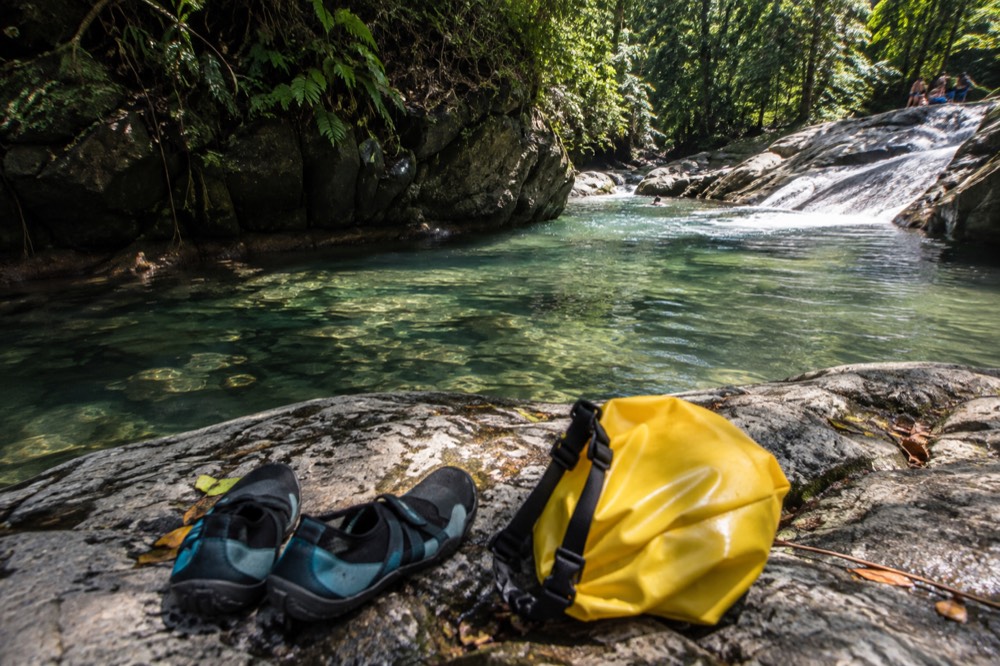
Towels live in the vehicle, not on your person while sliding. Phones should be in the dry bag or with the guide; the tours that advertise photos included are advertising exactly this problem solved for you. If you want the full packing rundown for a rainforest day in this climate, our what to wear and bring guide goes into more detail than this page needs to.
Is The Slide Worth It If It Is Not Actually In The Forest?
For most visitors, yes, because the day is bigger than the slide. The best-reviewed tours pair the slides with a rainforest segment inside the actual national forest, so you get the forest, the river and the chutes in one trip, with transport and a guide solving the parking and access problems that a self-driver faces. The slide alone is a good half hour; the combined day is the reason to book.
Think about what a self-drive version of this day looks like. You rent a car in San Juan, drive to the Luquillo side, find the access to private land, arrange entry with the landowners, park, walk in, and hope the water level is right. Then, if you also want the national forest, you drive to the PR-191 corridor, where entry is free and no reservation is required, but capacity is managed through designated parking, Yokahú Tower allows thirty minutes maximum, and the lots fill. Rideshare apps cannot pick you up at the corridor or at El Portal, and not every taxi holds a forest permit, a gap the Forest Service explicitly warns about.
A tour collapses that pile of logistics into one booking. The vehicle is permitted, the drop-off is legal, the guide knows whether the water is right, and the day moves. That is the honest case for booking, and it is a strong one: not queue-skipping, because there is no queue, but problem-solving.
If you are weighing the slide day against other ways to spend your time, these are the same three tours again, in one place, for a final look:
One last framing thought. The slide's appeal is partly that it is natural. Nobody designed it, nobody maintains it, and the river will keep reshaping it long after any tour company is gone. That is a genuinely unusual thing to ride, and it explains why a rock chute on a private river outside a national forest draws visitors from across the world. Go knowing what it is, wear the right shoes, and check the water before you commit.
Common Questions About The El Yunque Waterslide
Is The Slide In El Yunque Man Made?
No. It is a natural rock chute, a section of riverbed worn smooth by water and sediment over centuries, ending in a natural pool. The only man-made elements are the paths and rails locals have added for access.
Is the slide inside El Yunque National Forest?
No. The slides sit on private land in Luquillo, outside the national forest boundary and outside Forest Service management. The Forest Service does not list them among its recreation sites and provides no oversight there. Access is arranged with the landowners on the spot.
Do you need a reservation to enter El Yunque National Forest?
No. Entrance to the PR-191 North recreational corridor is free and no reservation is required, with hours from 8:00 a.m. to 5:00 p.m. The only fee site is El Portal Visitor Center, at $8 for visitors 16 and over, free under 15.
Can you swim at the slides?
Yes, the chutes end in plunge pools that people swim in, and tours build river time around them. Conditions matter: after heavy rain the flow rises and the chutes become unsafe, and flash floods in this watershed can arrive with almost no warning. Guides judge the water on the day.
What should you wear to ride the slide?
Closed-toe water shoes with real grip, a swimsuit worn under quick-dry clothes, and nothing valuable that is not in a dry bag. The rock is slick on the slide, beside it and on the approach, and the Forest Service's footwear advice for the forest next door applies equally here.
Which tour is best for the slides?
The 7-hour small-group tour, rated 4.9 across 16,584 reviews from $45, is the strongest-rated option. The standard 7-hour tour from San Juan runs from $58 with pickup, and the half-day rope-swing version runs 4 hours from $25. All group sizes are stated on the live listings.