Can You Swim At El Yunque?
Yes, but only at specific spots the Forest Service lists, and never at the famous falls most tours photograph. Here is where swimming is actually allowed in El Yunque, where it is not, and how to pick a tour with real water time.
Can You Swim At El Yunque?
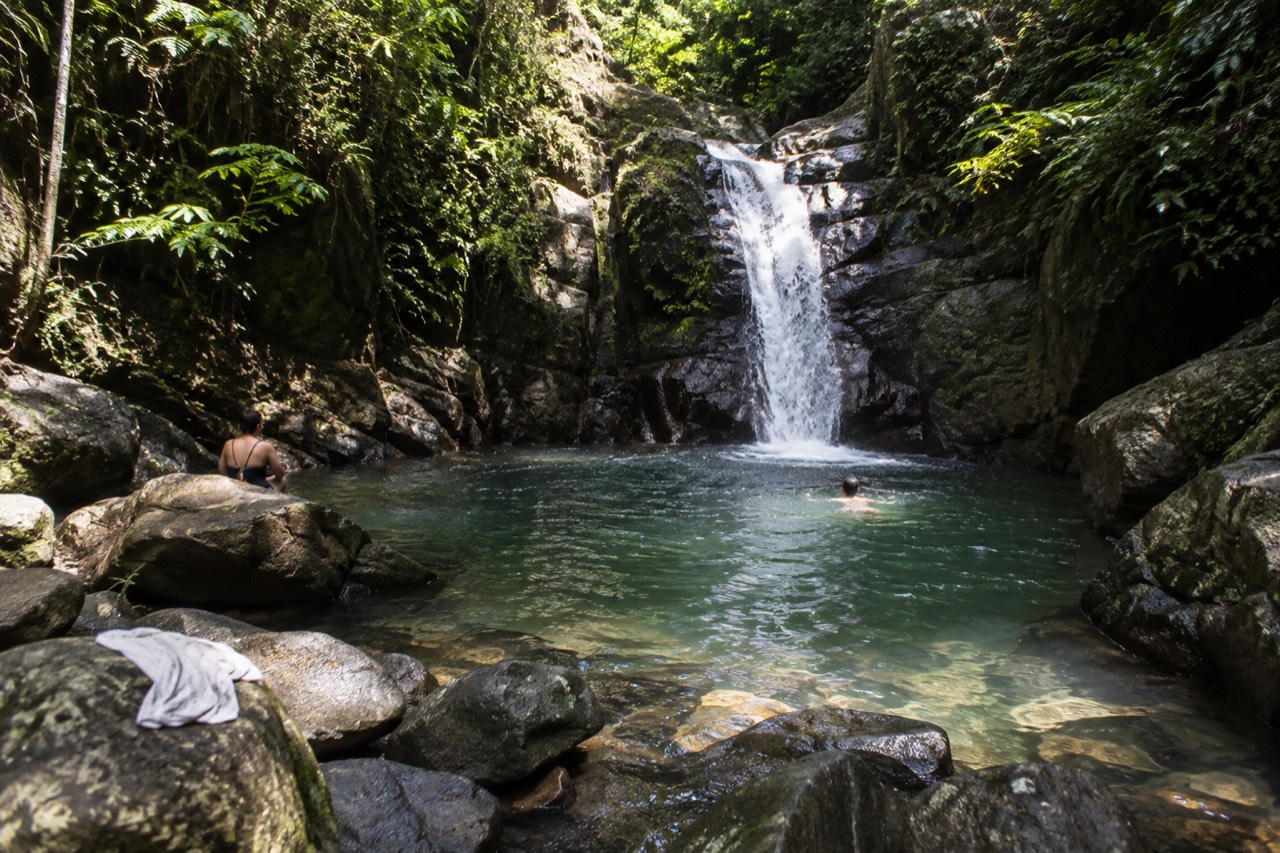
Yes, you can swim at El Yunque, but only at the specific spots the Forest Service itself lists as swimming opportunities: Juan Diego Falls, the Angelito Trail and Las Damas Pool on the Río Mameyes, Puente Roto, Quebrada Grande, Quebrada Sonadora, the Río Espíritu Santo Observation Point and the Río Sabana Recreation Area. The famous falls you have seen in photos, La Coca and La Mina, are not among them.
That split is the single most useful thing to understand before you book anything. El Yunque National Forest is managed by the USDA Forest Service, and the Forest Service publishes, for each of its recreation sites, a short list of the activities it actually offers. Some pages say "Swimming" under Water Activities. Others list only viewing scenery. That difference is not bureaucratic fine print, it is the difference between a day that ends with a dip in a mountain river and a day that ends with a photo of a waterfall you were never allowed to enter.
It matters even more if you are choosing a tour, because a large share of El Yunque tour marketing leans on water imagery: waterfall pools, natural slides, rope swings. Some of that water time happens inside the national forest at listed swimming spots. Some of it happens on private land outside the forest boundary. And some of it, frankly, describes places where swimming is not permitted at all. Knowing which is which lets you read a tour listing the way a local would.
The three options above are the ones this site would point a swim-focused reader to first: two tours whose entire format is slides and rope swings, and a hike-plus-zipline combo for travelers who want water and canopy in one long day. The rest of this article explains the underlying rules so you can judge any listing, not just these.
Where Is Swimming Actually Allowed Inside The Forest?
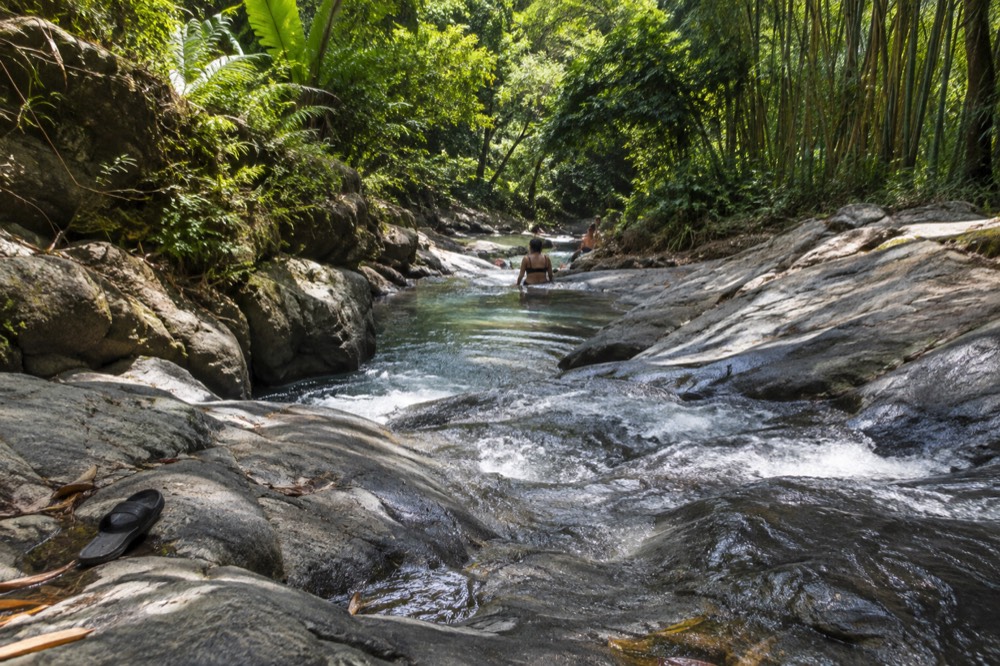
The Forest Service lists swimming at eight places in El Yunque: Juan Diego Falls and its natural pool, the Angelito Trail reaching the Río Mameyes and Las Damas Pool, Puente Roto, Quebrada Grande, Quebrada Sonadora, the Río Espíritu Santo Observation Point, and the Río Sabana Recreation Area. Each one is a river or creek setting, and each carries the same flash-flood warning.
Two of these stand out for the average visitor. Juan Diego Falls, at kilometer 9.6 on PR-191, is a short path to a natural pool along Juan Diego Creek with a waterfall you can wade into; the trade-off is a 30-minute maximum for parking because the area's capacity is limited. The Angelito Trail, on Road 988 near Luquillo, is the family favorite: an easy 0.4-kilometer walk down through tabonuco trees to the federally designated Wild and Scenic Río Mameyes, where Las Damas Pool and other swimming spots sit close to the trail's end. The Forest Service itself describes it as a nice trail for families with younger children.
The others are quieter. Puente Roto is a Luquillo-side recreation area with swimming listed, though the Forest Service's current note for the road asks drivers to take care because of construction. Quebrada Grande and Quebrada Sonadora are Río Grande-side creek spots. Río Espíritu Santo has an observation point on the El Toro Scenic Byway side, and Río Sabana is a Naguabo recreation area reached from the south, the side of the forest most San Juan visitors never see.
| Listed swimming spot | Where it is | What the Forest Service says |
|---|---|---|
| Juan Diego Falls | PR-191, km 9.6 | Short path to a natural pool you can wade into; 30-minute parking maximum |
| Angelito Trail / Las Damas Pool | Road 988, km 3.6, Luquillo | Easy 0.4 km trail to the Wild and Scenic Río Mameyes; family friendly |
| Puente Roto | Road 988, Luquillo | Swimming listed; road under construction, drive carefully |
| Quebrada Grande | Río Grande side | Swimming listed; poor road conditions noted, drive carefully |
| Quebrada Sonadora | Río Grande side | Swimming listed |
| Río Espíritu Santo Observation Point | Road 186, El Toro Scenic Byway | Swimming listed |
| Río Sabana Recreation Area | Naguabo, south side | Swimming listed; reached via PR-191 South |
A practical note on all of these at once: the Forest Service repeats one warning on its trail and recreation pages, that flash flooding along El Yunque's rivers can happen unexpectedly, and that you should be aware of current conditions and flash-flood reports for the area. That is not a disclaimer to scroll past, and the next sections explain why. Before you go, the forest alerts page is the live authority on what is open.
If a guided day with real water time sounds better than reading status pages, there is a straightforward way to get one.
Where Can You NOT Swim, Even Though The Photos Suggest Otherwise?
You cannot swim at La Coca Falls, at Baño Grande, at Baño de Oro, or at La Mina Falls, and swimming is not a listed opportunity at any of them. La Coca is a roadside viewing stop only. Baño Grande has been closed to swimmers since 1968 and is posted no swimming permitted. Baño de Oro is a former swimming hole, now a photo spot.
La Coca Falls is the waterfall most people photograph from the road: an 85-foot drop onto a rock formation at PR-191 kilometer 8.1, with a developed parking area and an artisan shop. The Forest Service lists exactly one recreation opportunity there, viewing scenery. It is a stop, not a swim.
Baño Grande catches people out because it looks built for swimming, because it was. It is a man-made pool 18 feet deep, formed by a stone and masonry dam built by the Civilian Conservation Corps in the late 1930s, and it was in continuous use as a swimming pool from 1936 to 1968, when it was closed to swimmers over safety concerns and turned into a scenic spot. Today the page says it plainly: no swimming permitted.
Baño de Oro is a similar story with a longer arc. The mid-1930s site holds the first concrete pool and house built in Puerto Rico, built by the CCC in pits earlier dug by Spanish gold seekers, and it is a registered National Historic Property. The Forest Service calls it a former swimming hole that is now a popular spot for photo opportunities. The trail to it reopened after eight years closed following Hurricane María damage, but the swimming did not come back with it.
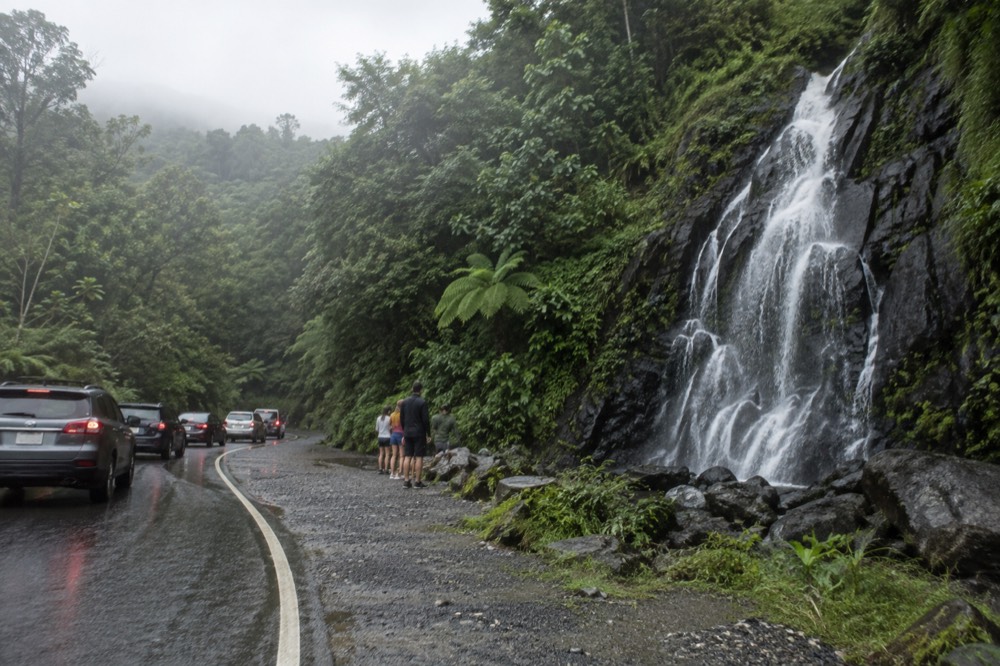
La Mina Falls deserves its own careful sentence, because it is the headline of so much El Yunque marketing. Both trails that lead to it, La Mina Trail and Big Tree Trail, are listed as closed in the Forest Service's forest trails status alert, and the FAQ says La Mina trail and falls remain closed for construction. So the honest answer is not "you cannot swim at La Mina Falls," it is "La Mina is not currently reachable, and a tour listing that promises swimming there is promising something outside the visitor's control." Closures in this forest change with construction and storm recovery, so treat any status, open or closed, as something to confirm on the alerts page rather than a standing fact.
There is a pattern worth naming here. A tour listing may still advertise a swim at a spot where the Forest Service does not permit it, or at a trail that is closed. That is the listing's claim, not the forest's rule. When you read an itinerary, check each water stop against the official list above, and treat anything else as a claim to verify.
What About The Natural Waterslides Tours Advertise?
The natural waterslides above Luquillo, known as Las Paylas, are not inside El Yunque National Forest. They sit on private land outside the forest boundary, with no Forest Service management, staffing, listing or safety oversight. Several popular tours include them, and that is fine, but it changes what you are buying: a stop on private property, not a national forest swim.
This is not a technicality and it is not an anti-tour argument. It was verified directly against the Forest Service's own GIS boundary and ownership layers: the slides return zero features in both, while a control point at La Coca Falls returns El Yunque National Forest. Las Paylas appears on none of the Forest Service's 37 listed recreation sites for El Yunque. Access is arranged with the landowners on the spot, through private property.
Why does it matter? Because the forest's rules do not follow you there. The flash-flood guidance, the trail-status alerts, the ranger presence, the posted warnings: none of it applies to a private-land slide. Some travelers will read that and still happily go, and several tours on this site's roster, including the San Juan to El Yunque Rainforest Waterslides and Luquillo Beach tour from $50 and the Small-Group El Yunque Waterfall & Waterslides with Pickup from $63, list Las Paylas as a confirmed stop. Others, like the Half-Day Yunque Rainforest Waterslide & rope swing Guided Tour from $25, do their sliding and rope-swinging at river spots the operator selects on the day. Both can be a good day out. The point is to know which one you booked.
| Water stop type | Inside the national forest? | Who manages it | What to check |
|---|---|---|---|
| Forest Service listed swim spot (Juan Diego, Angelito, Puente Roto, others) | Yes | USDA Forest Service | Alerts page for status; flash-flood outlook |
| Las Paylas waterslides | No, private land in Luquillo | Private landowners | Tour listing details; arranged on the spot |
| La Coca, Baño Grande, Baño de Oro | Yes | USDA Forest Service | Not swim spots; viewing only |
The related guide on Luquillo waterslides tours goes deeper on the slide tours specifically, including how the private-land stops differ from forest river stops.
Is Swimming In El Yunque Safe? The Flash-Flood Rule
Flash floods are the governing safety fact for every swim spot in El Yunque. The Forest Service warns that flood water can rise fast enough to claim victims in less than one minute, that surges can reach 30 feet or more and roll boulders and vehicles, and that floods can happen any time of year but are more frequent in the rainy months of April and May.
That is the stern version, and it deserves to be stated sternly, because every listed swimming spot in this forest is a river or creek pool. The Forest Service's own safety guidance for the forest is direct about the practical rules: stay alert for heavy rain not just where you are but upstream, watch for rising water, get to higher ground, do not cross flowing streams, and do not try to outrun a flash flood in a car. A flash flood watch means threatening weather is possible; a warning means you may have only seconds.
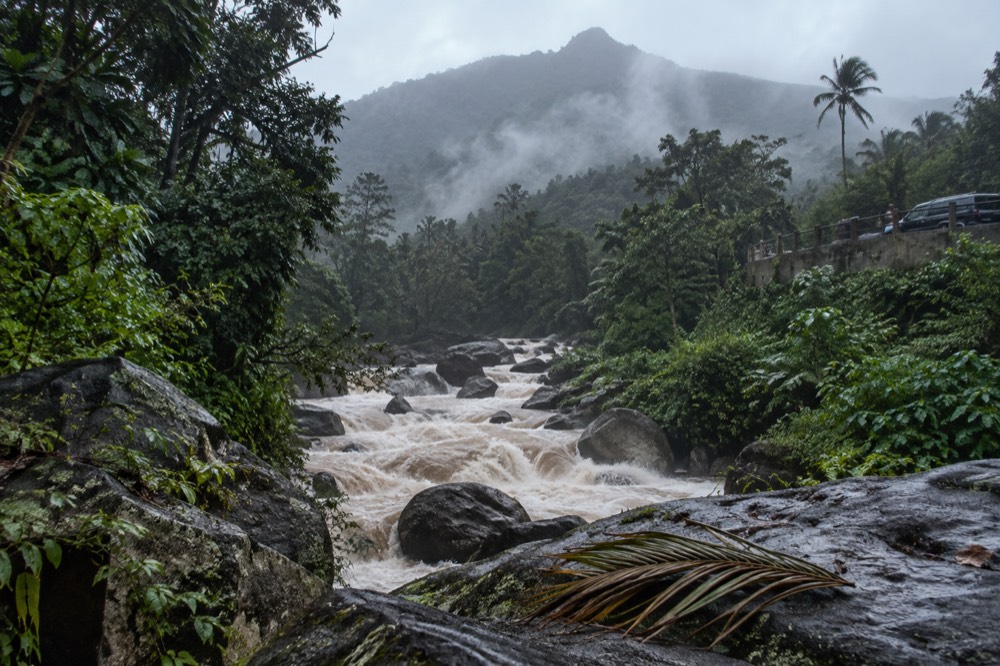
There is also a genuinely useful tool most visitors never hear about. The Río Mameyes, the river the Angelito Trail leads down to, has a live USGS stream gauge, site 50065500 near Sabana, publishing real-time discharge and gage height. The gauge page lets you check the river before you get in, and a guide worth their salt will be watching the same numbers. The Río Espíritu Santo has an equivalent flood-stage gauge page on the National Weather Service side.
One more piece of official advice that applies to every water stop: the Forest Service's preparation guidance for El Yunque leads with footwear, and its wording is worth repeating because it is exactly right. Wear good shoes with traction: it is a rainforest, and it is wet and mossy, and wet surfaces on a slope are a hazard. River rocks are the slippery version of the same problem. The site's guide on what to wear and bring to El Yunque covers the full kit.
How Do You Pick A Tour That Genuinely Includes A Swim?
Judge a tour by where its water time happens, not by its photos. A tour built on Forest Service listed swim spots or on the private Luquillo slides will deliver water time; a sightseeing tour that stops at La Coca and Yokahú Tower will not, no matter how much water is in the pictures. Read the confirmed stops, match them against the official list, and check the cancellation policy before booking.
The roster on this site makes the distinction visible. Tours in the waterslides family, like the El Yunque Rainforest Waterslides, Waterfalls and Rope Swing tour, a 4-hour meet-the-guide option from $25 rated 4.8 across 2,496 reviews, are built almost entirely around sliding, swinging and river pools. Sightseeing tours in the forest-corridor family, like the Half-Day El Yunque National Forest Tour from San Juan, from $100, list La Coca Falls and Yokahú Tower: beautiful stops, both confirmed, neither a swim.
Between those poles sit the hybrids. The forest-and-beach tours pair a forest visit with Luquillo Beach, which is a proper swim on a lifeguarded balneario rather than a river pool. The bio bay combos add an evening kayak on Laguna Grande in Fajardo, which is water time of a completely different kind. If a swim is the point of your day, name the stop you want to swim at, then find the tour that lists it as confirmed.
The 3-hour option above is the shortest water-heavy format on the roster, and its meet-the-guide design keeps the price low. For travelers who want the same idea with everything arranged, the related tour below is the one this page points to.
It is worth saying what a guide actually adds at a swim stop, because on this site the honest case for a tour is never queue-skipping. There is no reservation to skip: entrance to the corridor is free and no reservation is required. What a permitted operator provides is a vehicle that can legally drop off and pick up inside the corridor, a solution to the parking limits that are how the forest manages capacity, and someone who knows which water spots are actually workable on the day, which in a forest with active construction and closures matters more than usual. Rideshare apps cannot pick up at the corridor or El Portal, so a self-driver without a car can be stranded on foot after a swim.
| Tour format | Typical water time | Example from the roster |
|---|---|---|
| Waterslide and rope swing tours | Slides, swings and river pools, the whole itinerary | Half-Day Yunque Waterslide & rope swing, from $25, 4 hours |
| Forest and beach tours | Forest stops plus a swim at Luquillo Beach | Rainforest Waterslides and Luquillo Beach, from $50, 5 to 7 hours |
| Forest corridor sightseeing | Waterfall viewing only, no swim | Half-Day National Forest Tour, from $100, 5 hours |
| Bio bay combos | Forest day plus evening kayak at Laguna Grande | Two-in-One Day Trip, from $183.98, 12 hours |
Prices and review figures above come from the operators' live listings and move with demand, so treat them as a starting point rather than a quote. Every tour named carries free cancellation except where noted on its listing.
What Should You Pack For A Swim Stop In The Forest?
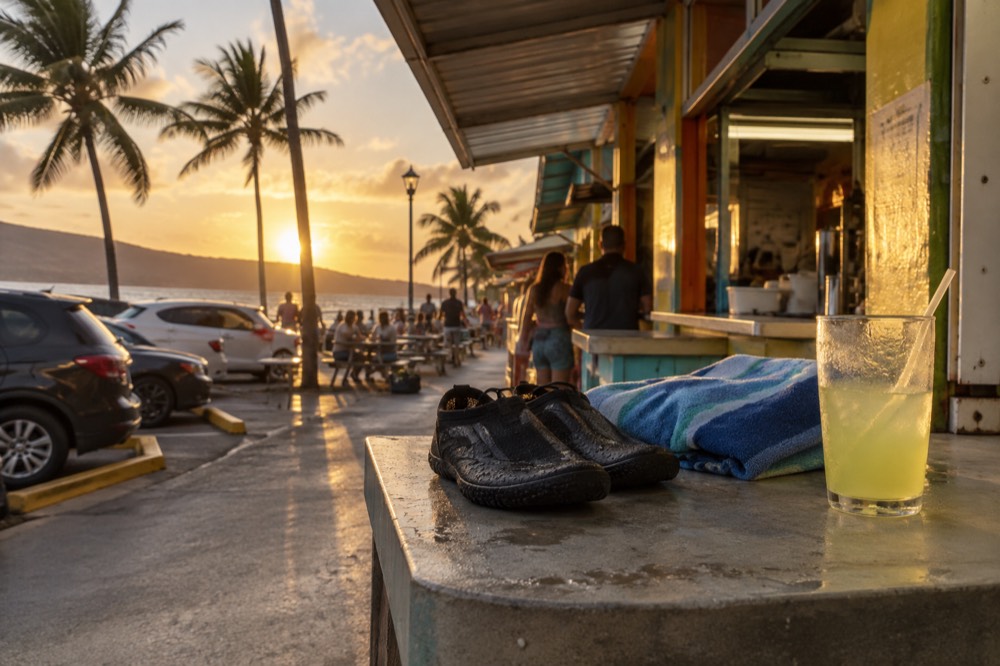
Pack for wet rock and quick rain: shoes with real traction, a swimsuit already under your clothes, a dry bag or ziplock for your phone, a towel, and a change of clothes for the ride home. Water shoes or strapped sandals beat flip-flops decisively on these surfaces, and the Forest Service's own advice about wet, mossy slopes applies double at a river pool.
The swimsuit-under-clothes trick matters more here than at a beach, because most swim stops in El Yunque do not have changing rooms. Juan Diego has a 30-minute parking maximum, so the rhythm of a visit is walk, wade, dry off, leave. Angelito is a short trail but ends at river rocks, not a beach. A towel that packs small and a bag that keeps the dry things dry are the two items people most often wish they had.
Two things not to bring: expectations of facilities, and valuables. The Forest Service's repeated trail-side advice is to lock your vehicle and take your valuables with you, and several listed swim spots have no potable water. If your tour includes a Luquillo kiosks stop, as many of the beach-hybrid tours do, that is where food and drink happen, and the kiosks are a destination in their own right, generating around 840 direct jobs and an estimated $41.4 million a year for the island's eastern economy.
The last planning question is timing. The corridor opens at 8:00 a.m. and closes at 5:00 p.m., with visitors advised to begin exiting at least 15 minutes before closing, and afternoon rain is a rainforest norm rather than an exception. Annual rainfall in the Luquillo Mountains ranges from roughly 96 inches at lower elevations to over 157 inches at the higher stations, and the highest readings cluster around El Yunque Peak. A morning swim, before the clouds stack up and before the parking fills, is the reliable play. The site's guide on the best time to visit El Yunque works through the seasons in detail.
This is also where El Yunque National Forest Tours earns its keep as a research site: every tour page here names its confirmed stops, so you can match water time to the official swim list before you spend anything, and every figure is drawn from the operators' live listings and the Forest Service's own pages.
Common Questions About Swimming At El Yunque
Can You Swim At El Yunque?
Yes, at the specific spots the Forest Service lists: Juan Diego Falls, the Angelito Trail and Las Damas Pool on the Río Mameyes, Puente Roto, Quebrada Grande, Quebrada Sonadora, the Río Espíritu Santo Observation Point and the Río Sabana Recreation Area. You cannot swim at La Coca Falls, Baño Grande or Baño de Oro, and La Mina Falls is unreachable while its access trails are closed.
Can you swim at La Mina Falls?
Not currently. Both trails that lead to La Mina Falls, La Mina Trail and Big Tree Trail, are listed as closed in the Forest Service's forest trails status alert, and the agency's FAQ says the trail and falls remain closed for construction. Check the alerts page for the live status rather than any tour listing's promise.
Are the El Yunque waterslides inside the national forest?
The natural waterslides above Luquillo, Las Paylas, are on private land outside the El Yunque National Forest boundary, with no Forest Service management or oversight. Tours that include them are selling a stop on private property, which can still be a good day, but it is not a national forest swim.
Is it safe to swim in El Yunque's rivers?
At the listed spots, yes, with one governing caution: flash floods. The Forest Service warns that rising water can claim victims in less than a minute and that floods are more frequent in April and May. Watch for heavy rain upstream, not just where you are, and get to higher ground if water starts rising.
Do I need water shoes for El Yunque?
Strongly recommended. The Forest Service's own preparation advice leads with footwear, noting the forest is wet and mossy and that wet surfaces on slopes are a hazard. River rocks at the swimming spots are the slipperiest surfaces in the park, so traction beats flip-flops every time.
Which El Yunque tour includes the most swimming?
The waterslide and rope swing tours are built entirely around water time, such as the Half-Day Yunque Rainforest Waterslide & rope swing tour from $25 and the 3-hour Waterfalls, Waterslides and Rope-swing option from $40. Forest-and-beach hybrids add a proper swim at Luquillo Beach on top of the forest stops.