Luquillo Kiosks And Beach: Planning The Afternoon Half Of An El Yunque Day
The Luquillo kiosks are a strip of around 60 food stalls on the town's beachfront, and for most visitors they are the standard second half of a Luquillo-side El Yunque day: rainforest in the morning, kiosks and sand in the afternoon.
Short answer
The Luquillo kiosks are a beachfront strip of food stalls in Luquillo, Puerto Rico, drawing about one million visitors a year. Entry to El Yunque's PR-191 corridor is free with no reservation, and the kiosks sit about ten minutes from the Road 988 forest entrance, which makes forest-plus-beach the natural day shape.
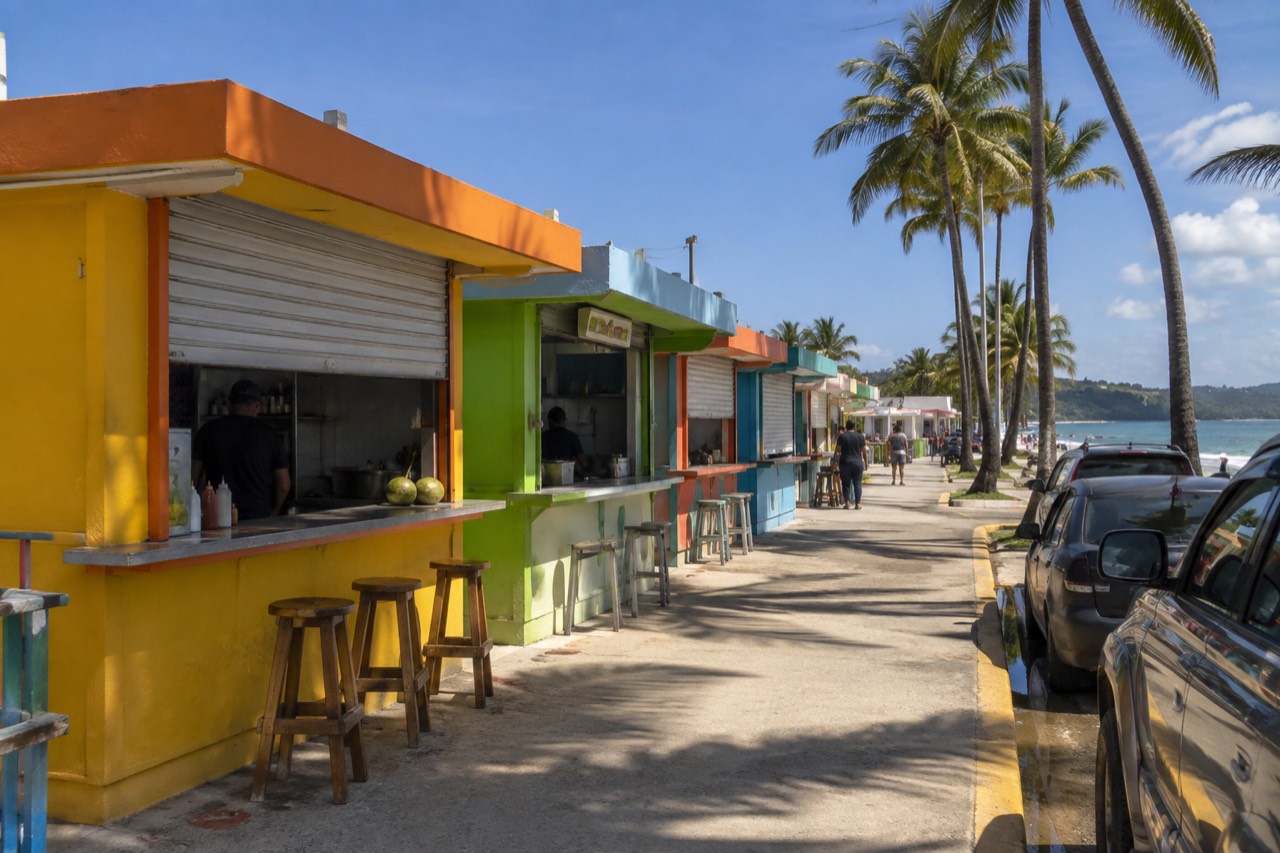
The Luquillo kiosks are less a restaurant row than a Puerto Rican institution: a strip of small, family-run food stalls packed along the beachfront at the edge of town, selling everything from fried whole snapper to pinchos straight off the grill. According to Puerto Rico Tourism Company figures reported by Metro Puerto Rico, around one million people visit the kiosks every year, and the businesses there generate around 840 direct jobs and more than $41.4 million a year for the economy of Luquillo and the wider east of the island. That is a serious operation for what looks, from the road, like a line of weathered shacks.
For someone planning an El Yunque trip, the kiosks matter for a simpler reason: geography. The forest's Luquillo-side entrance on Road 988 is minutes away, the PR-191 North corridor is just up the hill from El Portal, and the beach at Balneario La Monserrate sits directly behind the kiosks. Rainforest in the morning, lunch at a kiosk, sand and a swim in the afternoon is the natural shape of the day, and it is the shape most Luquillo-side tours are built around. This guide covers what the kiosks actually are, what you will eat and pay, which beach you are really on, and how to judge the combined itineraries worth booking.
One framing note before the details: the natural waterslides above Luquillo, often sold under the name Las Paylas, are on private land outside El Yunque National Forest, with no Forest Service management or oversight. If a tour lists a waterslide stop, that stop is not part of the national forest, which changes what you are buying. Our Luquillo waterslides tours guide covers that side of the coast in full.
What Are The Luquillo Kiosks?
The Luquillo kiosks are a beachfront strip of roughly 60 independent food stalls in Luquillo, Puerto Rico, open mainly from late morning into the evening, with weekends the busiest time. They are not a market or a mall but a row of individual kitchens, each with its own owner, menu and hours, so the experience depends on which stalls are open the day you go.
The strip has been part of Luquillo life for generations, and its character reflects that: some kiosks are barely more than a counter and a fryer, others have grown into full restaurants with decks facing the water. What they share is the food. Expect fried fish and whole red snapper, mofongo in every variation, alcapurrias and bacalaítos, pinchos, tacos, and cold Medalla. Prices are stall by stall, so treat anything you read as a planning range and confirm at the counter; a skewer of pinchos and a soda is cheap, a whole fried snapper for two is a proper meal at a proper price.
The million-visitors-a-year figure is worth pausing on, because it explains the rhythm. Weekends bring local families from across the east of the island, and the strip gets loud and full. Weekday late mornings are calmer, though some stalls will be shuttered. If your El Yunque plan has you coming down from the forest at midday on a Saturday, expect company; if you can shift your kiosk visit to a weekday, you trade atmosphere for ease, and the food is the same.
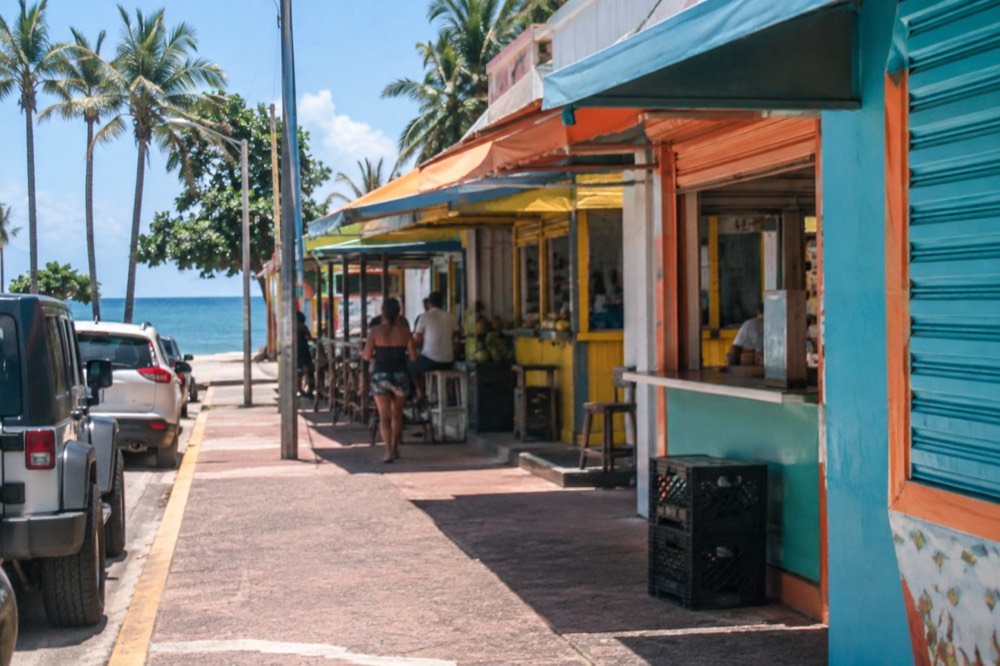
A practical note on payment: smaller stalls run on cash, and some of the larger ones take cards. Bring cash in small bills. There is no single kiosk authority, no central booking and no official website for the strip as a whole, so any list of "the best kiosks" you find online is someone's opinion, including ours would be if we offered one. Walk the strip, look at what is coming out of the kitchens, and follow the locals.
How Do The Kiosks Fit Into An El Yunque Day?
The kiosks sit minutes from the forest's Road 988 Luquillo entrance and from the PR-191 North corridor, so the standard day is rainforest in the morning and kiosks plus beach after. Entry to the PR-191 North corridor is free, no reservation is required, and hours are 8:00 a.m. to 5:00 p.m., with parking permitted only in designated areas.
Start with the fact that reshapes most itineraries: there is no timed-entry reservation for El Yunque any more. The Forest Service's Current Conditions page states plainly that entrance to the PR-191 North recreational corridor in Río Grande is free and no reservations are required, with operating hours of 8:00 a.m. to 5:00 p.m. Visitor capacity is managed because of parking limitations and ongoing construction, and parking is permitted only in designated areas. The old recreation.gov timed-entry facility no longer exists. You can read the current wording on the official conditions page, which is the page to re-check before any visit.
That fact cuts both ways. It means a self-driver with a rental car can enter free and owes nothing but parking discipline. It also means a tour does not buy you past a reservation queue, because there is none. What a tour does buy is the thing the Forest Service itself warns about: the corridor and El Portal are not pick-up points for rideshare apps, not every taxi holds a forest permit, and a permitted vehicle with a legal drop-off solves the parking problem that is the forest's actual constraint. That is the honest case for booking, and it is a good one.
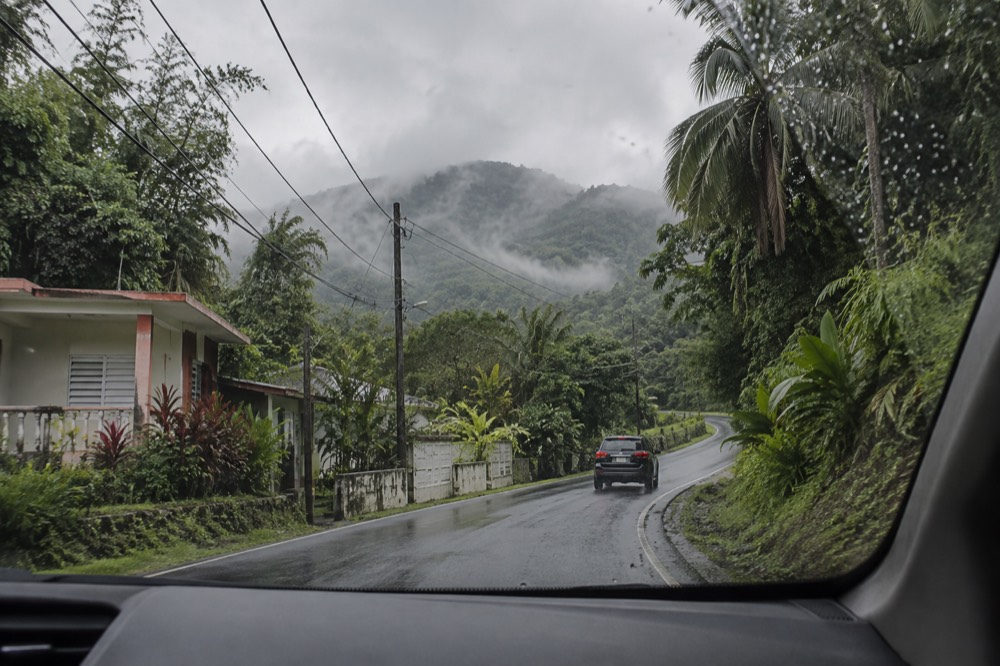
For the Luquillo-side shape of the day, the sequence works like this: enter on Road 988 from Luquillo or come down PR-191 North from Río Grande, spend the morning at the stops that are open, and descend to the kiosks for lunch when the forest's afternoon clouds build. Rainfall in El Yunque ranges from about 96 inches a year at lower elevations to over 157 inches at higher stations, so a wet afternoon is normal and a beach afternoon after a wet forest morning is not a consolation prize, it is the plan. Our guide to El Yunque in the rain covers the timing in more depth.
If you would rather have someone else handle the driving, the forest-and-beach combination is the most common tour format on this coast. The trio below spans the range: a half-day waterslide adventure that includes a Río Mameyes stop, a shorter self-drive slides-and-waterfalls option, and a beach buggy plus waterfall combo for something louder.
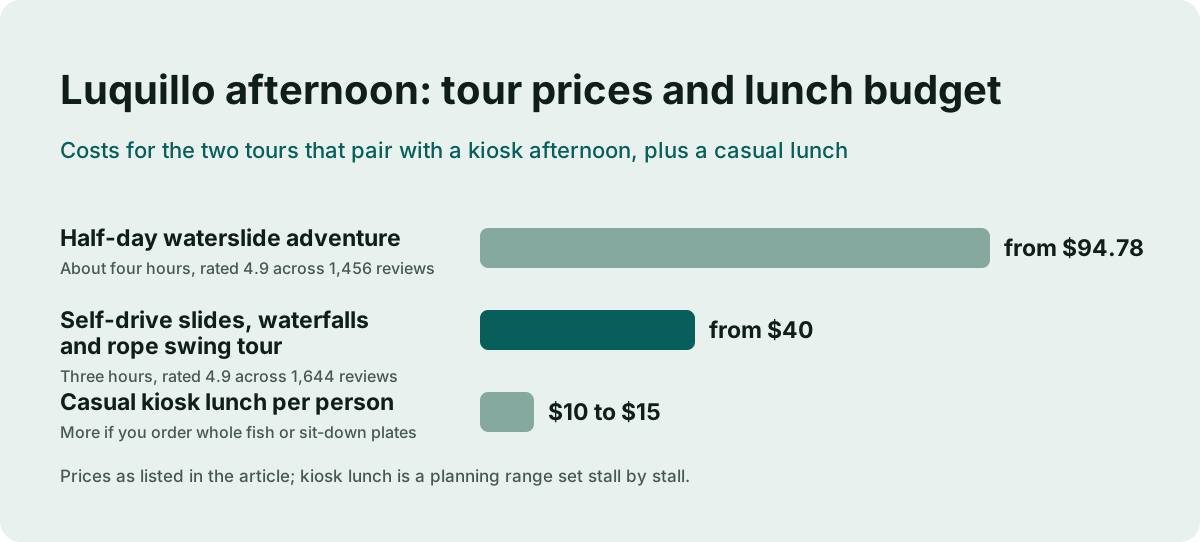
The trade-off between these formats is mostly transport and time. The half-day waterslide adventure runs about four hours from $94.78 and includes a confirmed Río Mameyes stop, rated 4.9 across 1,456 reviews. The self-drive slides, waterfalls and rope swing tour runs three hours from $40, rated 4.9 across 1,644 reviews, and lists Luquillo Beach and the Luquillo Kiosks as confirmed stops, so it pairs naturally with an independent afternoon. Whichever you choose, book the one whose stops match the day you actually want, not the one with the biggest headline.
Which Beach Do The Luquillo Kiosks Sit On?
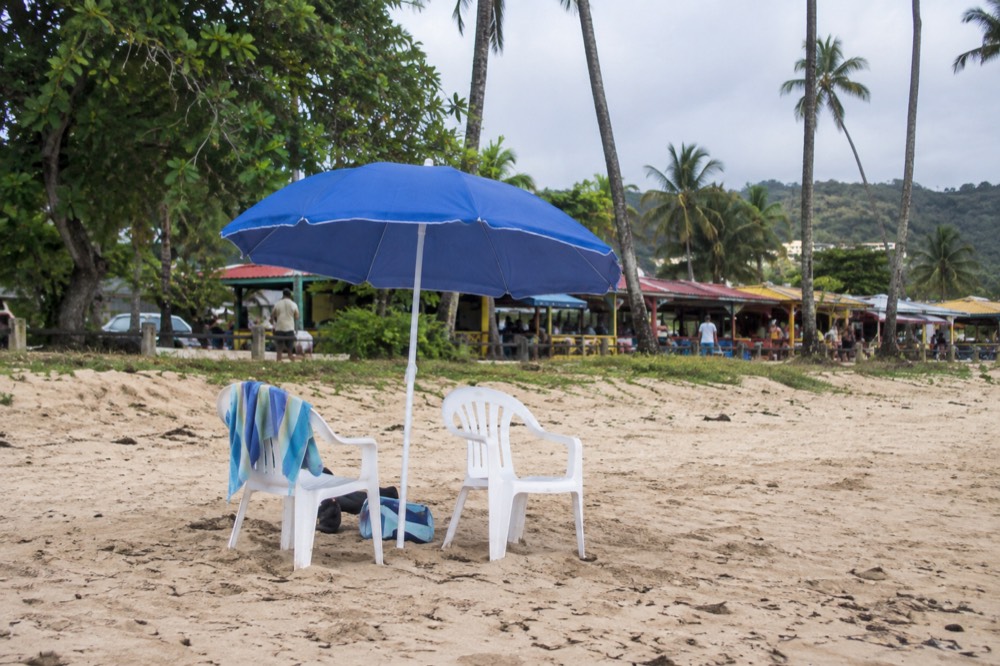
The kiosks back directly onto Balneario La Monserrate, Luquillo's main public beach, a calm, crescent-shaped bay protected by a reef, with a pedestrian bridge connecting the beach area toward the kiosks. It is a swimming beach by design, lifeguarded in the main season, and it is the beach almost every forest-and-beach tour means when it says Luquillo Beach.
Balneario La Monserrate is the classic postcard of the Puerto Rican east coast: wide sand, palm trees, and water that stays shallow and calm because of the reef across the bay's mouth. The DRNA began rehabilitation work at the balneario in September 2025 with a $98,000 investment, and the pedestrian bridge that connects the beach area toward the kiosks represented an investment of $194,875, funded through House Joint Resolution 47 of 2018, both reported by Walo Radio. The bridge matters practically: it means you can park at the beach, walk to lunch, and walk back without moving the car.
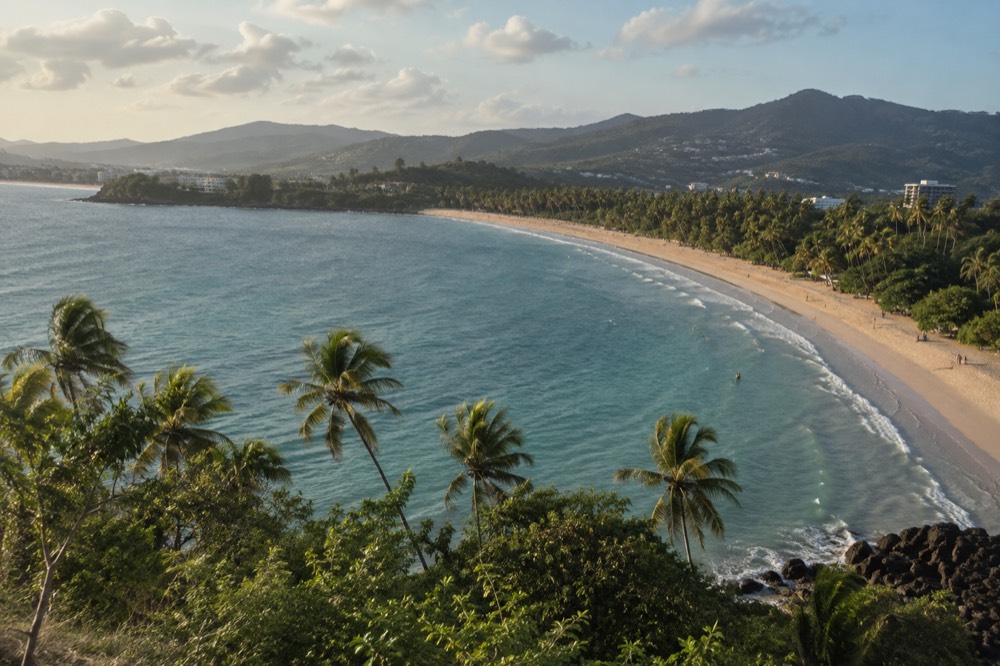
North of the balneario, Playa Azul fronts the town itself and is the more local, less manicured stretch. Both are free to walk; the balneario has facilities and organized parking, Playa Azul is more street parking and shade trees. Neither is part of El Yunque National Forest, which is worth saying because a surprising amount of tour copy blurs the two. The forest boundary ends in the hills; Luquillo's beaches are municipal and DRNA territory.
If a combined day sounds right, the half-day waterslide adventure is the roster's closest fit for a kiosk-centered afternoon: it finishes in about four hours, which leaves the second half of the day for the beach and a long lunch, and its Río Mameyes stop puts you on the water early. It is rated 4.9 across 1,456 reviews, from $94.78, with free cancellation.
What Food Will You Actually Find At The Kiosks?
Expect Puerto Rican street and comfort food: whole fried fish, mofongo, alcapurrias, bacalaítos, pinchos, empanadillas, tacos and cold drinks, plus a few stalls doing burgers and fusion menus. Prices are set stall by stall, so plan on roughly $10 to $15 per person for a casual lunch of snacks, more if you order whole fish or sit-down plates.
The fried food is the point. Alcapurrias are fritters of green banana dough stuffed with meat; bacalaítos are codfish pancakes; empanadillas are turnover pastries filled with chicken, beef or lobster. Pinchos are grilled chicken or pork skewers with bread, the cheapest hot meal on the strip. Mofongo, mashed and fried green plantains shaped into a bowl and loaded with garlic, shrimp, chicken or crab, is the plate to order when you want to sit down. Whole fried red snapper is the celebratory order, and several kiosks do it well.
A word on what the numbers above are: planning ranges, not promises. Each kiosk sets its own prices and changes them at will, so treat any per-item figure as a ballpark and confirm at the counter. The strip's economic weight is real, though: those 840 direct jobs and $41.4 million in annual economic activity reported by Metro Puerto Rico come from thousands of small transactions a day, which is why the strip can feel like the busiest kitchen on the east coast on a Sunday.
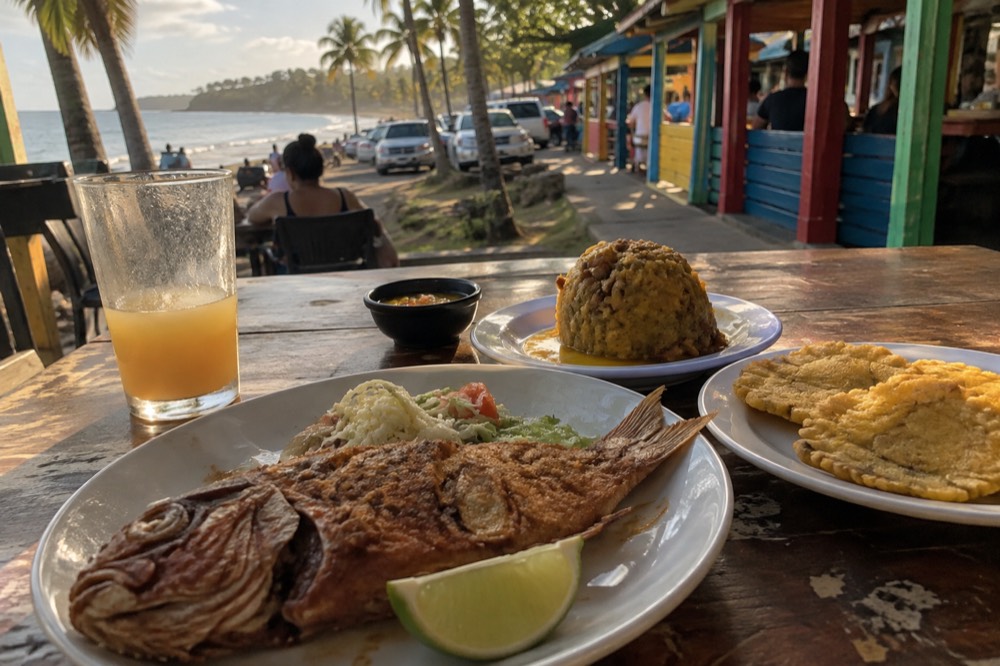
To help you order with confidence, here is the working vocabulary of the strip, dish by dish.
| Dish | What it is | How to order it |
|---|---|---|
| Pinchos | Grilled chicken or pork skewers with bread | Standing, from a grill cart, cheapest hot meal |
| Alcapurrias | Fried green banana dough fritters stuffed with meat | Standing or takeaway, one or two as a snack |
| Bacalaítos | Crispy codfish pancakes | Standing, best eaten immediately |
| Empanadillas | Fried turnover pastries, chicken, beef or lobster | Standing or takeaway |
| Mofongo | Mashed fried plantain bowl with garlic, shrimp, chicken or crab | Sit down, a full plate |
| Whole fried snapper | Entire red snapper, fried and served whole | Sit down, for two, the celebration order |
Timing advice that holds up regardless of which stalls are open: eat at the shoulder hours. The strip is thickest from noon to 3 p.m. on weekends, when the beach crowd gets hungry all at once. Arriving at 11:30 or after 2:30 gets you faster service and a better shot at a table with a water view. And if you are coming down from the forest, remember the corridor closes right at 5:00 p.m. and visitors are advised to begin exiting at least 15 minutes before closing; the kiosks run later into the evening than the forest does, so there is no rush in the other direction.
The half-day waterslide adventure, the tour this site most often pairs with a kiosk afternoon, works precisely because it ends early: from $94.78, about four hours, with a confirmed Río Mameyes river stop and free cancellation if the weather turns.
How Much Time And Money Should You Budget?
Budget half a day for the kiosks and beach on their own, or a full day combined with the forest. Entry to El Yunque's PR-191 North corridor is free, El Portal charges $8 for adults 16 and over and is free under 15, kiosk lunches run roughly $10 to $15 per person for casual eating, and the only hard costs are food, any El Portal tickets and parking if you drive.
The forest side of the budget is unusually simple. The corridor itself is free, and the only current fee site is El Portal de El Yunque Rainforest Center: $8 for adults 16 and over, free under 15, $4 with an interagency pass. Note that a fee proposal for El Portal and a La Mina Recreation Area permit is pending and not in effect; La Mina is free today, and nothing proposed should be paid by anyone until the Forest Service announces a decision. El Portal tickets are also sold through the official ticketing system, released 30 days in advance at 9 a.m. ET, with cancellations accepted up to 24 hours ahead minus a $2 processing fee. The wider set of guides lives on El Yunque National Forest Tours.
The chart below pulls the day's moving parts into one view, using the verified fee and the roster's tour prices as the anchors.
| Item | Typical cost | Notes |
|---|---|---|
| El Yunque PR-191 corridor entry | Free | No reservation required, 8:00 a.m. to 5:00 p.m. |
| El Portal visitor center | $8 adults 16+, free under 15, $4 interagency pass | The forest's only current fee site |
| Kiosk lunch | Roughly $10 to $15 per person, casual | Whole fish and sit-down plates cost more |
| Guided forest-and-beach tour | From $25 to $94.78 on this roster | Self-drive options start lowest |
| Full-day forest plus bio bay combo | From $165 to $184 on this roster | Adds Laguna Grande kayaking after dark |
Time is the other budget. The forest corridor's 8:00 a.m. to 5:00 p.m. window plus a beach afternoon means the day has a natural arc: forest stops in the morning when parking is achievable, kiosks at midday, beach until you are done. Tours that bundle both halves run from four to eight hours on this roster. If you want the fullest version, our El Yunque and Luquillo beach tours guide compares the combined itineraries in detail, and our what El Yunque tours cost guide covers pricing across every format.
Can You Swim At The Luquillo Beaches?
Yes, Balneario La Monserrate is a swimming beach by design, calm and reef-protected, and the kiosks sit right behind it. Inside El Yunque, the Forest Service lists swimming at the Río Mameyes along the Angelito Trail, Las Damas Pool, Juan Diego Falls pool, Puente Roto, Quebrada Grande, Quebrada Sonadora, Río Espíritu Santo and Río Sabana, each carrying a flash-flood warning.
Split the question in two, because the two halves of the day have different rules. On the beach side, La Monserrate is one of the easiest swims in Puerto Rico: the reef flattens the swell, the shallows run long, and the balneario is set up for families. Playa Azul is also swimmable but less serviced. Neither has anything to do with the forest's rules; they are town beaches.
On the forest side, be precise about where swimming is actually listed. The Forest Service's own recreation pages list swimming at the Río Mameyes reached by the Angelito Trail and Las Damas Pool, the Juan Diego Falls pool, Puente Roto, Quebrada Grande, Quebrada Sonadora, the Río Espíritu Santo Observation Point and the Río Sabana Recreation Area. They do not list swimming at La Coca Falls, which is a roadside viewing stop, and Baño Grande has been closed to swimmers since 1968 and is posted "No swimming permitted." La Mina Trail and Big Tree Trail, both approaches to La Mina Falls, are closed, so any listing promising a swim at La Mina Falls is describing something the Forest Service does not currently offer. Check the official alerts page before planning around any specific trail.
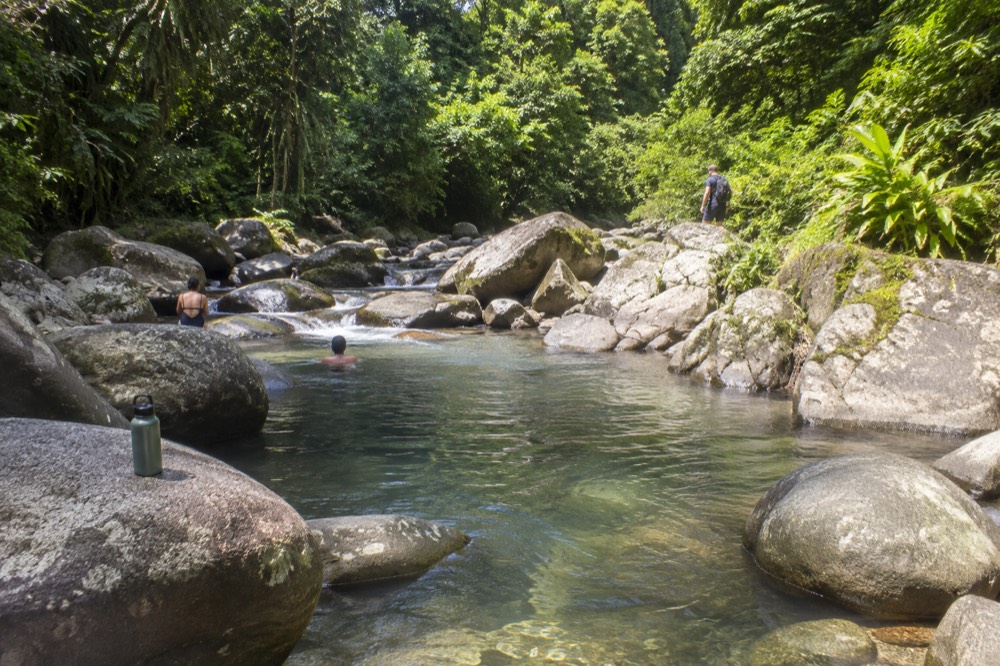
The flash-flood warning is not boilerplate. The Forest Service warns that flash floods can occur throughout the year, are more frequent in the rainy months of April and May, and that a sudden surge can claim victims in less than one minute, with flood water capable of reaching 30 feet or more. The safety advice is to stay alert for heavy rain upstream, not just where you are standing, and to leave the water at the first sign of rising levels. The Río Mameyes has a live USGS stream gauge publishing real-time discharge and gage height, so you can check the river before you get in.
For a tour that puts you in both worlds, the kiosks-and-beach pairing below includes a confirmed Luquillo Beach stop plus the Río Mameyes, the forest's listed swimming river, in one itinerary.
Do You Need A Tour To Do The Kiosks And Beach?
No, the kiosks and Balneario La Monserrate are public and need no tour, ticket or reservation. The case for a tour is the forest half of the day: rideshare apps cannot pick up at the corridor or El Portal, not every taxi holds a forest permit, parking is the forest's real constraint, and a guide knows which trails are actually open on the day.
Be honest about what you are buying. On the kiosk-and-beach side, an independent visitor with a rental car needs nothing but parking and cash. On the forest side, the Forest Service's own transport alert does the arguing: the recreational corridor and El Portal are not pick-up points for rideshare apps, visitors have been forced to walk long distances to reach a valid pick-up point, and while some taxi drivers can operate in the forest, not all hold the permit, so the agency tells visitors to ask before hiring. The Forest Service also publishes a directory of authorized and permitted tour operators, which is the only official list of who is allowed to guide in the forest.
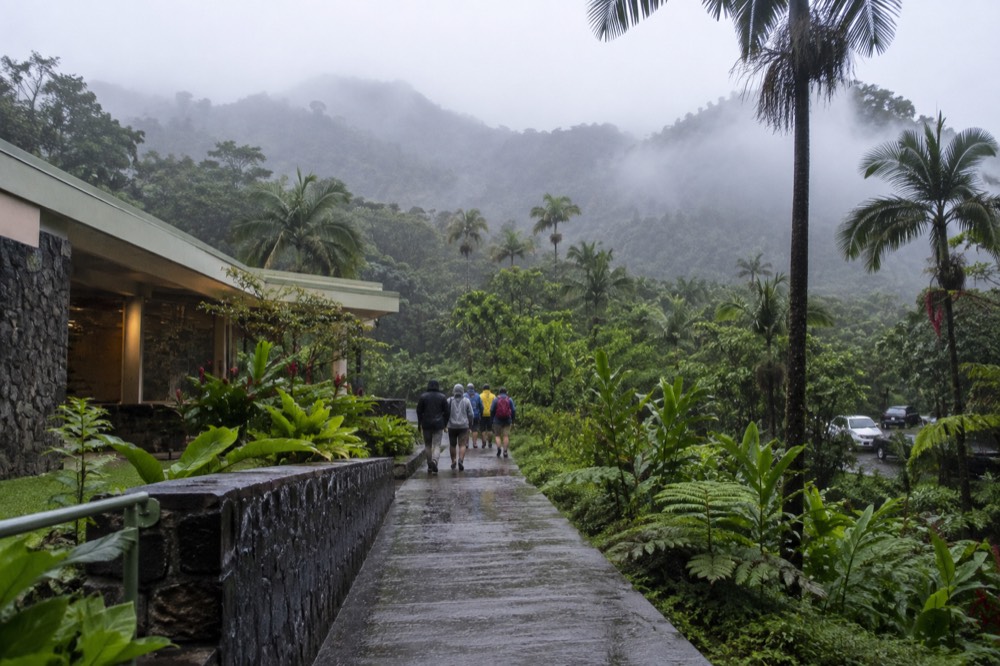
Then there is the knowledge argument, which matters more here than at most destinations. Trail and site closures in El Yunque change with construction and storm damage, and a guide who runs the forest weekly knows what is actually walkable today in a way a printed itinerary never will. A guide also solves parking: capacity in the corridor is managed because of parking limitations, with 30-minute maximums at Yokahú Tower and Juan Diego, and ticketing enforced at La Coca. A permitted vehicle with a legal drop-off removes that whole layer of stress.
What a tour cannot do is skip a reservation line, because there is no line to skip. If a listing implies priority entry, that is the listing's claim, not a fact about the forest. The tours worth booking on this coast are the ones selling transport, a permitted pick-up and local knowledge, all of which are real. For readers weighing the question fully, our blog post on visiting El Yunque without a tour walks the self-drive alternative step by step.
| Day type | What you handle yourself | What a tour handles | Best for |
|---|---|---|---|
| Fully independent | Driving, parking, trail research, lunch | Nothing | Confident drivers with a rental car |
| Forest tour plus free beach afternoon | Lunch, beach, kiosk time | Transport, permitted pick-up, guiding | Most first-time visitors |
| Full combined tour | Almost nothing | Transport, stops, timing, sometimes food | Cruise passengers and the carless |
What About Parking And Getting There?
The kiosks have their own parking areas along the strip, the balneario has organized parking behind it, and the forest's Road 988 Luquillo entrance connects directly to PR-191 North just above El Portal. Road 988 carries a construction advisory to drive carefully, and Road 186 on the Naguabo side is posted for poor road conditions.
Driving yourself, the geography is friendlier than it looks on the map. Luquillo sits where PR-3, the coastal highway, meets the forest's eastern flank. The kiosks line the shore road on the east edge of town, with lots serving the strip and the balneario behind it. From the kiosks, Road 988 runs up into the forest and connects directly to PR-191 North just south of El Portal, which makes the forest-beach-kiosks triangle a short drive in every direction. The Forest Service's current condition note for Road 988 is construction works on the road, drive carefully, so allow a little slack in your timing.
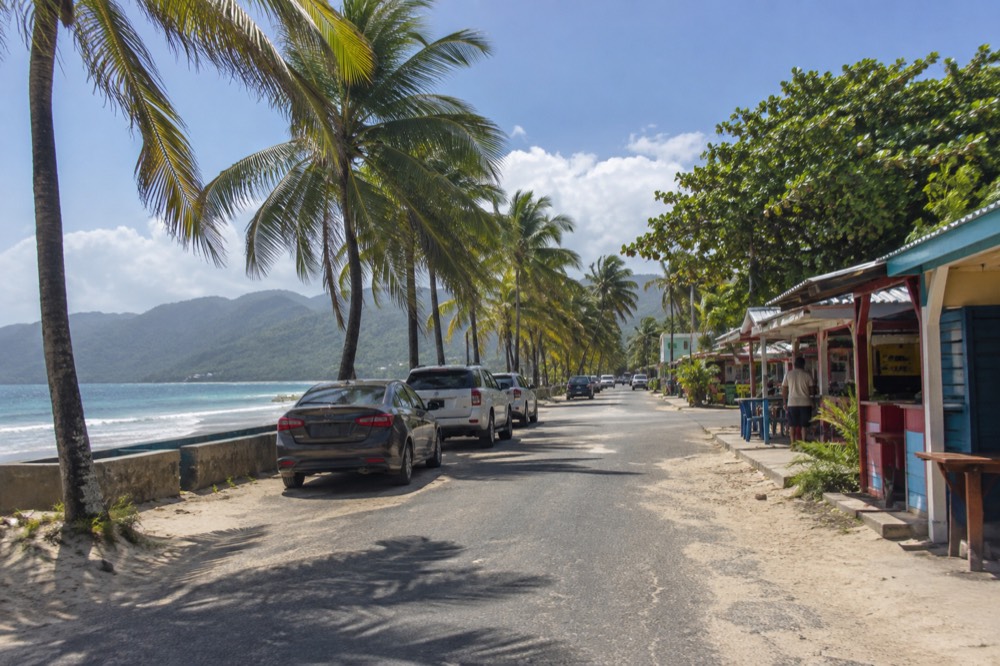
Inside the corridor, parking discipline is the rule that gets enforced. Parking is permitted only in designated areas corridor-wide, La Coca Falls posts that violators will be ticketed, and Yokahú Tower and Juan Diego both carry 30-minute parking maximums. The corridor closes at 5:00 p.m. sharp. The Forest Service's recreation index, with per-site status badges, is the page to check for current conditions at each stop, and you can read it on the official site before you plan your stops.
For tour-takers, parking is largely someone else's problem, which is a bigger perk here than at most forests. The one thing to verify on any listing is where the pick-up is: hotel pick-up is listed on many of the roster's tours, and the self-drive meet-the-guide options trade that convenience for a lower price. If you are staying on the coast rather than in San Juan, our guide to where to stay near El Yunque covers the Luquillo and Río Grande options, including the large resort nearest the forest that completed a major renovation and reopened in early 2026.
A final word on the waterslides that appear in so many Luquillo tour listings. The natural waterslides above Luquillo sit on private land outside the forest boundary, with no Forest Service oversight, and access is arranged with the landowners on the spot. A tour that includes them is selling a private-land adventure alongside its forest stops, which can be a great day, but it is worth knowing what is national forest and what is not before you compare prices. The tour below is one of the roster's most-booked kiosk-area pairings, from $85, rated 5 across 593 reviews, with Luquillo Beach and the Luquillo Kiosks as confirmed stops.
Whichever way you assemble the day, the same logic holds across every format on this coast: the forest half runs on the corridor's clock and the parking rules, the kiosk half runs on the stalls' clocks and your appetite, and the best bookings are the ones that respect both. The trio below is the same spread as the top of this guide, repeated here so you can compare formats with the full picture in mind.
Common Questions About The Luquillo Kiosks And Beach
Do the Luquillo kiosks need a reservation?
No. The kiosks are independent food stalls you walk up to and order from, with no reservation, ticket or entry fee. Individual stalls set their own hours, so some are closed on any given day, especially early in the week.
How far are the Luquillo kiosks from El Yunque?
Minutes. The forest's Road 988 Luquillo entrance connects directly to PR-191 North just above El Portal, and the kiosks sit on the shore road in Luquillo at the bottom of that road. The forest-beach-kiosks triangle is a short drive in every direction.
Can you swim at the beach by the Luquillo kiosks?
Yes. The kiosks back onto Balneario La Monserrate, a calm, reef-protected swimming beach with a pedestrian bridge connecting the beach area toward the kiosks. Playa Azul, north along the town front, is also swimmable.
What should I eat at the Luquillo kiosks?
The staples are fried whole snapper, mofongo, alcapurrias, bacalaítos, empanadillas and pinchos, plus cold local beer. Prices are set stall by stall, so plan on roughly $10 to $15 per person for a casual lunch and confirm at the counter.
Do you need to book a tour for the kiosks and the beach?
No, both are public and free to enjoy independently. The case for a tour is the forest half of the day: rideshare apps cannot pick up at the corridor or El Portal, not every taxi holds a forest permit, and parking is the forest's real constraint.
When is the best time to visit the Luquillo kiosks?
Weekday late mornings are calmest, while weekends bring the biggest crowds and the most stalls open. Eat at the shoulder hours, around 11:30 a.m. or after 2:30 p.m., to avoid the midday rush when the beach crowd gets hungry all at once.