Is The El Yunque And Bio Bay Combo Worth It?
A 12-hour El Yunque and bio bay combo costs $165 to $184. Here is what the day actually involves, what the forest half costs on its own, and who should book the combination.
Is The El Yunque And Bio Bay Combo Worth It?
Is The El Yunque And Bio Bay Combo Worth It?
Yes, for most travelers without a rental car the combo is worth it, and the reason is logistics rather than scenery. The forest is free to enter and closes at 5 p.m., while the bio bay only glows after dark, so the two halves barely overlap and the gap between them is the hard part. A $165 to $184 combo day solves transport across both.
The honest starting point is what the forest half costs on its own: nothing. Entrance to the PR-191 North recreational corridor in Río Grande is free, no reservation is required, and hours run 8:00 a.m. to 5:00 p.m. That fact, published on the Forest Service current conditions page, changes the whole value calculation. You are not paying $184 for admission. You are paying for a permitted vehicle, a driver who handles the midday gap, and someone who knows which trails are actually open on the day.
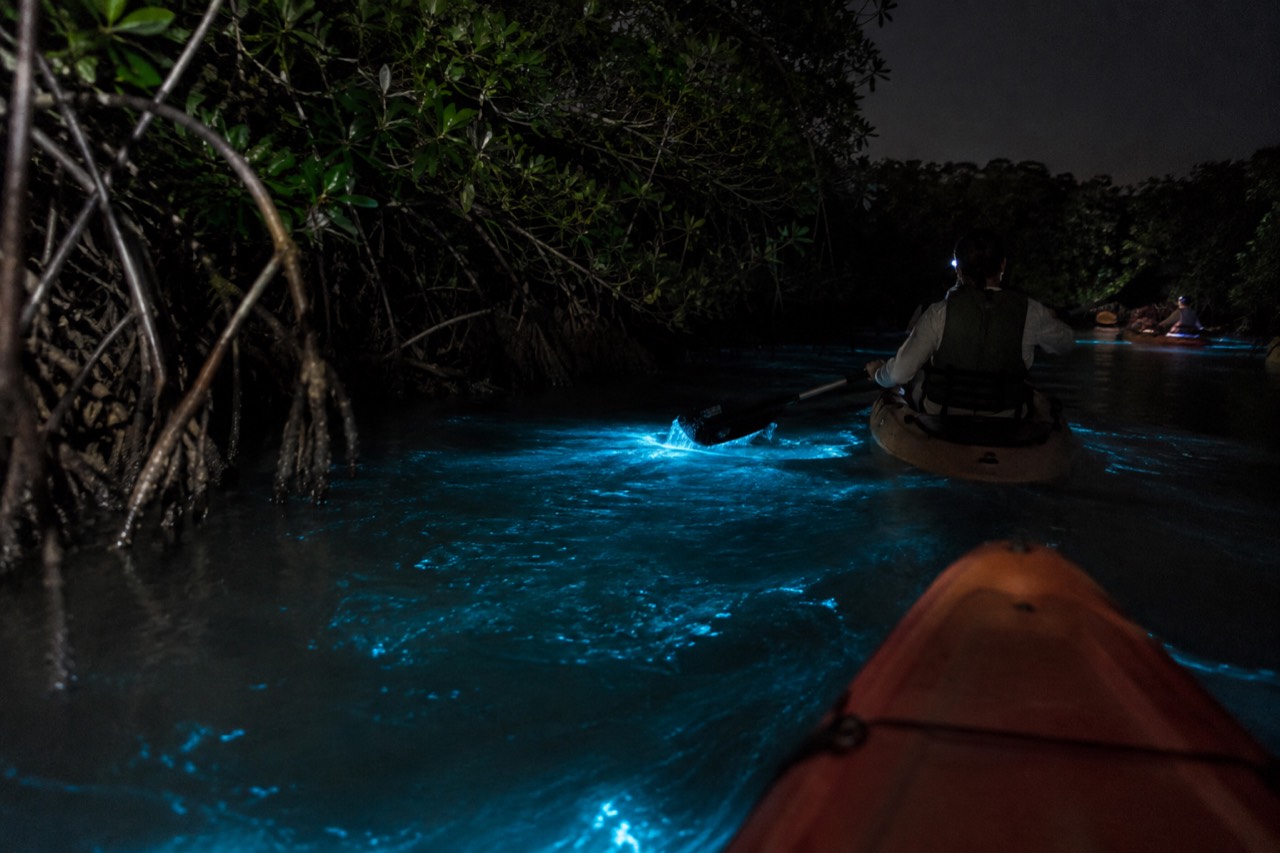
The bio bay half is the opposite. Laguna Grande near Fajardo can only be entered by kayak or small boat through a tour operator, so there is no free, independent version of that experience. Consistent marine bioluminescence occurs in only five places in the world, and Puerto Rico holds three of them. That scarcity is real, and it is what makes the evening half of the day worth protecting.
So the combo question is really two questions. Can your body handle a 12-hour day, and can you realistically string together a rainforest morning and a Fajardo night on your own? For a visitor staying in San Juan without a car, the second answer is usually no, which is why the combination sells. For a visitor with a car and a flexible schedule, the answer tilts the other way, and the rest of this article lays out both cases honestly.
What The Combo Day Actually Looks Like
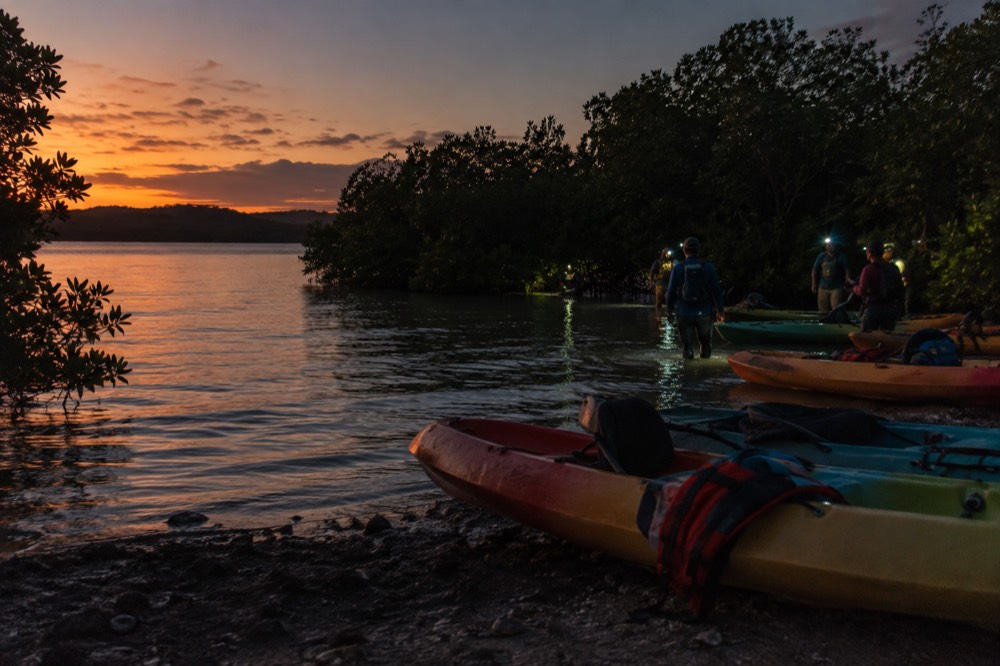
A combo day runs roughly 12 hours, typically 8 a.m. to 8 p.m., with a rainforest morning, a long midday gap for food and rest, and a sunset kayak in Fajardo. The forest half ends when the corridor closes at 5 p.m., and the bay half cannot start until dark. The middle hours are the price you pay for both.
The shape of the day is fixed by two clocks that do not negotiate. The recreational corridor closes right at 5:00 p.m., and the Forest Service advises visitors to begin exiting at least 15 minutes before closing. Bioluminescence, meanwhile, is invisible in daylight, so the kayak portion starts at dusk at the earliest. That leaves a two-to-three-hour gap, and where you spend it depends on the tour: some operators build in a Luquillo beach or kiosks stop, others drop you back toward San Juan before regrouping.
On the roster, the Two-in-One Day Trip pairs El Yunque with a Laguna Grande kayak night, runs 12 hours from $183.98, and holds a 4.9 rating across 1,446 reviews. It includes hotel pickup and lists Río Mameyes among its confirmed stops, so the forest half leans toward a river experience rather than a summit hike. Free cancellation is offered on the listing, which matters for a day this dependent on weather.
The Full-Day Bio Bay with Transport option covers similar ground from $184, runs the same 12 hours, and carries a 4.7 rating across 244 reviews. It also lists free cancellation. The differences between the two are mostly in the forest half: one emphasizes the river and swimming stops the Forest Service actually lists, the other leans on sightseeing. Our guide to El Yunque and bio bay tour options breaks the whole category down stop by stop.
The midday gap is where combo days are won or lost. Eat a real lunch, because dinner often lands after 9 p.m. Change out of wet clothes. If your tour includes a Luquillo stop, the kiosks there are a destination in their own right, generating around 840 direct jobs and more than $41.4 million a year for the eastern Puerto Rican economy. That is a lot of fried food within walking distance of a beach, and it is also a genuinely good place to spend two hours doing nothing while your legs recover from the morning.
What You Pay Versus Booking The Forest Alone
Booking the forest alone costs almost nothing in admission: entry is free, and the only charge inside the corridor is $8 per adult at El Portal, the visitor center. A combo therefore is not buying you access, it is buying transport, timing and a guide, and comparing it to a rental car day is the fair test.
Run the numbers and the combo competes less with the forest than with a rental car, a taxi or two separate tours. A one-day car rental in San Juan plus parking plus a separate bio bay kayak booking can easily exceed the combo price once you add the evening drive back from Fajardo. Two separate tours booked independently usually cost more than the bundled day, and they leave you to solve the midday gap yourself.
| Option | Typical cost | What it covers | The catch |
|---|---|---|---|
| Combo day tour | From $183.98 to $184 | Forest transport, guide, bio bay kayak, hotel pickup on some listings | 12 hours, weather dependent on both halves |
| Forest only, self-drive | Free entry, plus car and parking | Full control of your morning | Rideshare cannot pick you up in the corridor |
| Forest tour plus separate bay tour | Sum of both, usually higher | Same content, split days or split bookings | You own the logistics between them |
| Forest only, no car | Free entry, but no way in | Nothing unless you arrange transport | Not every taxi holds a forest permit |
The transportation line in that table is the quiet argument for the combo. The Forest Service warns that the recreational corridor and El Portal are not authorized pick-up points for rideshare apps, and that not every taxi driver holds a permit to operate in the forest. A visitor who drives up in the morning, gets dropped, and tries to app a ride out can be left walking. A permitted tour vehicle with a legal drop-off solves that, and the Forest Service maintains a public directory of authorized operators for exactly this reason.
If you do drive yourself, remember that parking is the real constraint: it is permitted only in designated areas, capacity is actively managed, and violators at La Coca Falls are ticketed. The 30-minute parking maximums at Yokahú Tower and Juan Diego also make a leisurely self-drive day harder than it sounds on a map. Add the evening drive out to Fajardo and back in the dark, and the self-drive version of the combo stops looking simple.
Why The Bio Bay Half Is The Fragile Half
The bio bay is the part of the combo that can fail, because bioluminescence depends on living dinoflagellates and 2025 proved they can die. Sargassum inundated Laguna Grande, decomposed, stripped the lagoon of oxygen and left the bay dark for months. Book with free cancellation and check conditions before you go.
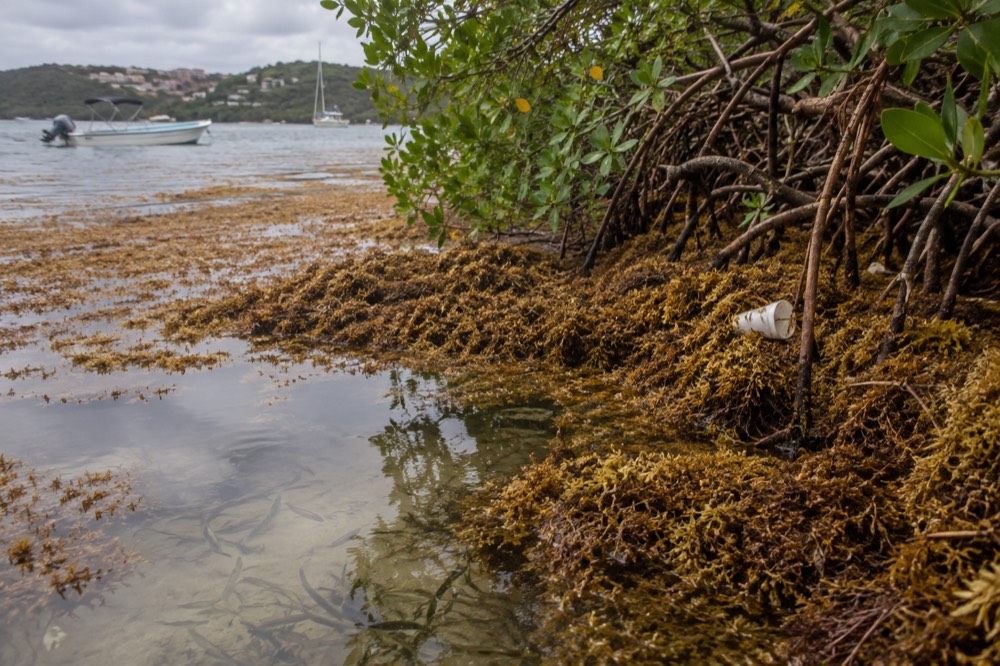
This is the risk nobody puts in the brochure. In 2025 the macroalgae sargassum flooded into Laguna Grande, and as it died and decomposed it consumed the oxygen the dinoflagellates need, killing them and leaving the bay without bioluminescence for several months. The event was reported in depth by Sierra, the Sierra Club's magazine, which also explains how each of Puerto Rico's three bio bays is managed differently. Laguna Grande sits in the middle: moderate restrictions, kayak or small boat access through an operator only.
The practical takeaway is not to avoid the bay but to protect yourself. Book a listing with free cancellation, keep an eye on conditions in the days before, and go with an operator who will tell you honestly whether the bay is glowing. The moon matters too: a dark-of-moon night shows far more than one near a full moon, and a good operator plans around it even though no official dark-of-moon definition exists.
The forest half has its own fragility, of a different kind. Trails close and reopen with construction and storm recovery, and the Forest Service's own FAQ says the damage from hurricanes Irma and María was significant and recovery continues. Check the official alerts page before any El Yunque day, combo or not, because a guide who knows what is open on the day is worth more here than almost anywhere else.
Who Should Skip The Combo
Skip the combo if you have young children, mobility limits, or a tight next-morning obligation, because a 12-hour day that ends near 9 p.m. in Fajardo traffic is unforgiving. Also skip it if you have a car and a second night, since splitting the two halves across two days is calmer and costs less.
The honest case against is stamina. A combo day means a rainforest morning, which even at the gentlest tour level involves heat, humidity and some walking on wet surfaces, followed by hours of waiting, followed by an hour or more of paddling in the dark. The Forest Service's own preparation advice leads with footwear: wear good shoes with traction, because it is a rainforest, it is wet and mossy, and wet surfaces on a slope are a hazard. Our what to wear and bring guide covers the rest of the kit.
Families with small children should think hard. The forest half is family friendly, and the Angelito Trail to the Río Mameyes is a short, easy walk the Forest Service itself recommends for younger kids. But a 9 p.m. return to San Juan with a tired six-year-old is a different product. If that is your situation, book a half-day forest tour such as the Half-Day Waterslide and Rope Swing option, from $25 for 4 hours with a 4.8 rating across 8,066 reviews, and save the bio bay for a future trip or a dedicated evening tour from Fajardo.
The other skip case is the slow traveler. If you have four or more nights in Puerto Rico and a car, doing El Yunque one day and the bay another lets you pick a dark-moon night and a dry forest morning independently. The combo exists for people who do not have that slack, and it is worth being honest with yourself about which group you are in before you book.
How To Pick Between The Combo Tours
Pick by the forest half, because the bay half is similar across operators: a guided kayak into Laguna Grande at night. Compare the confirmed stops, the pickup terms, the review depth and the cancellation policy, and check whether the operator is on the Forest Service's authorized list.
The two headline combos on this roster are closer than their prices suggest. The Full-Day Bio Bay with Transport runs from $184, 12 hours, 4.7 across 244 reviews, free cancellation, with Laguna Grande as its confirmed bay stop. The Two-in-One Day Trip runs from $183.98, also 12 hours, 4.9 across 1,446 reviews, hotel pickup, free cancellation, and confirmed stops at Río Mameyes and Laguna Grande. One dollar apart, so the decision comes down to the forest half and the pickup terms.
Review depth deserves a caveat. The review figures shown on a listing are a combined pool drawn from across the operator's booking channels, not a headcount of customers who took this specific product. Treat them as a signal of operator reliability rather than a census of this exact day. A 4.9 across 1,446 reviews tells you the operator runs a consistently good operation; it does not mean 1,446 people paddled this exact lagoon on this exact itinerary.
Whichever you choose, the booking hygiene is the same. Confirm the pickup window before you commit, since a 12-hour day with a 7 a.m. pickup is a different animal from a 10 a.m. one. Keep the free cancellation window in mind, and read the listing's own weather policy, because a combo that cancels only the bay half still owes you a forest morning. You can Check availability on the operator's live listing before deciding.
Making The Day Work: Timing, Food And Expectations
Plan the day around the 5 p.m. corridor closing, a real lunch in the gap, and a realistic bedtime, and treat rain in the forest as normal rather than bad luck. Annual rainfall in El Yunque ranges from roughly 96 inches at lower elevations to about 169 inches at the peak, so a wet morning is the standard experience.
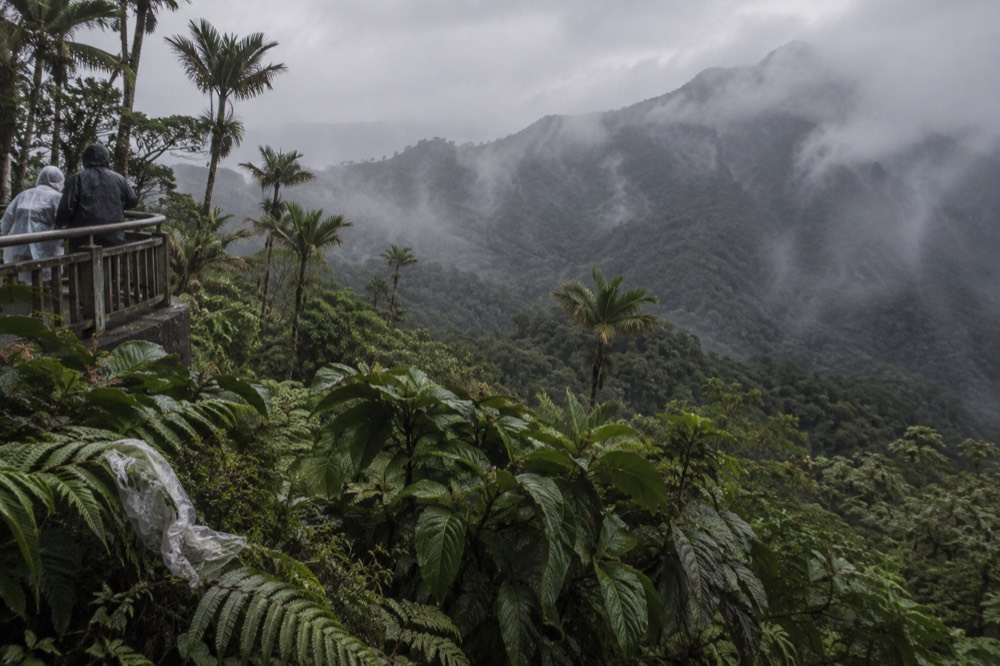
The rain point matters more on a combo day than a forest-only one, because there is no going home to dry out afterward. El Yunque is the only tropical rainforest within the national forest system, nearly 29,000 acres across eight municipalities, and it earns the name: rainfall increases with elevation, and the highest stations record over 4,000 mm per year. You will get wet. A change of clothes in the vehicle between the halves is the single best upgrade to a combo day.
Food is the other failure point. Tours that include a Luquillo kiosks stop solve it, and the kiosks draw around one million visitors a year by Puerto Rico Tourism Company figures, so expect a line at the popular stalls. If your tour does not feed you, ask the operator where the midday stop lands before you book, and pack snacks regardless. Paddling hungry in the dark is a memorable way to ruin a good evening.
Set expectations for the bay itself. Bioluminescence is best in darkness and motion: every paddle stroke lights up, fish leave blue trails, and on a strong night the water sparkles around your hands. Cameras mostly fail to capture it, so go expecting to watch rather than to photograph. Flash floods are the one safety note that applies to both halves of the day, since they can happen any month and are most frequent in April and May; a sudden surge can claim victims in less than one minute, so never enter water during a flood warning. If you want to go deeper on the forest side of the day, our forest and bio bay tours guide and the best time to visit El Yunque are the two pages worth reading next.
The verdict, restated plainly: the combo is worth it when the alternative is not doing one of the two halves at all. That is the situation for most car-free visitors on a short trip, and it is why the format sells. If you have a car and slack in the itinerary, split the days instead. Either way, the forest costs nothing to enter and the bay glows only at night, so plan around those two facts and the rest of the day falls into place. That is the whole premise behind El Yunque National Forest Tours: honest logistics first, booking second.
Common Questions About The El Yunque And Bio Bay Combo
Is The El Yunque And Bio Bay Combo Worth It?
For most car-free visitors on a short trip, yes. The forest is free to enter and closes at 5 p.m., the bay only glows after dark, and the combo's real product is the permitted transport and timing that bridges the two. If you have a car and multiple nights, booking the halves separately is calmer and usually cheaper.
How long is the El Yunque and bio bay combo?
The combo tours on this roster run 12 hours, typically from morning pickup in San Juan to a return around 8 or 9 p.m. after the Laguna Grande kayak. The forest half ends by the 5 p.m. corridor closing, and the bay half cannot start before dark.
Can you swim at El Yunque on a combo tour?
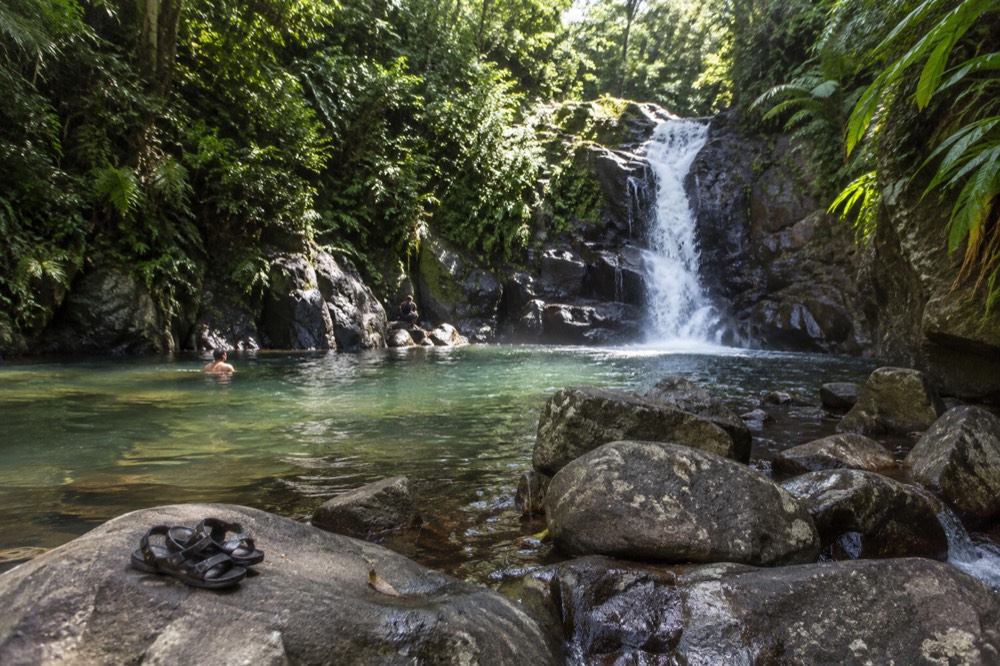
Swimming is only permitted at the sites the Forest Service lists, such as the Río Mameyes at the Angelito Trail, Juan Diego Falls and Puente Roto, always with flash-flood awareness. La Coca Falls is viewing only, and Baño Grande has been closed to swimmers since 1968. Check the official alerts page for current trail status.
What happens if the bio bay is not glowing?
In 2025 sargassum stripped Laguna Grande of oxygen and the bay produced no bioluminescence for several months. Book a listing with free cancellation, ask the operator directly about current conditions, and time your visit away from a full moon, since bioluminescence shows best on dark nights.
Do you need a reservation for El Yunque if you take the combo tour?
No. Entrance to the PR-191 North recreational corridor is free and requires no reservation, so a tour does not buy you past any entry system. What it buys is a permitted vehicle, a legal drop-off and pick-up, and a guide who knows what is open on the day.