What City Is Closest To El Yunque?
Río Grande is the closest city to El Yunque National Forest, with the main recreational corridor and El Portal visitor center both on its side of the mountain. Here is how Río Grande, Luquillo and the other gateway towns compare for sleeping, eating and tour pickups.
What City Is Closest To El Yunque?
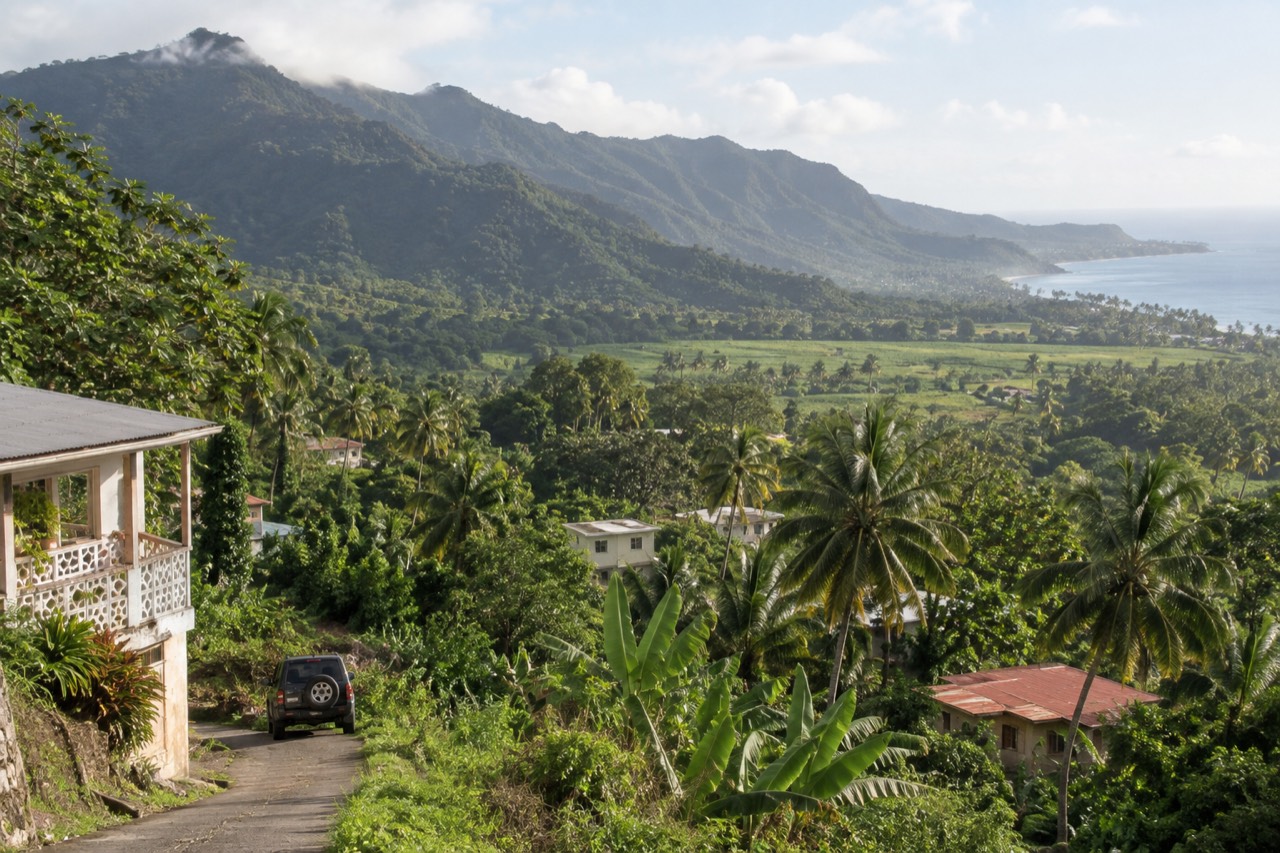
Río Grande is the closest city to El Yunque National Forest, and it is not a close call. The main recreational corridor runs up PR-191 North from Río Grande, the El Portal visitor center sits at kilometer 4.1 nearest the Palmer community, and La Coca Falls, Yokahú Tower and the other headline stops all line that same road. If a tour pickup or hotel search lists a town, this is the one.
Palmer, the small community at the bottom of PR-191, is the practical gateway village. That is where the forest road begins its climb, where the visitor center sits, and where nearly every authorized tour vehicle heading into the corridor passes through. Río Grande is the municipality around it, and the town center itself sits a few miles inland from the coast on PR-3, the main east coast highway that connects the whole region.
This matters more than most visitors expect. The forest spans eight municipalities in total, so several towns can honestly claim a piece of El Yunque, and hotel listings in all of them say "near El Yunque" regardless of whether the nearest forest entrance is ten minutes or an hour away. Knowing that Río Grande holds the main entrance changes what you book, what you pay, and how early your morning starts.
It also changes what kind of day you have. The recreational corridor is open 8:00 a.m. to 5:00 p.m., and the Forest Service asks visitors to begin exiting at least 15 minutes before closing. Staying on the Río Grande side means you can be at the entrance when the gates open rather than burning the best light of the day on the drive over.
Which Towns Actually Touch The Forest?
El Yunque extends through eight municipalities: Río Grande, Luquillo, Canóvanas, Fajardo, Naguabo, Ceiba, Las Piedras and Juncos. Only two of them, Río Grande and Luquillo, hold entrances to the main recreational corridor most visitors picture when they say El Yunque. The rest touch the forest's wilder southern and western flanks, where there are far fewer facilities and no corridor at all.
The Forest Service describes the forest as the only tropical rainforest within the national forest system, spread across nearly 29,000 acres of the Luquillo Mountains. Those mountains run east to west, which is why the towns stack up along both slopes. The wet, built-up, touristic side faces north and east toward the Atlantic. The quiet side faces south toward Naguabo and the eastern coastal plain.
Here is how the eight municipalities relate to the forest in practice:
| Municipality | Relationship to El Yunque | What it means for a visitor |
|---|---|---|
| Río Grande | Main PR-191 North corridor, El Portal, La Coca, Yokahú | The default base; closest beds and pickups |
| Luquillo | PR-988 entrance, Angelito Trail, Río Mameyes | Second entrance plus the beach and kiosks |
| Fajardo | Eastern edge, Río Espíritu Santo watershed, bio bay at Laguna Grande | Forest plus bioluminescent bay combos |
| Naguabo | PR-191 South entrance, Río Sabana | Quiet southern side, winding 20 mph road |
| Canóvanas, Las Piedras, Juncos | Western and inland flanks | Little visitor infrastructure, no corridor access |
| Ceiba | Southeastern edge near Fajardo | Mostly a pass-through toward the east coast |
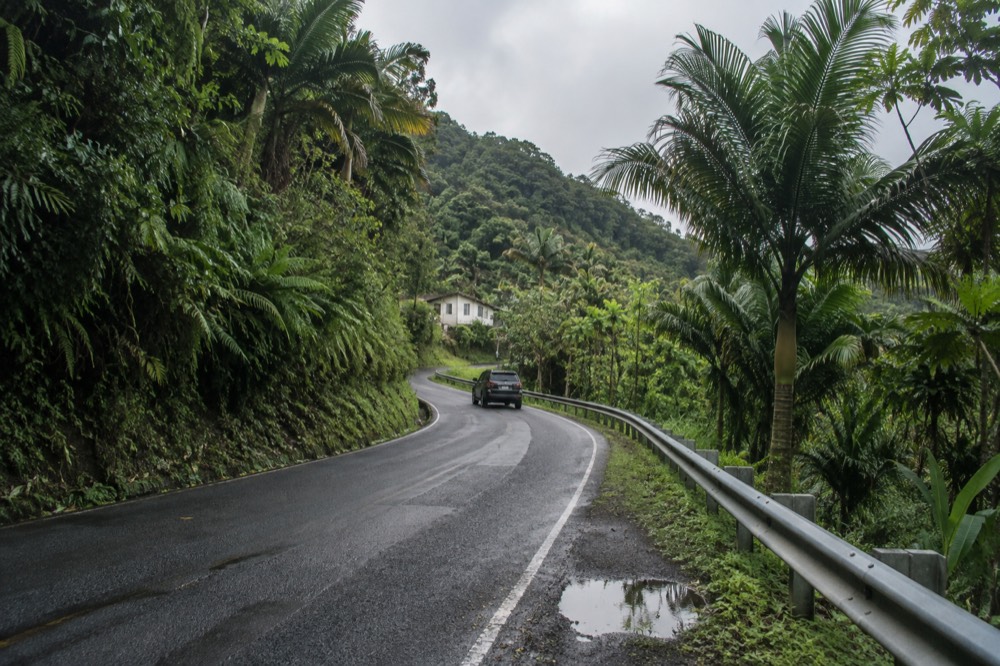
The southern approach deserves a note. PR-191 South out of Naguabo is not connected to the north side of the forest: the Forest Service states the two halves are cut off from each other by a major landslide that occurred in the mid-1970s, and the road carries a 20 mph speed limit through its winding section. A visitor who books a hotel in Naguabo expecting to pop over to La Coca Falls is in for a long drive around the mountain. Check the current conditions page for corridor status before committing to any base on the south side.
Entry itself is free and no reservation is required for the PR-191 North corridor, a fact worth repeating because so much third-party content still says otherwise. Visitor capacity is managed through parking, and parking is permitted only in designated areas. That constraint, more than distance, is what shapes the town question, because a base close to the entrance lets you arrive before the designated lots fill.
If you are weighing the whole region rather than just the front door, the trio below covers three different ways to build a day out of the Río Grande side: horses at the forest's edge, ATVs on the same property, or a small-group waterslide and transport trip that handles the driving entirely.
The practical upshot is that the eight-town list matters less than the two-entrance reality. Canóvanas, Las Piedras, Juncos and Ceiba do appear on maps as bordering municipalities, but since they offer no corridor access and little visitor infrastructure, they function mainly as places you drive through, not places you stage from. Basing there saves nothing on forest access and usually adds driving.
Río Grande and Luquillo, by contrast, let you work around the parking constraint from two directions. Río Grande sits closest to the PR-191 North corridor and its named stops, including El Portal, La Coca and Yokahú, while Luquillo's PR-988 entrance adds the Angelito Trail and Río Mameyes plus the beach and kiosks as a same-day option. Because the two entrances serve different parts of the forest, a stay in either town gives you a fallback if one side's designated lots fill early.
For south-side planners, the landslide split is the single most important logistics fact: PR-191 South and PR-191 North are separate experiences, and combining them in one day means a long drive around the mountain, not a quick pass through it.
Is Río Grande A Good Base For Visiting The Forest?
Yes, and for most visitors it is the best one. Río Grande puts you minutes from the PR-191 North entrance, next door to the Carabalí Rainforest Park adventure operations, and within easy reach of both Luquillo's beaches and Fajardo's bioluminescent bay. The closest large resort to the forest, the Wyndham Grand Rio Mar, reopened in February 2026 after a renovation its owner put at more than $60 million, and it sits in Río Grande.
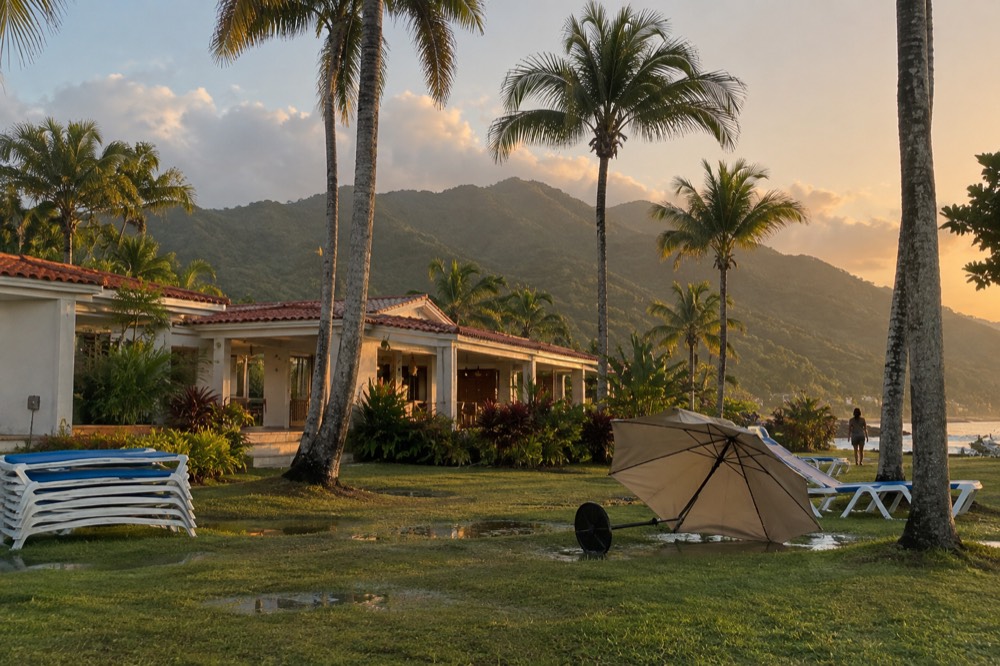
That reopening matters for the area's character. The Rio Mar property sits between the forest foothills and the coast, and its return adds a full-service resort option to a town that was otherwise made up of small hotels, guesthouses and vacation rentals. For a visitor who wants to wake up, eat breakfast and be at the corridor entrance within the first hour it is open, this side of the mountain is hard to beat.
Río Grande also holds the adventure infrastructure that sits just outside the federal forest. Carabalí Rainforest Park, at the foot of the mountains along the Río Mameyes, runs horseback riding, ATVs, UTVs and go-karts on its own property, and its horses are worth knowing about: the operator says it keeps over 85 horses of the Paso breed, chosen for endurance and a comfortable gait so rides suit all skill levels. That is a genuine option for families whose children are too young for the forest's steeper trails, or for anyone who wants animals and mud rather than stairs and viewpoints.
For a deeper comparison of the two experiences, the guide to Carabalí Rainforest Park versus the national forest breaks down what each one offers and how to combine them in a single day. The short version: the forest gives you the towers, falls and cloud-level views, while Carabalí gives you handlebars and hooves at the bottom of the same mountain.
The horseback ride itself is a natural fit for an El Yunque base. It runs 2 hours, from $110, with hotel pickup included and free cancellation, and it is rated 4.7 across 1,183 reviews. Because the pickup covers area hotels, it pairs neatly with a Río Grande or Luquillo stay without adding a self-drive leg to your morning.
The other thing Río Grande has going for it is food logistics. The Palmer community at the base of PR-191 has a handful of local eateries, and the larger town has supermarkets and pharmacies for stocking a cooler, which matters in a forest where the only drinking water at several sites is what you carry in. The nearest full beach-and-kiosks scene is one town over in Luquillo, covered below.
Wondering whether to fold a ride into your forest day?
What About Luquillo As A Base?
Luquillo is the second gateway, and for beach-focused trips it beats Río Grande. The PR-988 Luquillo entrance connects directly to PR-191 North just above El Portal, and it leads to the Angelito Trail, a short, easy path down to the federally designated Wild and Scenic Río Mameyes and its swimming spots. Add Luquillo Beach, the famous kiosks and the natural waterslides above town, and you get forest plus coast in one base.
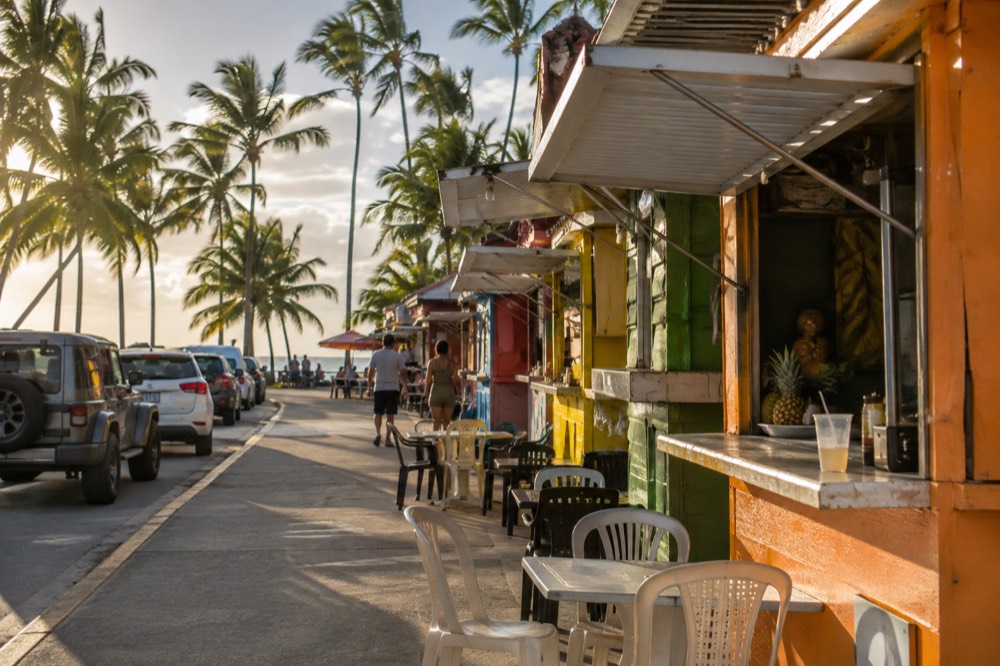
The kiosks alone move the needle for a lot of travelers. According to Puerto Rico Tourism Company figures reported in local press, around one million people visit the Luquillo kiosks every year, the businesses there generate around 840 direct jobs, and their operations are estimated to produce more than $41.4 million a year for the island's eastern economy. That is a real food scene, not a roadside curiosity, and it sits minutes from the forest's second entrance.
One honesty note that changes what you are buying. The natural waterslides above Luquillo, known as Las Paylas, sit on private land outside El Yunque National Forest. The Forest Service does not manage them, does not list them among its recreation sites and provides no oversight there, and access is arranged with the landowners on the spot. Several tours on the market visit them, and that can be a great day, but the stop is not a national forest attraction and should not be booked expecting one. The site's guide to Luquillo waterslide tours covers what those trips actually include.
For swimming inside the forest itself, the Angelito Trail is the classic Luquillo-side option. It is 0.4 km one way with a 132-foot elevation change, rated easy, and it descends through Tabonuco forest to the Río Mameyes and Las Damas Pool. As with every river in the forest, flash flooding can happen unexpectedly, so check conditions before getting in and get to higher ground if water starts rising.
The beach itself, Balneario La Monserrate, has seen recent public investment. In September 2025 the island's natural resources department began rehabilitation work there with a $98,000 investment, and the pedestrian bridge connecting the beach area toward the kiosks represented $194,875 in public funds. The town is actively maintaining the assets a visitor comes for, which is more than can be said for every stretch of coast in the region.
How Far Is San Juan, And Does It Matter?
No official source publishes a drive time from San Juan to El Yunque, and this site does not print one. What is verifiable is that San Juan is not adjacent to the forest at all: it sits west of all eight gateway municipalities, and every tour listing on this roster that runs from San Juan builds a transport leg into the day. For a visitor without a rental car, that transport leg is the biggest factor in choosing a tour.
Plenty of travel content will hand you a confident number of minutes from San Juan to the forest. None of it comes from the Forest Service, and drive times on Puerto Rican highways swing hard with traffic, cruise-ship days and construction. What can be said plainly is directional: San Juan is the island's capital and transport hub on the north coast, the forest is on the east coast, and the towns between, Canóvanas, Río Grande and Luquillo, are where the trip actually happens.
The transport question has a wrinkle that catches visitors out. The Forest Service has an active alert stating that the recreational corridor and El Portal are not authorized pick-up or drop-off points for rideshare apps, and that visitors relying on them have been forced to walk long distances to reach a valid pick-up point. The same alert urges visitors to use authorized transportation: private or rental vehicles, cabs with permits to operate in the forest, or authorized tour providers. Not every taxi holds a forest permit, so the Forest Service tells visitors to ask before hiring.
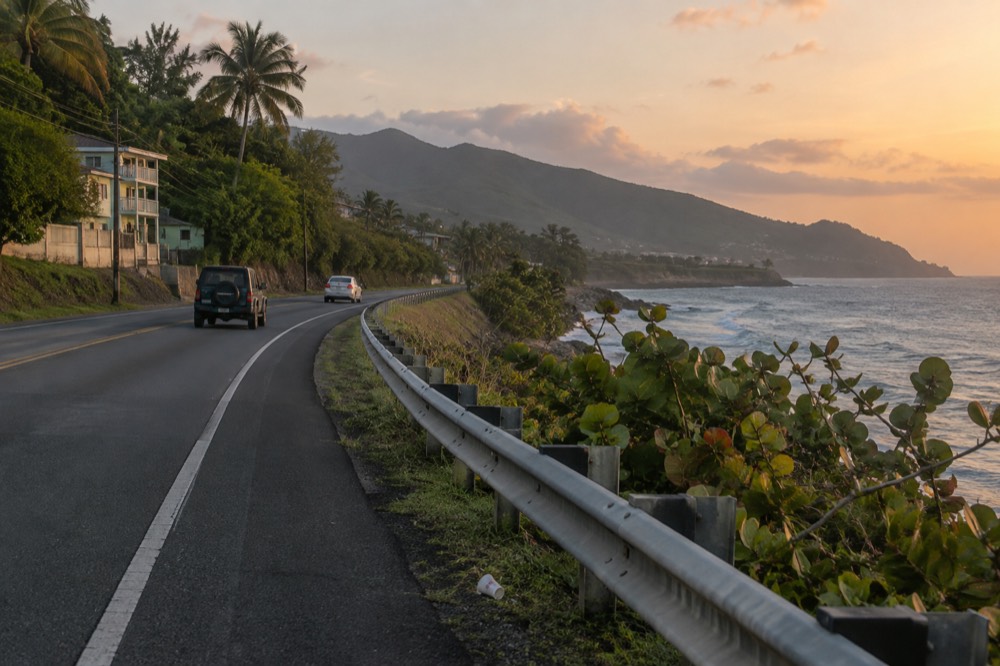
That is the honest case for a guided tour from wherever you are sleeping. A tour does not buy you past a reservation queue, because no corridor reservation exists and entry is free. What it buys is a permitted vehicle, a legal drop-off and pick-up, a driver who solves the parking-capacity problem, and a guide who knows which trails are actually open on the day, which in a forest with ongoing construction matters more than usual. The Forest Service publishes a directory of authorized and permitted tour operators, and it is the only official list of who holds a permit to guide in the forest.
For a full breakdown of the self-drive question, including the rideshare trap, the blog post on whether you can go to El Yunque without a tour walks through the tradeoffs. And if you are still choosing where to sleep, the guide to where to stay near El Yunque compares the towns by budget and style.
A small-group tour with transport included is one way to skip the driving decision entirely. The 6-hour Small Group El Yunque Waterslide and Transportation tour with photos runs from $43.99, rated 4.9 across 3,835 reviews, with free cancellation and pickup built in.
Which Side Should You Choose For A Bio Bay Combo?
Fajardo, east of Río Grande, is the town that matters if you want to pair the forest with a bioluminescent bay. Laguna Grande in Fajardo is one of Puerto Rico's three bio bays, and consistent marine bioluminescence occurs in only five places in the world, three of which are in Puerto Rico. Laguna Grande can only be entered by kayak or small boat through a tour operator, which is why the combos run around 12 hours.
That length is the honest tradeoff. A combo day means leaving your base in the morning, touring the forest through midday, and kayaking the lagoon after dark, which pushes the return to your hotel very late. Visitors based in Río Grande or Luquillo shorten both legs of that day considerably compared with anyone starting from San Juan. The combo tours on this roster run from $165 to $184, and the premium ones include hotel pickup.
One caution worth carrying into any bio bay booking. In 2025 the macroalgae sargassum inundated Laguna Grande, and as it decomposed it stripped the lagoon of oxygen and killed the dinoflagellates that produce the glow; the bay produced no bioluminescence for several months. That is not a reason to skip it, but it is a reason to book with free cancellation and to keep expectations tied to current conditions rather than to brochure photos.
Common Questions About The Closest City To El Yunque
What City Is Closest To El Yunque?
Río Grande is the closest city to El Yunque National Forest. The main PR-191 North recreational corridor, the El Portal visitor center at kilometer 4.1 and most of the forest's famous stops all sit on the Río Grande side, with the Palmer community at the base of the forest road.
Is it better to stay in Río Grande or Luquillo?
Río Grande is better for forest-first trips, since it sits closest to the PR-191 North entrance. Luquillo is better if you want beach time and the kiosks alongside the forest, and its PR-988 entrance connects directly to PR-191 North just above El Portal.
Can a rideshare pick me up at El Yunque?
No. The Forest Service states that the recreational corridor and El Portal are not authorized pick-up or drop-off points for rideshare apps, and visitors have been forced to walk long distances to a valid pick-up point. Use a rental car, a permitted taxi or an authorized tour operator.
Do I need a reservation to enter El Yunque?
No. Entrance to the PR-191 North recreational corridor is free and no reservation is required. The only fee site is El Portal, at $8 for visitors 16 and over, free under 15. Capacity is managed through designated parking.
Which town is best for a bio bay combo?
Fajardo, east of Río Grande, holds Laguna Grande, the bioluminescent bay the combo tours kayak. Staying in Río Grande or Luquillo shortens both the forest leg and the evening kayak leg of a roughly 12-hour combo day.
If you are still sketching the trip, El Yunque National Forest Tours holds a full roster of options from every gateway town, and the picks below are the three most booked ways to turn a Río Grande base into a day out.