El Yunque Ziplining: Operators, Prices And How To Choose A Canopy Tour
Ziplining is the most popular adventure add-on to an El Yunque day, and the operators who run it sit on private land around the forest rather than inside the national forest itself. Here is where each option sits, what it costs, and how to pick.
Short answer
Zipline tours around El Yunque run from $99 to $225 per person and last from 90 minutes to a full combined day. The zipline courses sit on private land around the forest, not inside it, and forest entry itself is free with no reservation required, so a zipline booking buys the canopy course, not forest access.
El Yunque National Forest welcomes roughly a million visitors a year to its 360-acre special recreation area, according to the forest supervisor, and a large share of those visitors want one thing the forest itself does not provide: a ride through the canopy on a cable. Ziplining around El Yunque is run by private adventure parks on land surrounding the forest, and choosing between them is genuinely confusing, because the tours are marketed with the forest's name even though the cables are not inside it.
This guide sorts the options out. It covers where each operator sits, what each tour costs, what a combined hike-and-zipline day looks like, what the forest's own access rules mean for your planning, and how a zipline day compares with the waterslide tours that compete for the same budget. Every price and rating below comes from the live tour listings on our roster or from the operators' own pages, and the access facts come from the Forest Service.
Where Can You Actually Zipline Near El Yunque?
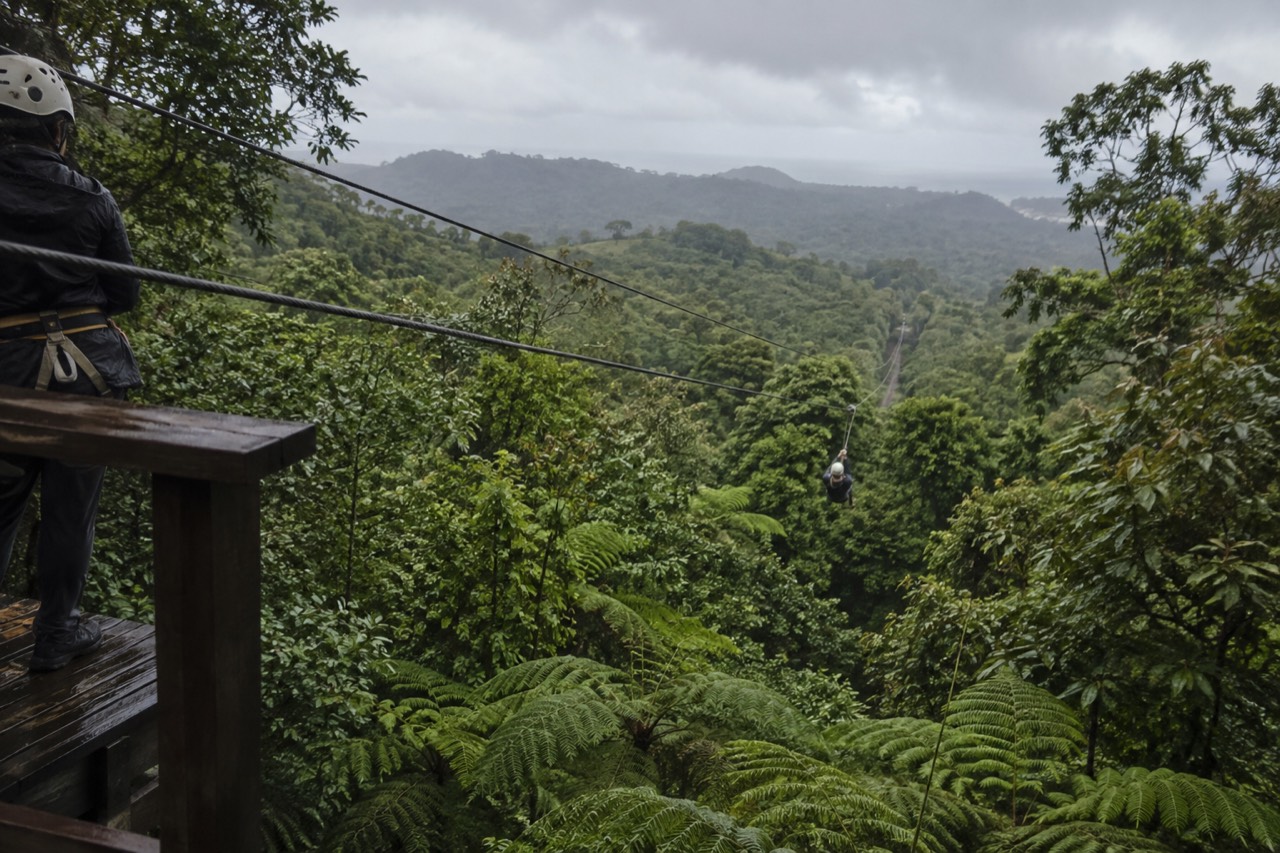
No zipline course operates inside El Yunque National Forest itself. The canopy tours marketed as El Yunque ziplining sit on private land in the communities around the forest, mostly on the Río Grande and Luquillo side, and the Forest Service neither runs nor regulates them. Forest entry is free and needs no reservation, so your zipline booking buys the course, not access to the forest.
That distinction matters more here than at most destinations. El Yunque is a National Forest managed by the USDA Forest Service, and its recreation program is built around trails, waterfalls, towers and interpretive sites, not adventure concessions. The zipline parks that use the forest's name in their marketing are private businesses outside the boundary. That is not a knock on them: the courses are real, the reviews are strong, and several sit minutes from the forest entrances. It simply means your day will likely have two separate halves, a zipline course on private land and a forest visit on federal land, and you should plan each half separately.
The practical consequence is scheduling. The forest's recreational corridor on PR-191 North in Río Grande is open 8:00 a.m. to 5:00 p.m., with the Forest Service advising visitors to begin exiting at least 15 minutes before closing. A morning zipline slot followed by an afternoon forest drive is the pattern most visitors choose, and it works well because the canopy courses are close to the same highway. If you want the full picture of how the two halves connect, our guide to getting to El Yunque from San Juan covers the road layout, and the question can you zipline at El Yunque answers the inside-or-outside question in more depth.
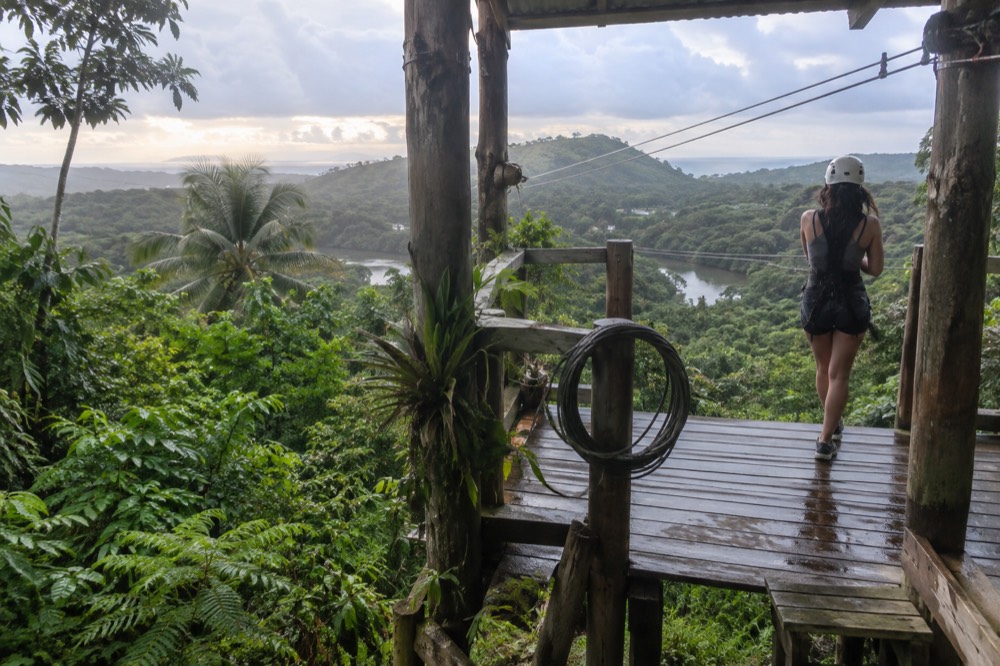
One more framing note before the options. The Forest Service publishes a directory of authorized and permitted tour operators for guiding inside the forest, and that list is separate from the zipline parks entirely. A zipline operator does not need a forest permit to run its cables, because the cables are not in the forest. If a tour you are considering also guides walks inside El Yunque, that guided portion is where the permit question becomes relevant, and the official authorized operator directory is the place to check.
Which Zipline Tours Serve The El Yunque Area?
Three zipline products dominate the El Yunque area: a 90-minute Río Grande canopy experience from $99, a Junglequi rainforest zipline adventure from $139, and a nine-and-a-half-hour hike-and-zipline combo from $225 that bundles transport from San Juan with a forest trail walk. Ratings run from 4.7 to a perfect 5.0 across their listings, and every one of them sits on private land outside the national forest.
The Río Grande zipline experience is the most-reviewed pure canopy option, rated 4.9 across 304 reviews on its listing, from $99 for 90 minutes. The Junglequi zipline adventure, marketed as an El Yunque rainforest zipline, holds a 5.0 rating across 20 reviews, from $139 for the same 90-minute length. The hike-and-zipline combo is a different animal: 9 hours 30 minutes door to door, from $225, rated 4.7 across 21 reviews, with hotel transport from San Juan folded in. A fourth option worth knowing about is the Carabalí Rainforest Park complex in Río Grande, which runs ATVs, UTVs and horseback rides alongside the forest; its own site lists the guided ATV tour at 1 to 2 hours, minimum age 16, a 450 lb maximum per vehicle, from $80, and we break that park down separately in Carabalí Rainforest Park vs El Yunque.
Here is how the three zipline-focused tours compare on the numbers that actually drive the decision:
| Tour | Length | From (per person) | Rating on the listing | Format |
|---|---|---|---|---|
| Río Grande zipline experience | 1 hour 30 minutes | $99 | 4.9 across 304 reviews | Canopy course only |
| Junglequi rainforest zipline | 1 hour 30 minutes | $139 | 5 across 20 reviews | Canopy course only |
| Forest hike and ziplining combo | 9 hours 30 minutes | $225 | 4.7 across 21 reviews | Hike, zipline and transport from San Juan |
Read that table with two things in mind. First, the review pools on these listings are combined ratings drawn from across booking channels, not a headcount of that specific tour's own customers, so treat the number as a sentiment signal rather than a census. Second, the price gap between a $99 canopy hour and a $225 combined day is not really a gap at all once you price the alternative: the combo includes the guided forest walk and the round-trip transport from San Juan, which you would otherwise buy separately or arrange yourself.
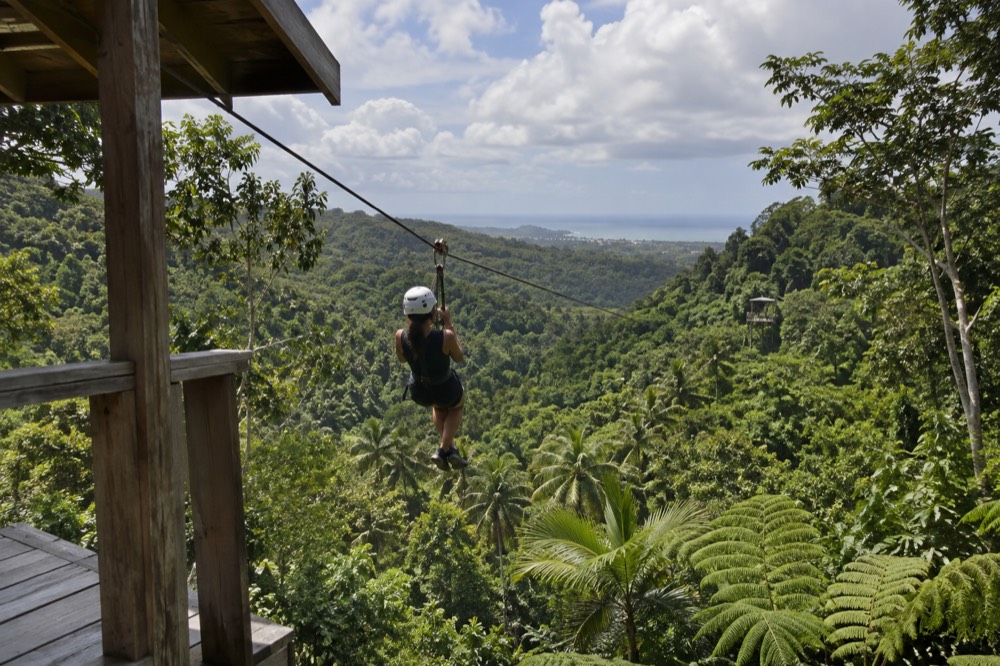
The trio above is the honest shortlist. The Río Grande experience is the pick if you want the canopy and nothing else, the combo is the pick if you want the forest and the canopy solved in one booking, and the half-day waterslide and rope swing tour is the budget contrast, from $25, that many visitors end up preferring once they realize the natural river play costs a third of the cable course. All three can be checked on their live listings with free cancellation where the roster notes it.
How Much Does El Yunque Ziplining Cost?
A standalone El Yunque-area zipline tour costs from $99 to $139 per person for about 90 minutes on the cables. A combined tour that adds a guided forest hike and San Juan transport runs from $225. Budget another $8 per adult only if you also want El Portal, the forest's visitor center, since the forest itself charges nothing to enter.
The canopy-only price band is tight, which makes the choice easier than the marketing suggests. At $99, the Río Grande experience is the floor for a zipline-only booking on our roster; at $139, Junglequi sits at the top of the same 90-minute format. Neither price includes a forest visit, tips, or photos if the operator sells them separately, and group sizes are stated on each listing rather than fixed, so check the live listing for the headcount before assuming a private-feel ride.
The combo math is where buyers often miscalculate. The $225 hike-and-zipline tour sounds expensive next to $99 until you add what it replaces: a guided forest tour from San Juan typically runs $63 to $125 on our roster depending on length and pickup, and the combo folds that transport, a trail walk and the zipline into one 9-hour-30-minute day. If you are staying in San Juan without a rental car, the combo is usually the cheaper and simpler route, because it removes the transport problem entirely.
| Cost item | Typical figure | Source |
|---|---|---|
| Río Grande zipline experience | From $99, 90 minutes | Tour listing |
| Junglequi zipline adventure | From $139, 90 minutes | Tour listing |
| Hike and zipline combo with transport | From $225, 9 hours 30 minutes | Tour listing |
| El Portal visitor center (optional, separate) | $8 adults 16+, free under 15, $4 with an interagency pass | Forest Service |
| Forest entry (PR-191 North corridor) | Free, no reservation | Forest Service |
Two warnings about forest-side costs. A proposal exists to introduce new recreation fees at El Portal and the La Mina Recreation Area, including a $4 La Mina day permit, but it is proposed only, the public comment period closed in August 2026, and no decision has been published, so treat every current price in the table as the real one and ignore any page telling you to budget for a La Mina fee today. And note the Forest Service's own framing that about 2% of the national forest has a proposed fee, meaning 98% does not: the free-entry fact is not a loophole, it is the design.
What Is The Río Grande Zipline Experience Like?
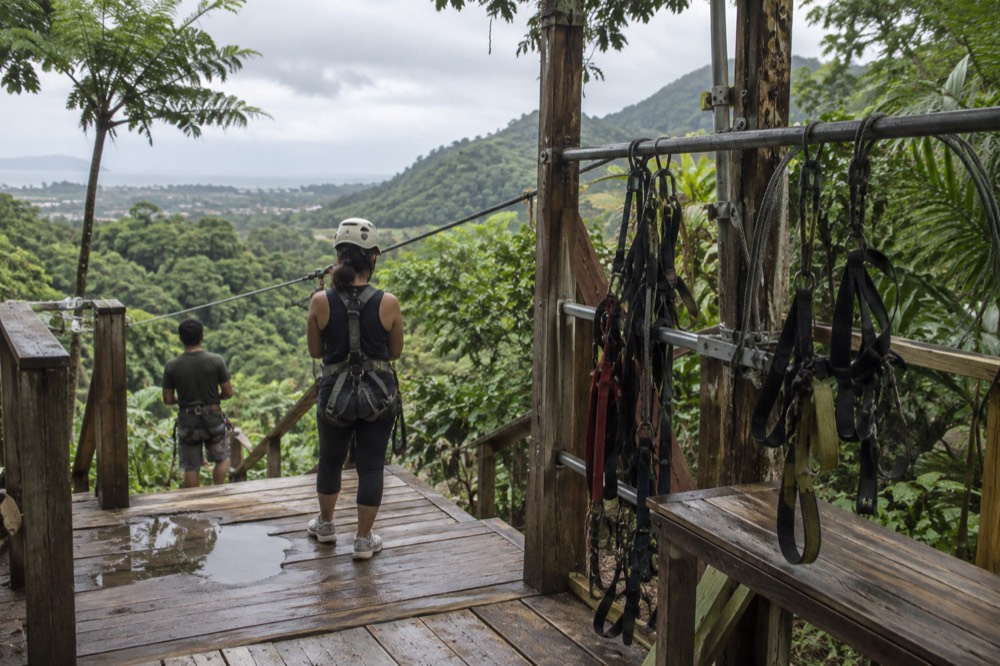
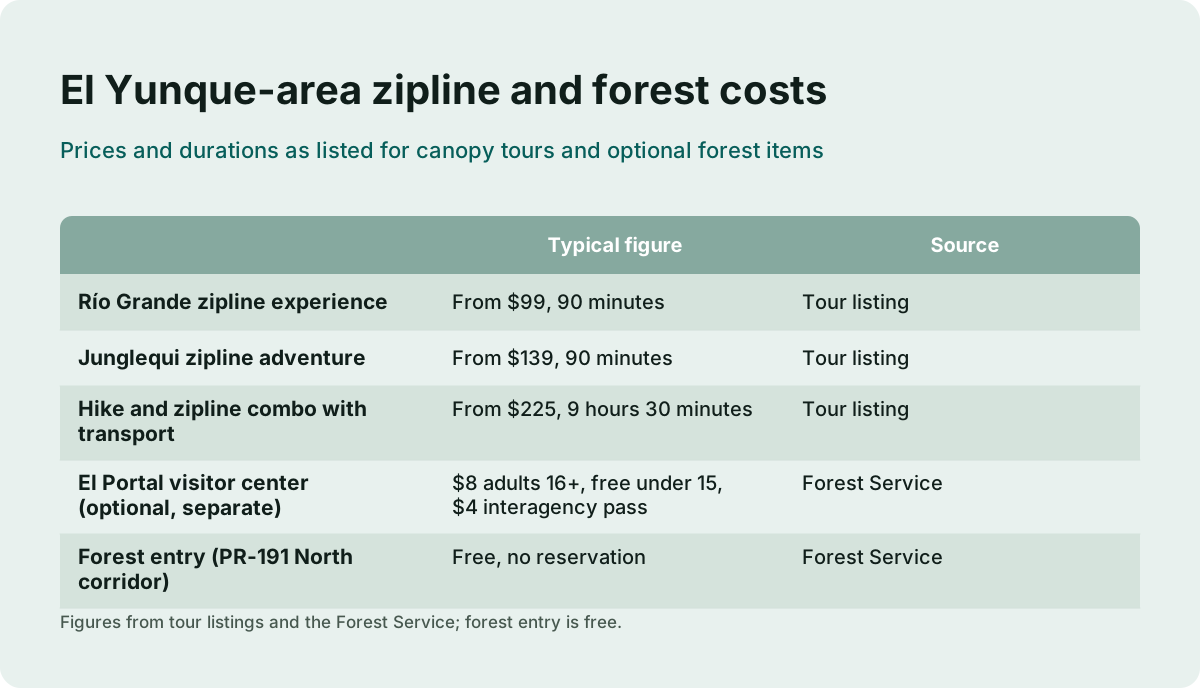
The Río Grande zipline experience is a 90-minute canopy course rated 4.9 across 304 reviews, priced from $99, with the group size stated on the listing. It is the most-reviewed zipline option in the El Yunque area and the one most visitors should book if they want cables only, without a hike or a full-day commitment.
The tour's strength is focus. Ninety minutes is enough for multiple lines, a harnessing briefing and a walk between platforms, and it leaves the rest of your day free for the forest itself, the Luquillo beach strip, or both. Reviews on the listing repeatedly praise the guides' handling of nervous first-timers, which is the single most common anxiety in canopy touring, and the 4.9 score across a 304-review pool is a strong sentiment signal for a tour type where equipment and briefing quality vary widely between operators.
Because the course sits on private land near Río Grande, plan it as its own leg. Most visitors pair a morning zipline with an afternoon drive up PR-191 North, hitting La Coca Falls and Yokahú Tower before the 5 p.m. corridor close, or they reverse it and zip in the afternoon after the forest crowds thin. Either order works; the only hard constraint is the forest's 8 a.m. to 5 p.m. window and the 30-minute parking maximums at the popular stops, which our El Yunque map and main stops guide lays out stop by stop.
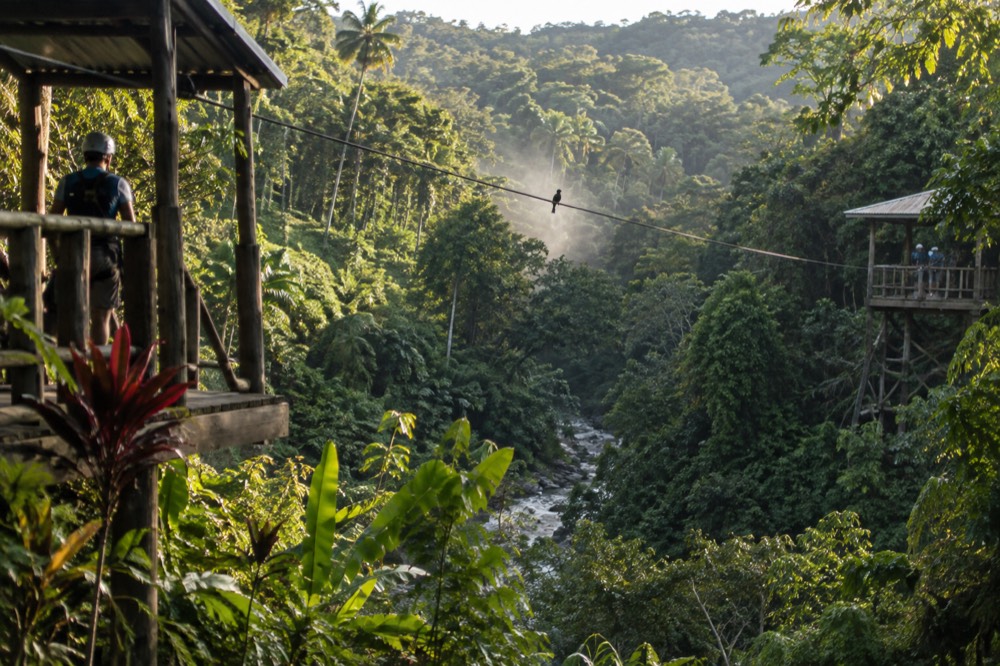
If you are traveling with teenagers or a mixed group where some people want cables and others want horses or ATVs, the same Río Grande corridor hosts the Carabalí adventure park, whose rides we cover in El Yunque ATV and horseback tours. Splitting the group across two operators in the same morning is logistically easy because everything sits within a short drive of the PR-3 and PR-191 junction.
Should You Combine Hiking And Ziplining In One Day?
Yes, if you are based in San Juan without a car, the combined hike-and-zipline tour is usually the better buy: from $225 you get a guided forest trail walk, the canopy course and round-trip transport in a 9-hour-30-minute day, rated 4.7 across 21 reviews. With a rental car, booking the pieces separately is often cheaper and gives you more control over timing.
The combo's value is entirely in the bundling. A 9-hour-30-minute day is long, and the listing's modest review pool of 21 reflects how new and niche the product is, but the format solves the two hardest problems for a car-free visitor: getting to the forest and getting to a zipline course that has no transit link. The hike portion is guided, which matters at El Yunque more than at most forests, because trail status here changes with construction and storm damage and a guide knows what is actually walkable on the day.
The separate-pieces alternative is worth pricing line by line before you dismiss it. A guided forest tour with hotel pickup runs from $63 to $125 on our roster depending on length and format, the zipline runs from $99, and you would need to bridge the two bookings yourself. Here is how the pieces and the combo stack up:
| Booking | From (per person) | Time on the listing | What it covers |
|---|---|---|---|
| Hike and zipline combo | $225 | 9 hours 30 minutes | Guided forest hike, canopy course and transport from San Juan |
| Guided half-day forest tour with pickup | $63 | 4 hours 30 minutes | Guided walk and hotel pickup, rated 4.8 across 124 reviews |
| Six-hour forest hike with transport | $125 | 6 hours | Guided hike and hotel pickup, rated 4.9 across 165 reviews |
| Río Grande zipline experience | $99 | 1 hour 30 minutes | Canopy course only, rated 4.9 across 304 reviews |
If the transfer between the two bookings costs you more than a dollar's worth of hassle, the combo wins. If you have a car, the pieces win, because you can time the forest for the morning, zip in the afternoon, and stop at the Luquillo kiosks in between, a strip that generates around 840 direct jobs and draws roughly a million visitors a year by the Tourism Company's figures.
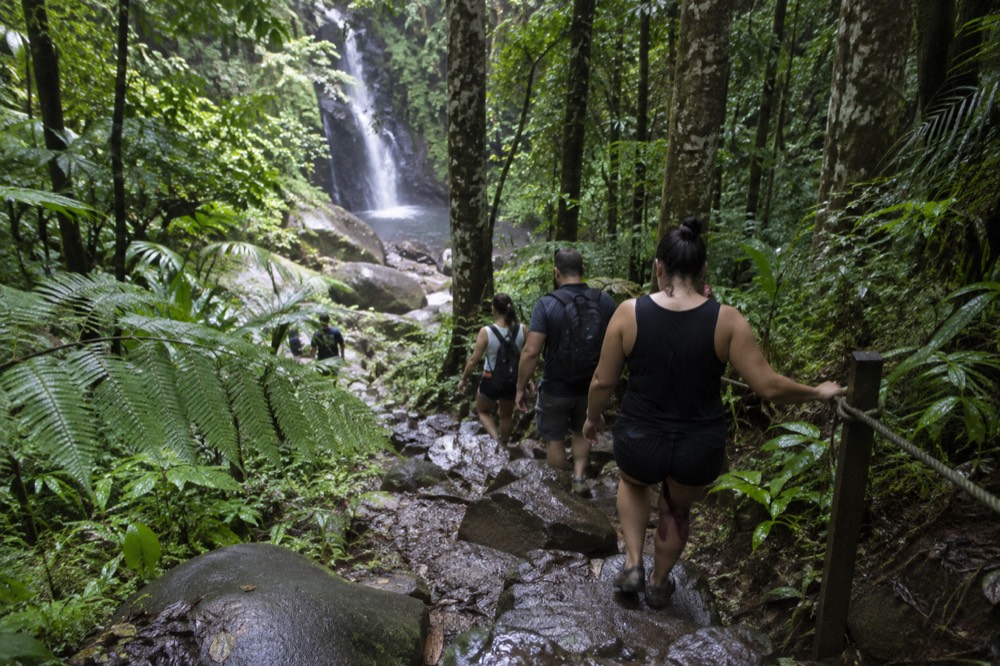
One planning note for the hike half, whichever way you book it. The Forest Service's own preparation advice leads with footwear: wear good shoes with traction, because the forest is wet and mossy and wet surfaces on a slope are a genuine hazard. Several of the forest's named trails are rated challenging on elevation change alone, and the question is El Yunque a difficult hike breaks the difficulty picture down trail by trail.
Do You Need A Reservation Or Permit To Zipline At El Yunque?
You need a booking for the zipline course itself, but you need no reservation, permit or fee to enter El Yunque National Forest. The PR-191 North corridor is free, open 8 a.m. to 5 p.m., and managed through designated parking rather than timed entry. The old recreation.gov corridor reservation no longer exists, so no tour can sell you queue-skipping that does not exist.
This is the fact most competing pages get wrong, so it is worth stating plainly. Entrance to the recreational corridor is free and no reservations are required, per the Forest Service's own current-conditions page, and all four forest corridors are published as not requiring a reservation. The former timed-entry vehicle system on recreation.gov has been retired; the facility no longer exists. If any page, seller or acquaintance tells you to book a corridor reservation, they are repeating an old system that ended.
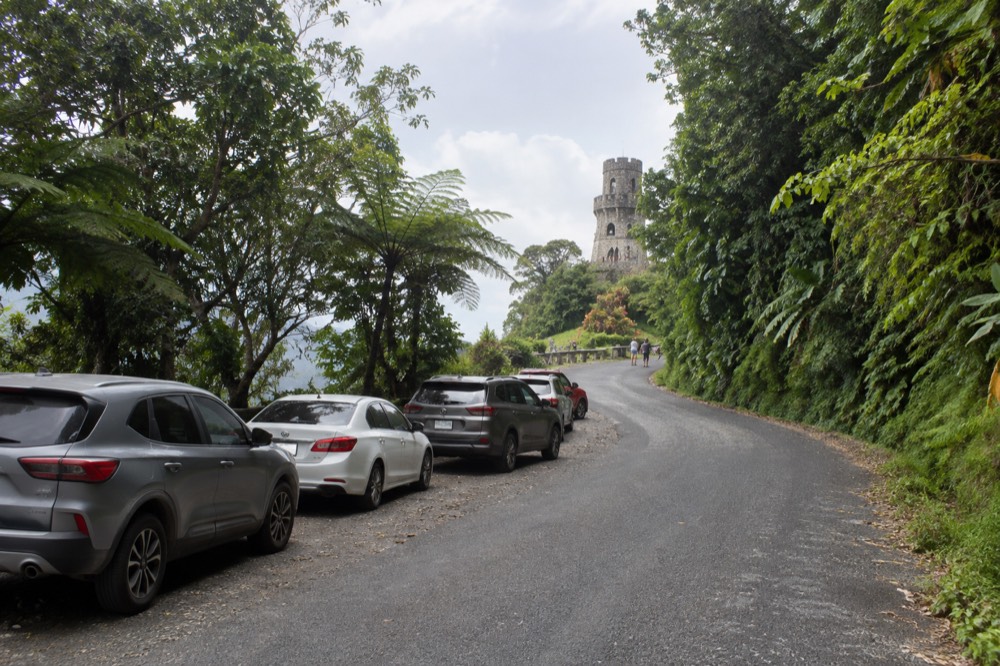
What a zipline tour does legitimately solve is transport and parking. Visitor capacity in the corridor is managed because of parking limitations, parking is permitted only in designated areas, and violators are ticketed at La Coca Falls, with 30-minute maximums at Yokahú Tower and Juan Diego. Rideshare apps cannot pick you up at the corridor or at El Portal, the Forest Service warns that visitors have been forced to walk long distances to a valid pick-up point, and not every taxi holds a forest permit, so the agency tells visitors to ask before hiring. A tour with a permitted vehicle and a legal drop-off removes all of that from your day. That, not entry, is the honest case for booking.
Closures are the other reason a guide earns their fee here. Trail and site status in El Yunque changes with construction and storm recovery, and the Forest Service routes visitors to its alerts page for the live picture rather than any standing claim. A guide who works the forest weekly knows what is open on the day; a self-driver relying on a blog post from last year often does not.
What Should You Wear And Bring For A Canopy Tour?
Wear closed shoes with real traction, shorts or long pants without loose drawstrings, and bring a small strap for sunglasses, because harnesses, helmets and gloves are provided by the operators. The Forest Service's own advice for the neighboring forest is blunt: it is a rainforest, it is wet and mossy, and wet surfaces on a slope are a hazard, so the same shoe rule applies to both halves of your day.
Canopy courses have their own dress logic that has nothing to do with the forest's. Harnesses sit on your hips and thighs, so anything with loose strings, dangling jewelry or a flowy hem is a snag risk, and most operators will ask you to empty your pockets or secure them before the first platform. Long hair gets tied back. If you are combining the zipline with a forest walk, you need shoes that survive both: the cables want tread, the trails want tread, and the Forest Service's safety page says exactly that.
Rain is not a reason to cancel, on either half. Annual rainfall in the Luquillo Experimental Forest ranges from roughly 2,450 mm at lower elevations to over 4,000 mm at higher stations, with the highest recorded annual totals at El Yunque Peak, so a shower is a feature of the day rather than an exception. Operators run in light rain and pause only for lightning, and the forest trails are at their greenest and quietest in a drizzle. Our guide to El Yunque in the rain covers what changes, and what to wear and bring to El Yunque has the full packing list.
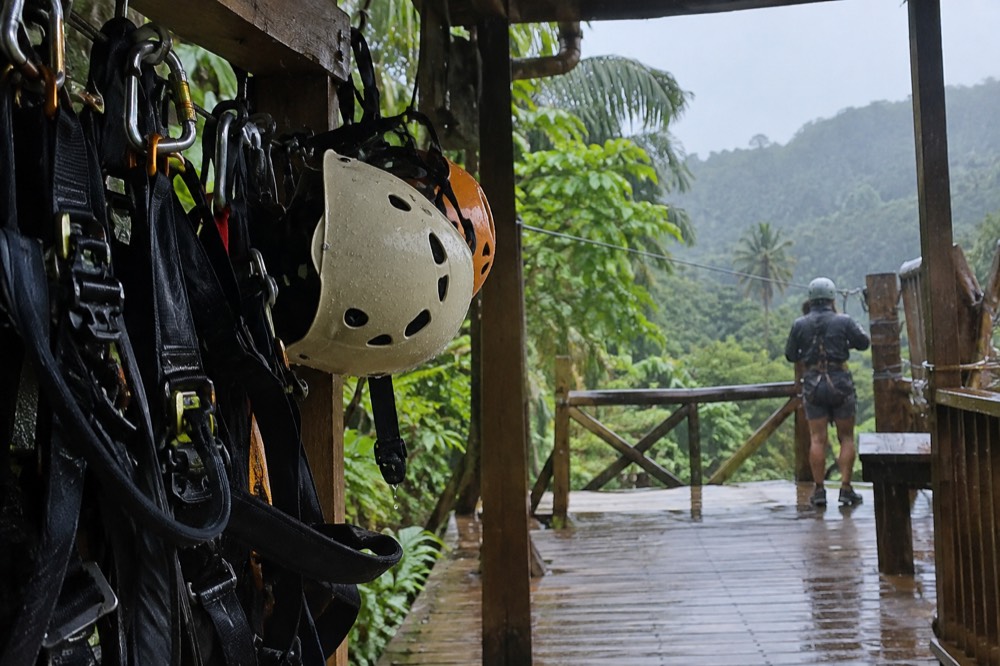
One item most visitors forget: a dry bag or a zip pocket for the phone, because the photo moment on a canopy tour is mid-line, and the photo moment in the forest is at a waterfall or a tower, and both environments are wet. Operators on our roster sell photo packages on some listings, and the small-group island day tour that includes photos in its title is one way to outsource the problem entirely.
Zipline Or Waterslide: Which El Yunque Adventure Should You Pick?
If you want adrenaline with a harness, book the zipline, from $99 for 90 minutes. If you want adrenaline in the water at a third of the price, book the half-day waterslide and rope swing tour, from $25, rated 4.8 across 8,066 reviews. Many visitors with a full day do both, but if you must pick one, the waterslide tour delivers more hours of play per dollar and the zipline delivers the bigger single thrill.
The comparison is fair because the two products compete for the same budget and often the same morning. The half-day waterslide and rope swing tour runs 4 hours from $25 with free cancellation, and its 4.8 score across an 8,066-review pool makes it one of the most-reviewed tours in the entire El Yunque market. The zipline's 4.9 across 304 reviews is a better rate, but a far smaller sample, and the two scores say the same thing: both operators deliver.
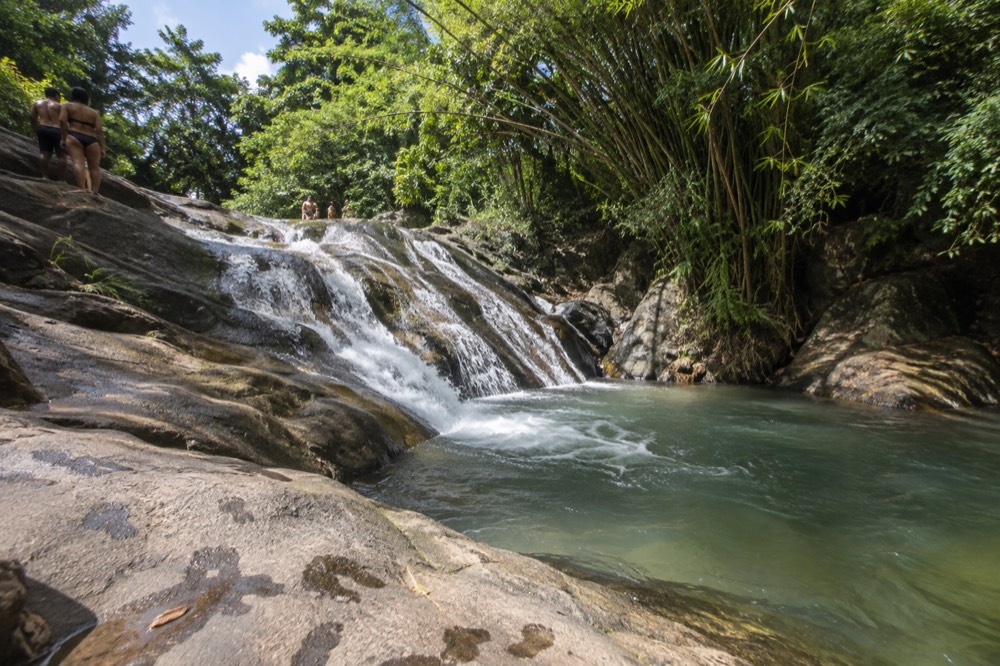
One honesty note the zipline marketing will not give you. The natural waterslides above Luquillo that several tours visit, including tours on our own roster, sit on private land outside the national forest boundary, with no Forest Service management, staffing or safety oversight, and access is arranged with the landowners on the spot. The Forest Service lists its own swimming opportunities inside the forest, such as the Juan Diego Falls pool and the Las Damas Pool on the Río Mameyes along the Angelito Trail, and every one of them carries the same flash-flood warning: rising water here can be sudden and dangerous, so watch conditions upstream and get to higher ground if water starts to rise. The Luquillo waterslides guide covers the private-land picture in full.
There is also a middle path that skips the cables but keeps the adventure: the Carabalí park's ATV and horseback options, from $80 for the ATV ride on the operator's own page and $110 for the guided horseback tour with pickup on our roster, or the 90-minute zipline at Junglequi if you want the canopy feel at a different course. Whichever way you lean, book the adventure half for the morning, save the forest drive for the afternoon, and check the forest's current conditions page the night before, because construction and weather both move the pieces.
If you are still weighing whether any of this is worth the money, the honest answer is that the transport, parking and trail-knowledge case holds up on its own, and are El Yunque tours worth it runs that math. For the canopy decision specifically, the short version is this: El Yunque National Forest Tours readers consistently do best by matching the format to their transport situation, combo with pickup if you are car-free, pieces booked separately if you are not.
Common Questions About El Yunque Ziplining
Can you zipline inside El Yunque National Forest?
No. The zipline courses marketed as El Yunque ziplining sit on private land around the forest, mostly on the Río Grande side, and the Forest Service neither operates nor regulates them. The forest's own recreation program is trails, waterfalls, towers and interpretive sites. You can pair a private-land canopy course with a forest visit in one day, and most visitors do exactly that.
How much does El Yunque ziplining cost?
Standalone canopy tours in the area run from $99 for the Río Grande zipline experience and from $139 for the Junglequi adventure, both about 90 minutes. A combined tour that adds a guided forest hike and San Juan transport runs from $225 for a 9-hour-30-minute day. Forest entry itself is free, and the only forest-side charge is the optional $8 El Portal visitor center ticket for adults 16 and over.
Do I need a reservation to enter El Yunque before my zipline tour?
No. Entrance to the PR-191 North recreational corridor is free and no reservations are required, with hours 8 a.m. to 5 p.m. The old recreation.gov timed-entry reservation no longer exists. Your zipline booking reserves the course only; it does not, and cannot, reserve forest entry, because there is nothing to reserve.
Is ziplining at El Yunque safe for beginners and kids?
The operators provide harnesses, helmets, gloves and a briefing, and reviews on the Río Grande listing repeatedly praise guides' handling of nervous first-timers. Age and weight limits are set by each operator and stated on the live listing, so check before booking rather than assuming. If your group includes riders who would rather stay on the ground, the ATV and horseback options at the nearby Carabalí park split the difference.
What should I wear for a zipline tour at El Yunque?
Closed shoes with real traction, and clothing without loose drawstrings or dangling items that a harness or cable could snag. Long hair tied back, pockets emptied or secured. If you are combining the canopy course with a forest walk, the Forest Service's own advice applies to both halves: it is a rainforest, surfaces are wet and mossy, and good traction matters on any slope.
Should I book a zipline tour or a waterslide tour?
Both are strong, and they compete for the same budget. The zipline, from $99, is the bigger single thrill in a tighter 90-minute window. The half-day waterslide and rope swing tour, from $25 and rated 4.8 across 8,066 reviews, delivers more hours of water play per dollar. Car-free visitors who want both the forest and an adventure in one booking should look at the hike-and-zipline combo, from $225 with transport included.